
HUMBOLDT penguins are hardier than other species.
Named for the plankton-filled Humboldt Current that flows up from Antarctica to South America, they’ve adapted over centuries to cycles of hardship and abundance driven by the presence or absence of El Nino.
The climate phenomenon brings warm water from the west every two to seven years, driving away the cold-water fish that the penguins rely on.
“I don’t have high expectations about what I’m going to see,” Susana Cardenas-Alayza, a biologist and the director of the conservation programme at Punta San Juan in Peru, said as she prepared to check on the penguin colony a few weeks after the start of this year’s El Nino conditions.
Her low expectations were justified.
Just a few years ago, the breeding colony at Punta San Juan was decimated by a one-two punch of avian flu in 2022 – which killed thousands of birds – and an El Nino in 2023 that dropped the population to only a few hundred.
Now, just three years later, the birds are facing a so-called Super El Nino that is forecast to be much stronger than the last.
At the start of this year’s breeding season, which typically spans March to December, there were about 200 nests at Punta San Juan.

But when researchers checked on the birds after the fall peak, the penguins had already started to abandon their eggs.
Typically, penguin parents trade off staying at the nest to ensure their eggs or chicks are warm and guarded while the other parent is out hunting.
But during El Nino years, food takes longer to find. Eventually, the hungry parent guarding the nest will abandon the post to find food as well.
“I’ve watched adults leave their chicks and their chicks following them, like ‘cheep, cheep, cheep,’” Cardenas said, mimicking the birds’ chirps.
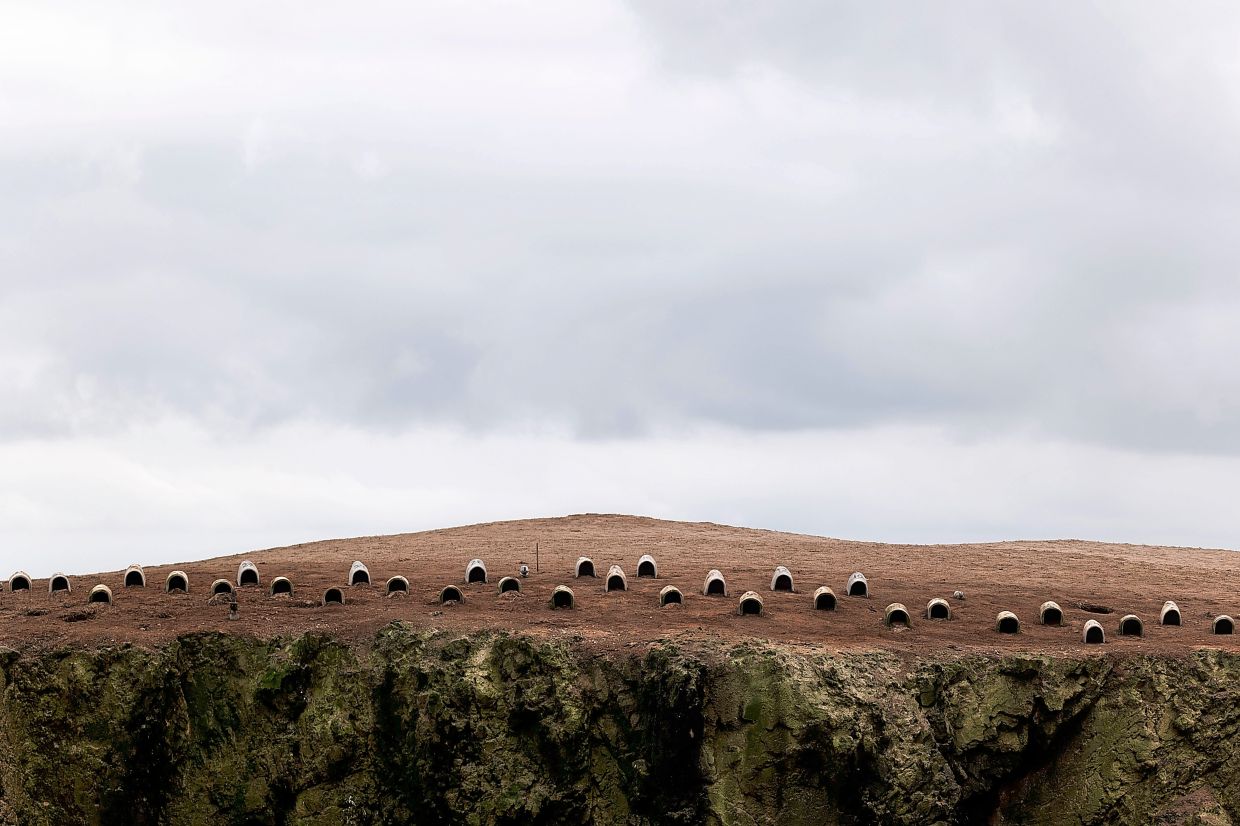
The abandonment of nearly an entire colony and the loss of a generation of penguins can happen in just a few weeks – as it has in Punta San Juan.
Cardenas is not expecting to see the colony’s numbers rise again until well after the El Nino has ended.
Carlos Zavalaga, a seabird ecologist at the Universidad Cientifica del Sur in Lima, Peru, regularly visits Humboldt penguin colonies in Peru.
He says he’s seen many nest abandonments like those at Punta San Juan this year.
“When you see the carcasses of penguins on beaches, that is an indication that the El Nino is really, really strong,” Zavalaga said.
Some research suggests that El Ninos are becoming more intense as climate change warms the oceans’ waters.
Extremely powerful Super El Ninos like this year’s are still rare, but it can take years for ecosystems to recover from their effects.
In 1997-98, another Super El Nino destroyed 16% of the world’s coral reefs, caused natural disasters around the world and left Punta San Juan nearly devoid of animals for several years after.
“We were running around with spray paint to count all the dead animals on the beach,” said Patricia Majluf, a biologist who worked at Punta San Juan during that El Nino.
“Every day, there were new ones, so we had to recognise the old ones with paint.”
Majluf estimates that about 80% of the animal populations that she had spent her career working with were gone by the end of the 1997-98 El Nino: Humboldt penguins, cormorants, pelicans and fur seals, among them.
The experience was so jarring that she shifted her career’s focus from local fieldwork to national and international marine conservation efforts after realising that the problems in places like Punta San Juan were too big to solve locally.
Humboldt penguins will always experience some negative effects during El Nino years, but researchers say there are things humans can do to lessen other pressures on the birds’ food supply and habitats.
In the water, conservationists suggest expanding Peru’s marine protected regions to include more of the waters where penguins typically hunt for fish.
They also suggest strengthening restrictions and closing loopholes that have allowed industrial fishing to continue in some protected spaces.
On the shore, conservationists are focused on keeping the penguins’ breeding grounds as attractive to the species as possible, even during the years that El Nino has temporarily driven them away.
This means ensuring that human activities like the harvesting of guano – seabird excrement widely used by humans as fertiliser and used by penguins to create nest-shielding burrows – are kept to a minimum.
But these protective measures are difficult to achieve.
High turnover of political figures in Peru, where the 10th president in 10 years was recently elected, has made it challenging to sustain long-term initiatives.
Constant campaigning has drawn the political system closer to large fishing industries that make new conservation policies harder to pass, scientists say. — ©2026 The New York Times Company
This article originally appeared in The New York Times