



THE ballots were cast in America, but the consequences could reach as far as Malaysia.
As the United States emerges from its midterm elections, policymakers in Putrajaya will be watching closely for signs of how Washington’s political shifts could affect trade, investment, regional security and its approach to Asia.
While midterm elections are often viewed through a domestic lens, their implications can extend to foreign policy. Changes in the balance of power in Congress may influence defence spending, economic priorities and America’s engagement with the rest of the world.
For Asia, those decisions matter. As rivalry between the US and China deepens, countries across the region are looking for reassurance that Washington’s commitment to the Indo-Pacific remains intact.
South-East Asia, meanwhile, continues to navigate a delicate balance between economic opportunities and great-power competition.
For Malaysia, the question is straightforward: will America’s post-midterm political landscape strengthen its engagement with the region, or leave “middle-power” countries such as Malaysia to navigate an increasingly uncertain geopolitical environment on their own?
A change in policy outlook?
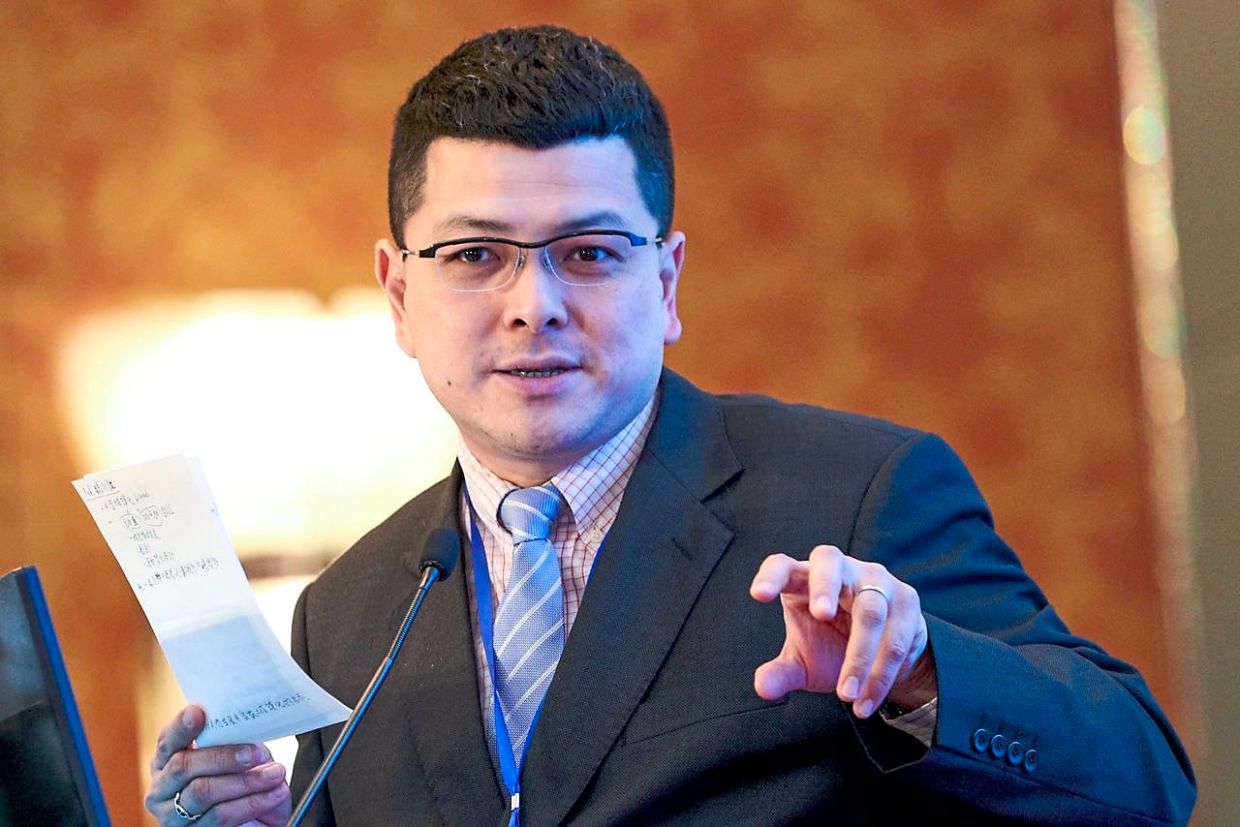
The midterms may change who constrains American foreign policy, but not necessarily what drives it, says Universiti Malaya’s International Institute of Public Policy and Management (INPUMA) senior lecturer Dr Muhammad Danial Azman.
He points out that the fundamental distinction lies between a change in political power and a change in strategic interests.
While US President Donald Trump retains executive authority over foreign policy, an opposition-controlled Congress would subject his decisions to greater scrutiny, particularly on tariffs, security commitments and international spending.
“For Asia, strategic competition with China, technological supremacy and supply-chain security remain bipartisan priorities. What may change is the intensity of political confrontation in Washington, rather than America’s underlying geopolitical objectives,” says Muhammad Danial.
Pacific Research Centre of Malaysia principal adviser Oh Ei Sun, meanwhile, does not expect any immediate changes to American foreign policy.
“If you are thinking about whether Trump, for example, would scale back his trade and tariff policies, I think that is unrealistic. He would continue to charge full steam ahead with his America First trade agenda and very high tariffs.
“And for a lot of Americans, that is also bringing back jobs, so it is not an unpopular policy.”
He adds that trade policy is not something Democrats would rush to overturn simply because they have gained greater influence in Congress.
“A Democratic-controlled Congress would not be very smart to go against that because it is bringing jobs and manufacturing back to the United States, reversing years of outsourcing overseas and so on.”
What does it mean for Malaysia?
A change in the balance of power in Washington does not necessarily translate into a softer American economic policy, says Muhammad Danial.
“Protectionism and strategic competition with China increasingly transcend party lines. Malaysia must therefore move beyond simply maintaining cordial relations with both powers.
“Strategic autonomy must be reinforced by economic resilience, market diversification and stronger domestic technological capabilities.
“Our foreign policy should be guided by national interests, not assumptions about which American political party is more favourable to Malaysia.”
He says Malaysia’s trade-dependent economy sits at the intersection of American technological influence and China’s manufacturing and commercial networks. This creates opportunities but also exposes the country to tariffs, export controls and geopolitical disruptions.
“Consider Penang’s semiconductor industry: American technology, Malaysian manufacturing and Chinese demand can be interconnected within a single supply chain. A policy decision in Washington can therefore have immediate consequences for Malaysian investment, production and employment.”
Beyond government policy, Malaysian businesses will also need to keep a close eye on developments in Washington.
ISEAS-Yusof Ishak Institute visiting senior fellow (Regional Economic Studies Programme) Stephen Olson says that even if Democrats push for softer trade policies and fewer new tariffs, the president still retains broad powers over trade.
“With a Democrat-controlled Congress that swept to power largely because of voters’ dissatisfaction with high prices, you might see pressure on the administration to expand exceptions and carve-outs for tariffs currently in place, as well as opposition to introducing additional tariffs.
“But at the end of the day, the president will retain wide authority to conduct trade policy as he sees fit. Malaysian businesses should watch to see how successful the Democrats will be in injecting a moderating voice into trade policy deliberations.”
What to watch in the coming months
Looking ahead, Muhammad Danial identifies five developments that Malaysia should monitor following the Democrats’ emergence as the majority in Congress.
“First, the direction of American tariffs and trade restrictions, especially measures affecting export-oriented economies.
“Second, semiconductor and artificial intelligence export controls, which could directly influence Malaysia’s industrial development and foreign investment.
“Third, the intensity of US-China trade competition and whether it escalates or eases.”
He also highlights two other areas that warrant close attention.
“Fourth, developments in the South China Sea, particularly any escalation that could affect Malaysia’s maritime interests and regional stability.
“Finally, the relationship between Congress and the White House, including whether political confrontation produces stronger oversight or prolonged policy paralysis.”
Against this backdrop, he says Malaysia must strengthen its capacity for geopolitical risk assessment, engage both the executive and legislative branches of the US government, and coordinate its foreign policy more closely with industrial and economic planning.
“In an increasingly fragmented international order, the countries that succeed will not necessarily be those that choose the strongest partner, but those that build the greatest capacity to withstand external pressure.”
