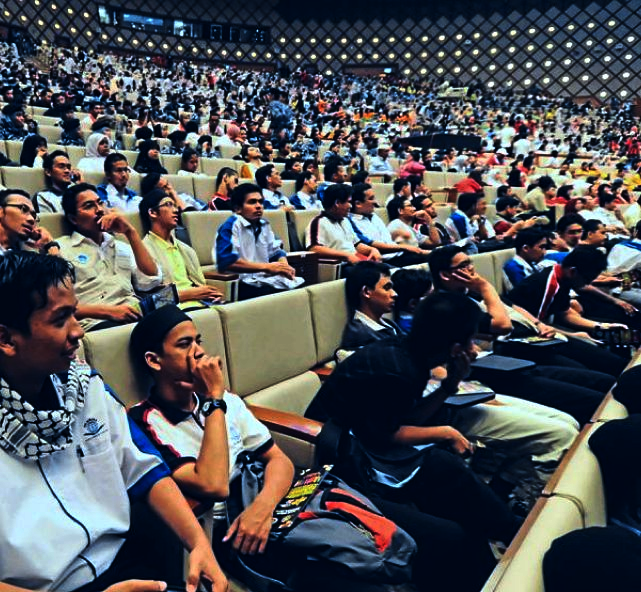
EVERY year, a familiar ritual plays out in the Dewan Rakyat. A fresh batch of young Malaysians takes their seats in the same chamber where lawmakers debate the nation’s business, moving motions and delivering speeches.

PBMy was first introduced in 2015, a programme organised by the Youth and Sports Ministry under the administration of the National Youth and Sports Department. Its aim, according to PBMy’s website, was to become a more inclusive platform for young people who are interested in expressing their views and proposals from a youth perspective.
On paper, it is an appealing premise.
Similar to the well-established Model United Nations, a simulation where students role-play as diplomats representing countries to debate global issues, PBMy offers young people an opportunity to rehearse the grammar of democracy before they are asked to practise it for real, from negotiating across party lines to learning that disagreement is not the same as disrespect.
As an observer, I hope it is a chance to cultivate and exercise a “different kind of politics” among young people. Young lawmakers making their mark around the world have shown that politics can be centred on data, substantive policy debates and civilised disagreement, rather than the personality clashes and point-scoring that so often characterise our parliamentary proceedings.
It is one thing to watch a minister and an opposition backbencher trade barbs; it is another to watch a young delegate press a motion armed with statistics and conviction, and have the opposing bench respond with a counter-argument rather than a jibe. If PBMy can normalise that instinct, it will have done something more valuable than a few viral clips.
This year, Dewan Rakyat Speaker Tan Sri Johari Abdul has been an enthusiastic cheerleader. Ahead of this year’s sitting, he called the programme his “baby” and set an ambitious target of 300,000 registered voters.
More recently, he pledged that the government would give “serious attention” to the views Parlimen Belia raises, framing the young delegates as uniquely positioned to voice the country’s future needs and anxieties.
It is a compelling pitch, but also one that PBMy has struggled to live up to for a decade.
Start with the numbers. When the programme held its first election, voter turnout nationwide came in at just 5.05%, with only 1.4% of Malaysia’s roughly 12 million young people bothering to register at all.
The numbers have hardly improved this year. According to PBMy’s press statement on Oct 31, the programme has 140,461 registered members, less than half of the Speaker’s 300,000 target and equivalent to just 1.5% of Malaysia’s youth population.
Candidates have pointed fingers at KBS for failing to promote the programme properly and at registration systems they describe as too complex.
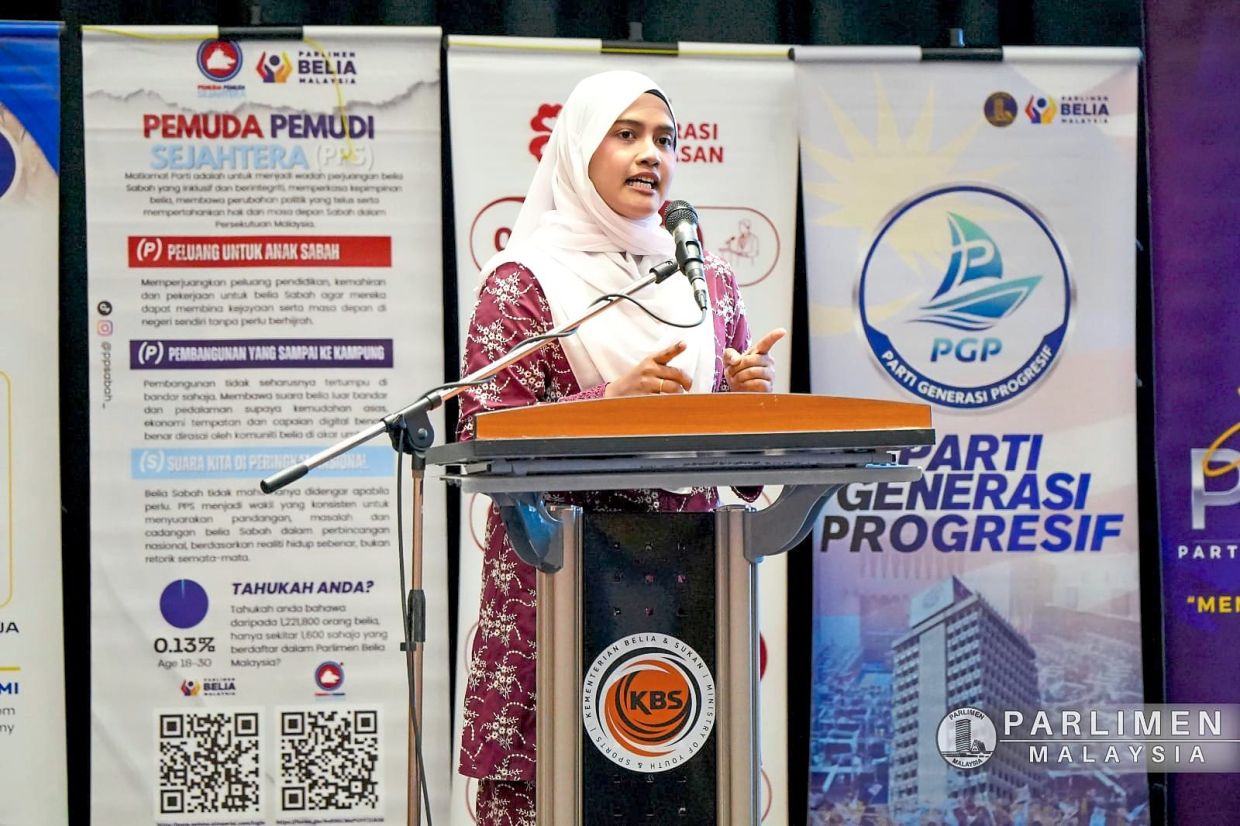
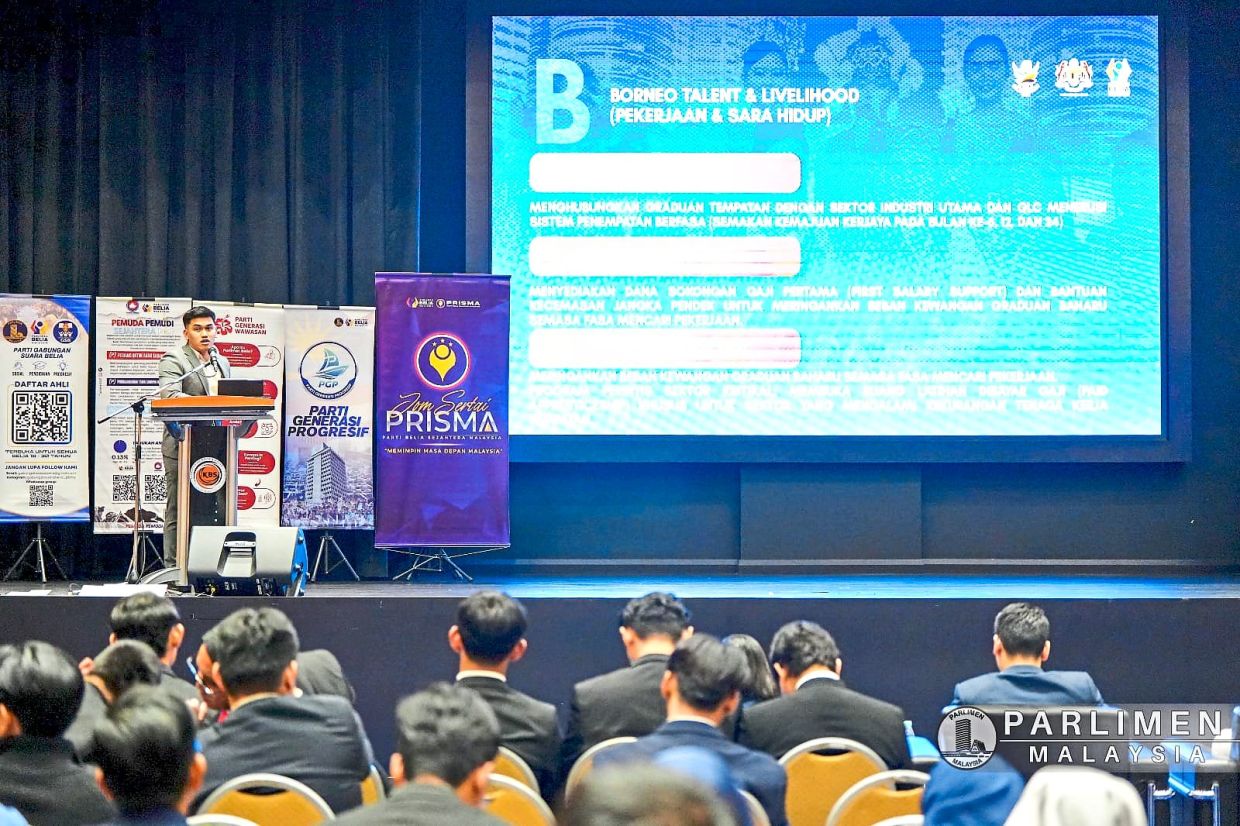
The deeper criticism, though, is about consequence. A political analyst from Universiti Teknologi Malaysia noted that there was no evidence that issues debated in Parlimen Belia ever registered with the actual Dewan Rakyat as the two entities were completely unconnected.
A study by Universiti Kebangsaan Malaysia of PBMy’s own delegates reached a similar verdict from the inside, citing weak promotion, slow and often dismissive responses from adult institutions, and limited willingness to let young delegates wield real influence, even as it affirmed that the platform still had value for building youth civic capacity.
Having had my own fair share of days interning with civil societies, participating in community organising and holding forums with political leaders, I have become cognisant of how hard it is to get a foot through the door as a young person when it comes to being heard in national policymaking, especially when you do not have the necessary connections.
Perhaps this is where PBMy needs to do more than simply give young people a taste of parliamentary proceedings.
For a start, there needs to be a clearer link between what happens in the youth Parliament and the actual business of government. Motions passed by PBMy could be formally referred to relevant parliamentary committees for consideration, with delegates invited to present their proposals at hearings.
Not every proposal needs to be adopted, but there is a difference between having an idea rejected after consideration and having it disappear into an institutional void.
There is also the question of whose voices are actually making it into the chamber. A youth Parliament that largely attracts university students, politically affiliated individuals and those already familiar with public institutions risks becoming an echo chamber of the already engaged.
To broaden the pool of participants, targeted outreach is required to TVET institutions, rural communities, youth organisations and marginalised groups, particularly in Sabah and Sarawak. After all, a Parliament cannot claim to speak for young Malaysians if large sections of the country’s youth barely see themselves represented in it.
More importantly, youth participation should not be confined to a two-day sitting or delegated entirely to PBMy. Parliamentary committees and government agencies should regularly make an effort to consult young people when developing policies that directly affect them.
Public consultations, youth advisory panels and engagements with student groups should give young Malaysians a voice before decisions are made, not after. Their proposals should also receive meaningful responses. Otherwise, these consultations risk becoming little more than another exercise in taking photographs and issuing statements about empowering the next generation.
As for young people, I encourage them to look beyond politics as the only avenue for change. I have learned over the years that change often begins and is most impactful at the community level. Find a cause that resonates with you, volunteer with organisations doing meaningful work and contribute where you can.
PBMy should be a starting point and not an end in itself. We should want young people to leave the chamber knowing that their voices can carry beyond the walls of Parliament.
The real test of youth participation is not how well young people can imitate the politics of today, but whether they can help shape the politics of tomorrow.
Malaysian youth advocate Jonathan Lee Rong Sheng traces his writing roots to The Star’s BRATs programme. The views expressed here are his own.