READING the news for the past month felt like observing one calamity after another. I am not referring to the political ones (although that needs to be acknowledged, too), but rather environmental ones.

Closer to home, we Malaysians lived through a terrible haze episode. Sarawak bore the initial brunt in August and early September, with Serian and Kuching crossing hazardous particulate levels above 400 and 500. By mid-September, the haze had shifted across Peninsular Malay-sia with widespread unhealthy air readings recorded.
The common thread that runs through both events is that climate change is altering the conditions that make such disasters possible. Warmer temperatures can destabilise glaciers and mountain slopes such as in Nepal’s case, while hotter and drier conditions in our region can increase the risk and spread of forest and peatland fires that produce haze.
While climate change does not single-handedly cause every flood, landslide, or fire, it can make some hazards more frequent or severe.
Climate change will pose growing risks to Malaysia. According to the National Water Research Institute of Malaysia, the whole Malaysian peninsula is expected to be 1°C to 1.5°C warmer in the next 50 years, with maximum monthly rainfall projected to rise by up to 113mm, or 12%.
These projections indicate a future where managing extreme weather and environmental disruptions will become more costly. The cost of climate change in Malaysia is not measured only in damaged property or emergency spending, but also in lost working hours, disrupted schooling, and the erosion of economic productivity.
According to a recent report in The Star, every 1 microgram per cubic metre increase in the concentration of PM2.5 (the particulate matter small enough to get into our lungs) during haze episodes has been associated with a 0.6% to 1.9% decline in productivity,
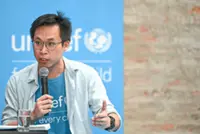
But the economic story is often much easier to pitch than the equally important human one. In my work as part of Unicef (United Nations Children’s Fund) Malaysia’s Climate, Environment, and Disaster Risk Reduction programme, the reality is stark on the ground.
I have heard stories from the ground of children in Rantau Panjang, Kelantan, having to abandon their homes at midnight to escape rapidly rising floodwaters, and more recently, how the shift to online learning due to poor air quality in Sarawak left students in areas with poor Internet connectivity behind.
Climate change is a youth issue. Younger generations are living with the consequences of environmental degradation despite having contributed the least to it.
In Unicef’s National Youth Climate Change Survey 2025, 83.2% of respondents say they’ve faced one or more disasters from 2024 to 2025, while almost 95% expressed worry about how climate change could affect their future.
However, the survey was equally clear that young Malaysians are ready to play a role, with more than half (52.6%) of the respondents wanting to mobilise their local communities and more than eight in 10 respondents (83.1%) saying they would consider working in Malaysia’s green industry.
While it is inspiring to see this level of readiness, the narrative surrounding youth and climate change may often fall into a predictable trap. Too often the conversation places the responsibility on young people to change their behaviour, such as to recycle more, use less plastic, take public transport, or consume less.
These things matter but they can only go so far.
While youth empowerment is important, I am cognisant that a child living in a flood-prone community cannot control where a drainage system is built, and similarly a student affected by haze cannot determine how forest and peatland fires are managed.
The larger responsibility lies with the systems around them. This means better disaster preparedness, stronger infrastructure, reliable access to education during emergencies, and more effective protection for communities exposed to environmental risks.
Ultimately, climate change is now a profound disruption to the Malaysian way of life. For all of us, the baseline of “normal” is fracturing as the monsoon season brings deep anxiety instead of relief, while the dry season brings a familiar, choking haze.
Addressing this requires environmental governance that is genuinely inclusive.
Recent government commitments, such as the drafting of a Climate Change Bill, Malaysia’s National Adaptation Plan, and amendments to the Environ-mental Quality Act, present opportunities to strengthen how Malaysia prepares for and responds to climate risks.
But these policies must also be grounded in the realities of the people who will live with their consequences. This is particularly important because climate resilience is not simply about how quickly we can recover after a disaster. It is also about protecting people’s ability to live and thrive when disasters strike.
The past month has been a sobering reminder of how quickly an environmental hazard can become a human crisis. The images from Nepal may feel distant, while the haze over here may eventually clear. But the underlying risks do not disappear when the headlines do.
We cannot prevent every flood, fire, or extreme weather event. But we can decide how prepared we are when they arrive, and how quickly people recover. The conversation, then, cannot stop at asking young people what they can do for the climate. We must also ask what Malaysia is doing to ensure they can thrive in the climate they are inheriting.
Malaysian youth advocate Jonathan Lee Rong Sheng traces his writing roots to The Star’s BRATs programme. The views expressed here are his own.