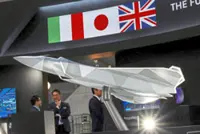
JAPAN’s easing of arms export rules has sparked strong interest from Warsaw to Manila, as US President Donald Trump wavers on security commitments to allies and the conflicts in Iran and Ukraine strain US weapons supplies.
Japanese Prime Minister Sanae Takaichi’s ruling party approved the changes recently as she tries to invigorate the pacifist country’s military industrial base.
Her government will formally adopt the new rules soon, according to three Japanese government officials.
Despite largely isolating itself from global arms markets since World War Two, Japan spends enough on its own military – US$60bil this year – to sustain a sizeable defence industry capable of manufacturing advanced systems like submarines and fighter jets.
Among the potential new customers are the Polish military and the Philippine navy, which are undergoing modernisation amid regional security challenges, according to interviews with Japanese officials and foreign diplomats in Tokyo.
Defence contractors Toshiba and Mitsubishi Electric are hiring staff and adding capacity to capitalise on demand, their executives said, providing previously unreported details.
One of the first deals Takaichi’s government will likely approve are exports of used frigates to the Philippines, according to two Japanese officials.
Warsaw and Tokyo can help plug gaps in each other’s arsenals, cooperating in areas like anti-drone and electronic warfare systems, said Mariusz Boguszewski, deputy chief of mission at Poland’s embassy in Japan.
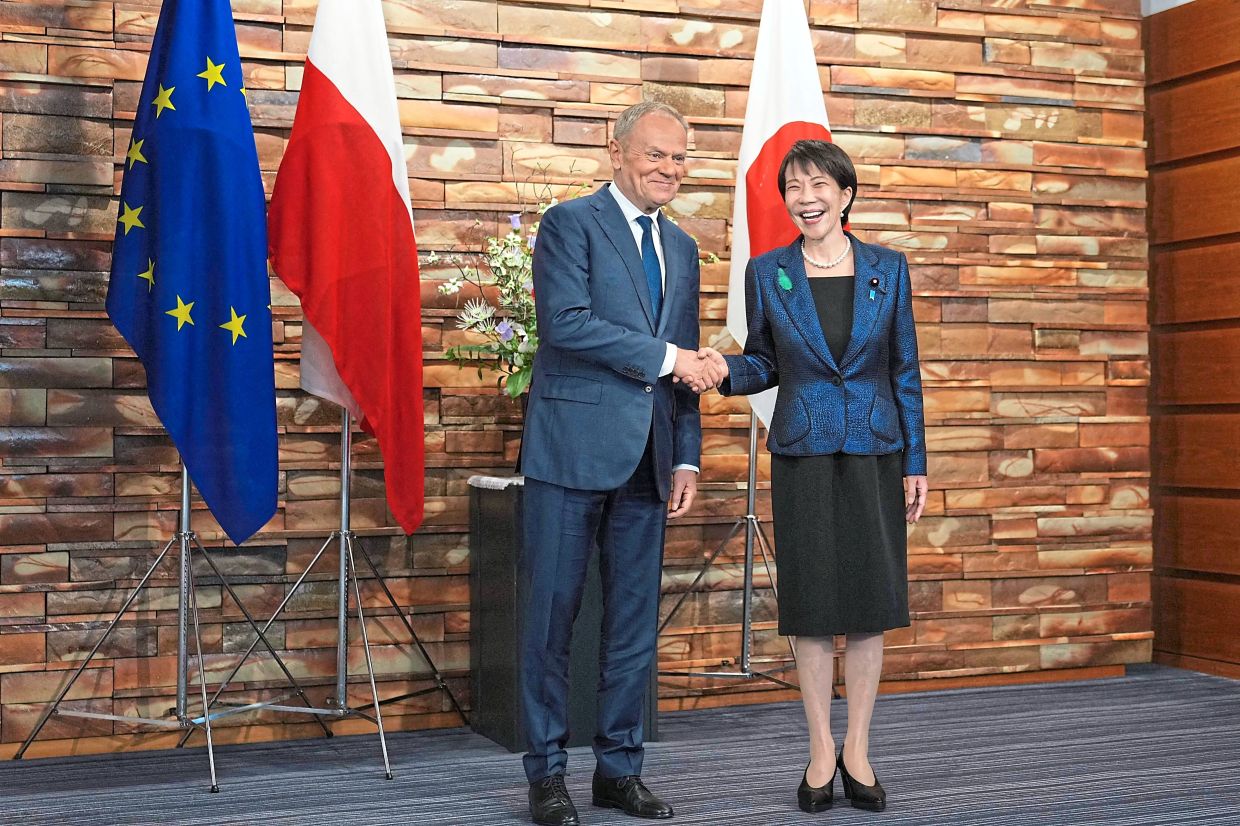
“There are some bottlenecks that we can overcome having Japan on board,” he added, without providing details of specific deals.
Poland’s WB Group, one of Europe’s largest private defence contractors, last year signed a tentative drone deal with Japanese aircraft maker ShinMaywa.
Three other European diplomats said Japan’s easing provided a chance to lessen their heavy dependence on US weapons production, which is strained by conflicts.
Trump’s unpredictability, such as his threats to leave Nato and invade Greenland, have also heightened the push to diversify, according to the diplomats, who requested anonymity to discuss sensitive matters.
“Offers are coming from everywhere,” said Masahiko Arai, senior vice-president at Mitsubishi Electric’s defence unit, which has been adding staff in London and Singapore to facilitate defence exports.
Takaichi’s office declined to answer specific questions for this story, instead referring to a Feb 20 speech where she said she was reviewing the controls to bolster Japan’s defence production and strengthen capabilities of allies.
Tokyo’s export overhaul has previously been encouraged by successive US administrations, including Trump’s, eager for allies to contribute more to collective defence efforts.
White House spokesperson Anna Kelly did not respond to questions about the changes to Japanese policy but said the two nations are closer than ever under Trump and Takaichi.
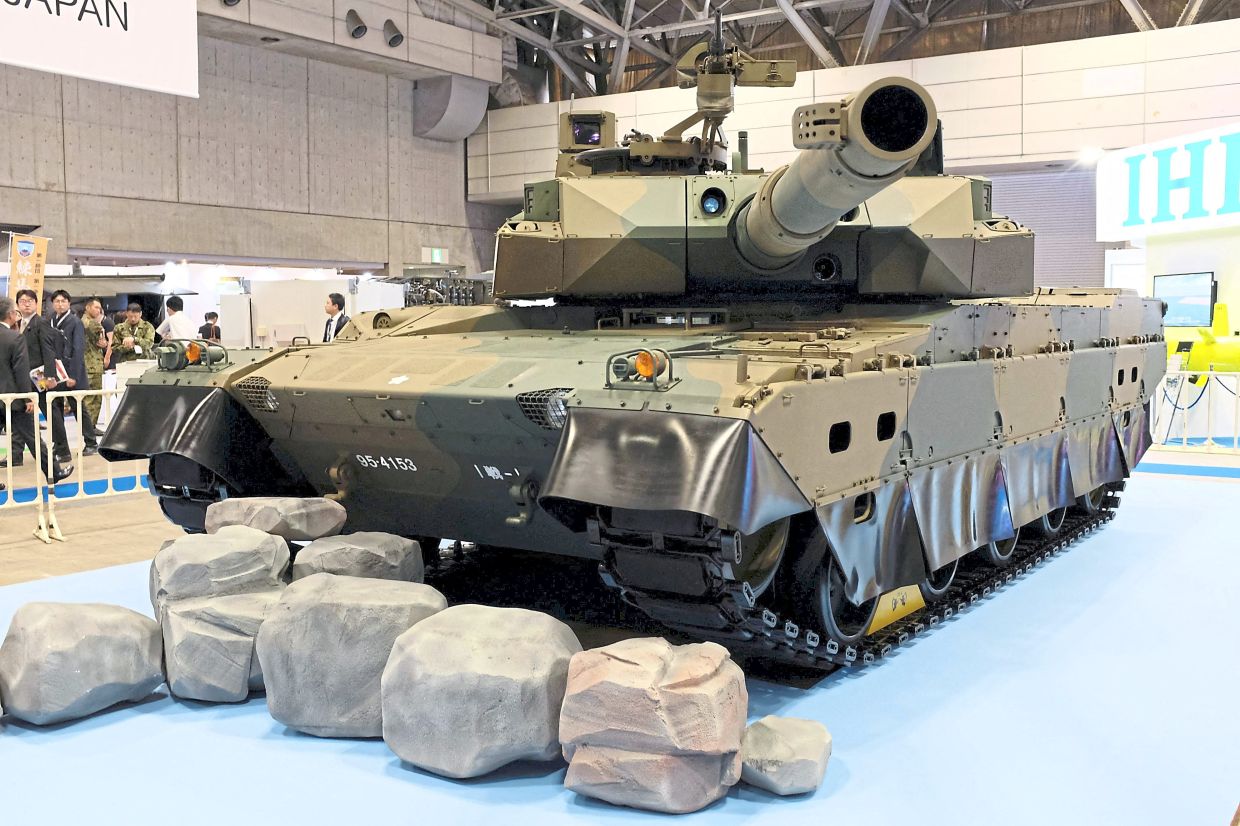
The Chinese Foreign Ministry said in a statement in response to questions that governments should be aware “that blindly entrusting their own security to another country, or even tying themselves to another country’s war chariot, will only end up backfiring”.
The Philippines defence ministry declined to comment.
Japan’s first steps to relax the rules began more than a decade ago when Takaichi’s mentor, the late premier Shinzo Abe, eased a near-blanket ban on exports to encourage joint arms development with allies.
The push largely stalled, however, as many restrictions – including on lethal equipment – remained. Companies continued to shy away from overseas defence sales.
Buoyed by a bumper election win and shorn of the longtime coalition partner that had opposed more radical change, Takaichi hopes the latest easing will nudge arms makers to add the production capacity Japan needs for a major military buildup.
Some Japanese defence firms say they are ready to pivot.
Air defence systems builder Toshiba said it plans to hire about 500 people over the next three years and is building new testing and manufacturing facilities. It has also established a new department to handle defence exports.
“Reputational risk is not what it used to be,” said Kenji Kobayashi, vice-president in Toshiba’s defence division.
Some big Japanese brands that have sidelines in defence equipment and also make consumer goods have expressed concerns that arms sales will put off their broader range of customers.
“Rather than worrying about that, we focus on fulfilling our role and growing the business,” Kobayashi said.
A recruitment listing from Mitsubishi Electric – whose products include fridges and missiles – shows the firm is hiring for an overseas sales role covering fighter aircraft and other military exports.
Demand for finished systems is strongest in Asia, while Europe, Australia and the United States offer markets for components and co-development of new products, said Arai, the Mitsubishi Electric defence executive.
The company expects defence sales, including domestic and international, to triple to 600 billion yen by 2031.
There remains a gap between the political messaging and the policies of some companies, however, said Latvia’s envoy to Japan, Zigmars Zilgalvis.
He gave the example of carmaker Toyota, whose subsidiary turned down an attempted purchase of engines and related parts by Latvian firm VR Cars for a military utility vehicle in 2023.
The Latvian mission had tried to help broker the failed sale, Zilgalvis said.
Toyota Customising & Development said in response to questions that it could not accommodate the request for military vehicles “based on our business scope and policy”.
It declined to comment on the upcoming revisions to Japan’s arms export policy. VR Cars said it respected the decision.
While Tokyo is expected to maintain strict controls on sending arms to conflict zones, even Ukraine has sensed an opportunity.
Kyiv’s chamber of commerce in Tokyo will soon launch a new industry group of Ukrainian and Japanese drone firms to spur development of new technologies, timed to coincide with the rule changes, its head Kateryna Yavorska said.
The US has long dominated global military supply chains. It accounted for 95% of Japan’s defence imports, 85% of Australian and British purchases and 77% of Saudi Arabian buys between 2021-2025, according to a March report by the Stockholm International Peace Research Institute (Sipri) think-tank.
But Washington’s foreign military sales programme, often blamed for late deliveries and rising costs, and its tight control over defence technologies has long been a source of frustration, officials and analysts said.
One objective of Japan’s rule changes is to build defence supply chains in Asia that do not rely on the United States, said a ruling party official involved in drafting security policy.
Neighbouring South Korea offers something of a blueprint: it has become the largest defence supplier to Poland and the Philippines after steady growth over the last five years, Sipri data shows.
But the potential for Japan – the world’s fourth largest economy – is greater.
Even with the curbs, Japan’s arms industry is on par with South Korea, Germany and Italy, and nearly twice the size of India’s, according to Sipri’s analysis of leading defence contractor revenues in 2024. The US industry, however, is 25 times bigger.
“Japan has been kind of in the timeout box because of World War Two, frankly,” said Andrew Koch, founder of Nexus Pacific, a Tokyo-based defence-industry advisory.
“But they were inevitably going to swing closer towards the centre of global politics.” — Reuters