I WROTE this on Nakba Day, May 15. That date marks the 78th anniversary of that terrible catastrophe that has befallen mankind, in other words, our Palestinian brothers and sisters. For Palestinians, the Nakba – literally “catastrophe” – is not a historical footnote but a living wound.
It is the story of dispossession, exile, and immense suffering that has stretched across generations. And for the rest of us, it is a moral test we have consistently failed.
What has happened over the years is only a story of immense suffering. Families torn from their ancestral homes, villages erased from the map and generations condemned to live as refugees. The Nakba was not a singular event in 1948; it was the beginning of a process that continues to this day.
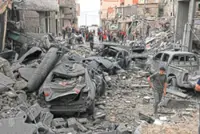
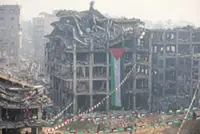
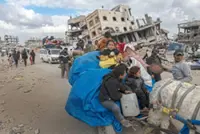
Every year is a Nakba year. The same pattern repeats itself over and over again. Palestinians in occupied Gaza, the occupied West Bank, and refugee camps across Lebanon, Jordan and Syria still endure hardship, while the diaspora carries the memory of lost homes and unfulfilled rights. The catastrophe is ongoing.
The Balfour Declaration: Britain’s original sin
If we are to understand the Nakba, we must go back further than 1948. We must go back to 1917, when Britain issued the infamous Balfour Declaration. In a single letter, Britain promised to support the establishment of a “national home for the Jewish people” in Palestine – without consulting the indigenous population who had lived there for centuries. The declaration was made by a colonial power that had no moral or legal right to dispose of another people’s land. It was, in essence, a colonial fiat that sowed the seeds of catastrophe.
The Balfour Declaration was not just a diplomatic gesture; it was a betrayal. Britain, as the mandatory power after World War I, had a responsibility to safeguard the rights of the people of Palestine. Instead, it facilitated their dispossession. The declaration ignored the political aspirations of the Arab majority and treated them as invisible. It was the original sin that set in motion the chain of events leading to the Nakba.
Let us be clear: if there had been no Balfour Declaration, there would have been no Nakba. Britain bears direct responsibility for the catastrophe. It opened the door to mass Zionist immigration, tilted the balance of power, and ultimately abandoned the Palestinians to their fate in 1948. Britain’s role was not passive; it was active. It engineered the conditions for dispossession and then walked away.
The historical catastrophe
In 1948, more than 750,000 Palestinians were expelled and some fled following the Arab-Israeli war. Hundreds of villages were depopulated or destroyed. The United Nations General Assembly Resolution 194 affirmed the right of refugees to return to their homes and receive compensation. Yet, 78 years later, that right remains unfulfilled. Instead, the refugee camps have become semi-permanent fixtures of the Middle East, symbols of a world order that speaks of justice but rarely delivers it.
The Nakba is remembered not only as a historical tragedy but as a continuing reality. Palestinians often say: “The Nakba did not end in 1948; it continues every day.” Land confiscations, settlement expansions, military checkpoints, arbitrary detentions and torture and blockades are seen as extensions of the original dispossession. The catastrophe is not frozen in the past – it is alive in the present.
Numbers alone cannot capture the depth of suffering. Imagine being forced to leave your home with nothing but the clothes on your back, never to return. Imagine growing up in a refugee camp, where your grandparents’ stories of orchards and stone houses are the only inheritance you receive. Imagine living under occupation, where movement is restricted, dignity denied, farms and livestock destroyed and hope constantly deferred. This is the Palestinian experience.
And yet, amidst this suffering, there is resilience. Palestinians have preserved their culture, their language, and their memory. The keys to lost homes are passed down through generations as symbols of the right of return. The Nakba is not only about loss – it is also about steadfastness. It is about a people who refuse to let their history be erased.
Britain’s silence and the world’s hypocrisy
Here is where my personal feelings sharpen into criticism. For 78 years, the world has largely watched in silence. International law is clear: refugees have the right to return, occupation must end, human rights must be respected. Yet, these principles remain abstract when applied to Palestinians. The same international community that speaks loudly about justice elsewhere often whispers when it comes to Palestine.
Britain, in particular, has never truly reckoned with its responsibility. It celebrates the Balfour Declaration as a proud moment in its history, while ignoring the catastrophe it unleashed. This is hypocrisy of the highest order. How can a nation that prides itself on democracy and fairness continue to glorify a document that denied an entire people their rights? Britain’s silence is not neutrality; it is. Nakba Day should provoke us to think critically – not only about the past but about the present. It should force us to confront uncomfortable questions. Why has the refugee crisis persisted for nearly eight decades? Why has international law been applied selectively? Why do we accept a reality where one people’s catastrophe is another’s independence celebration? And why has Britain never been held accountable for its role in creating this catastrophe?
It is easy to reduce the Nakba to a “conflict” between two sides. But that framing obscures the asymmetry of power, the reality of dispossession, and the moral urgency of justice. The Nakba is not simply a Palestinian tragedy; it is a human tragedy. It is a stain on our collective conscience.
Memory as resistance
For Palestinians, memory itself is a form of resistance. To remember the Nakba is to refuse erasure. To commemorate it is to assert identity and demand recognition. This is why Nakba Day matters. It is not only about mourning the past but about insisting on justice in the present.
For the rest of us, remembering the Nakba is a moral obligation. It is a reminder that silence is complicity. It is a call to challenge the narratives that justify dispossession and to stand with those who demand dignity and rights. Memory is not passive; it is active. It shapes our choices, our politics, and our humanity.
Seventy-eight years is a long time. Long enough for generations to be born, grow old, and die in exile. Long enough for refugee camps to become cities. Long enough for the world to forget if it chooses to. But forgetting is not an option. To forget the Nakba is to accept injustice as normal. To remember it is to keep alive the possibility of change.
On this Nakba Day, I mourn with my Palestinian brothers and sisters. I share in their grief, their resilience and their hope. But I also turn my gaze outward, to Britain and to the world that has failed them. The Nakba is not only a Palestinian catastrophe; it is a global moral failure. And until that failure is addressed, the catastrophe will continue.
Nakba Day is a day of mourning, but it should also be a day of reckoning. It should force us to confront the gap between our ideals and our actions. It should remind us that justice delayed is justice denied. And it should provoke us to ask: how long will we allow this catastrophe to continue?
The Nakba must not be allowed to reach its centenary as an unresolved tragedy. The world owes Palestinians more than sympathy; it owes them justice. And justice begins with recognition – recognition of history, recognition of rights, and recognition of Britain’s responsibility.
If there had been no Balfour Declaration, there would have been no Nakba. Britain lit the match. The world watched the fire spread. And Palestinians have lived in the ashes ever since.
Dr Abdul Latiff Mohd Ibrahim is head of the Research and Publications Division at the International Institute of Advanced Islamic Studies (IAIS) Malaysia. The views expressed here are solely the writer’s own.