GOING on 55 years strong, The Star has grown from a small regional newspaper to the country’s top national English-language daily.
Today the Star Media Group Berhad (SMG) is also a media powerhouse with leading brands on various platforms including The Star Online, mStar, 988 FM, Suria FM, Star Property and Star ESG.

Joining as a rookie reporter in the Penang-born company soon after it started in 1971, Aeria remembers his colleagues as a small group of people who believed they had to stand up for the weak.
“It was like fighting a giant.
“We’d arrive at an assignment to find about eight reporters and five photographers from one media group covering the event, but, somehow, this never put us off,” says the 1975 International Relations graduate of Universiti Malaya.
Aeria, now 73, shares that the vibrant, idealistic spirit of the newsroom fit him perfectly at the time: “I was from the ‘Anwar era’ [early to mid-1970s], when we UM students were always demonstrating for change.
“After varsity, I wanted to do something that would impact people’s lives.”
In the old days, many of the reporters were proud school dropouts or had stopped at Form Six, he tells.
“Yet their command of English was fantastic,” says this alumnus of Penang’s St Xavier’s Institution.
Aeria notes that many SMG bosses came from this oldest of South-East Asia’s Lasallian schools as he quips with a laugh: “St Xavier’s produced rascals!
Leading in training
When it comes to mentoring, Aeria describes SMG’s tradition of shaping cub reporters into top newsmen as being mainly “trial and error” at the start.
He had to learn most skills on the job and, like many of his generation of newsmen, faced “fierce” editors who’d crumple and fling printed copies of article drafts into a bin, in the single-level open floor press room.
“We never knew why they did so and we had to keep on correcting our stories until they were accepted.”
When The Star moved to Brickfields, Kuala Lumpur, reporters would gather at the nearby Pines food court in the evening for “pub training” after a long day at the office, he jokes.
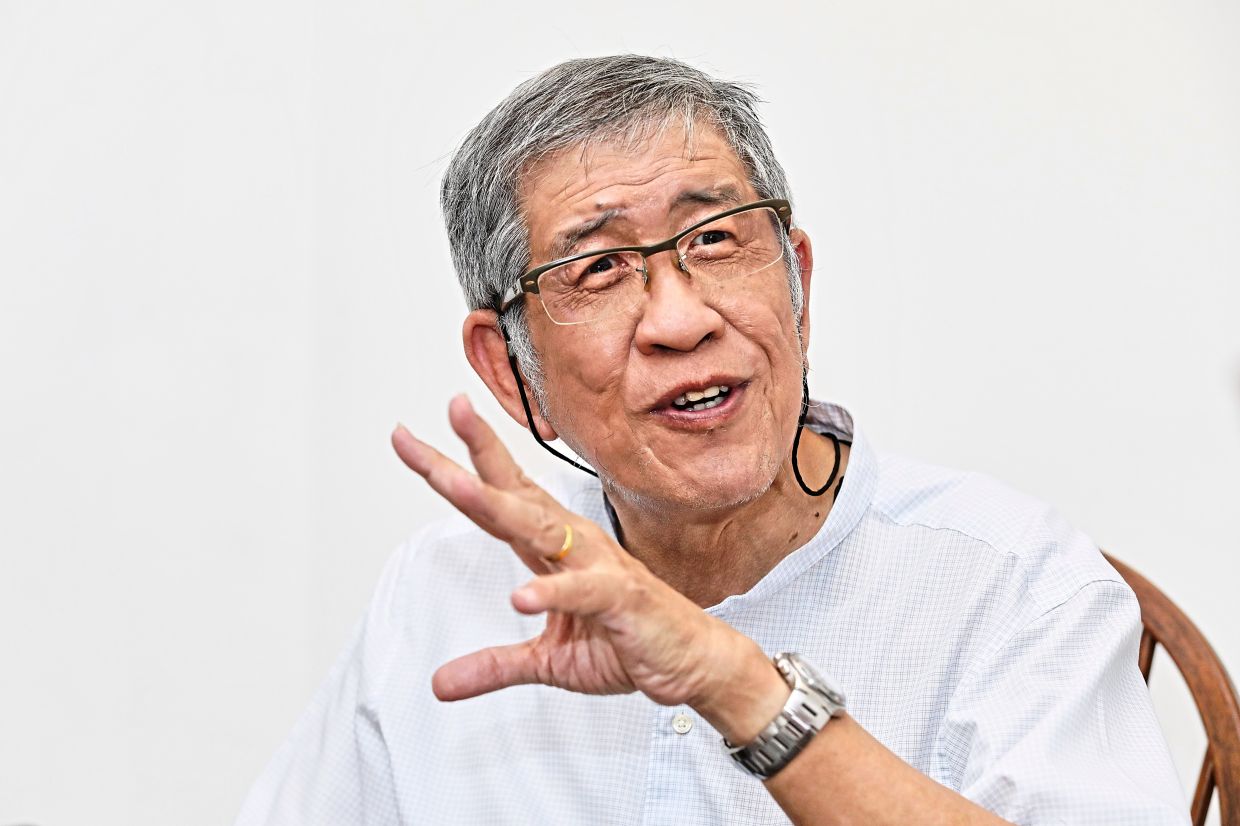
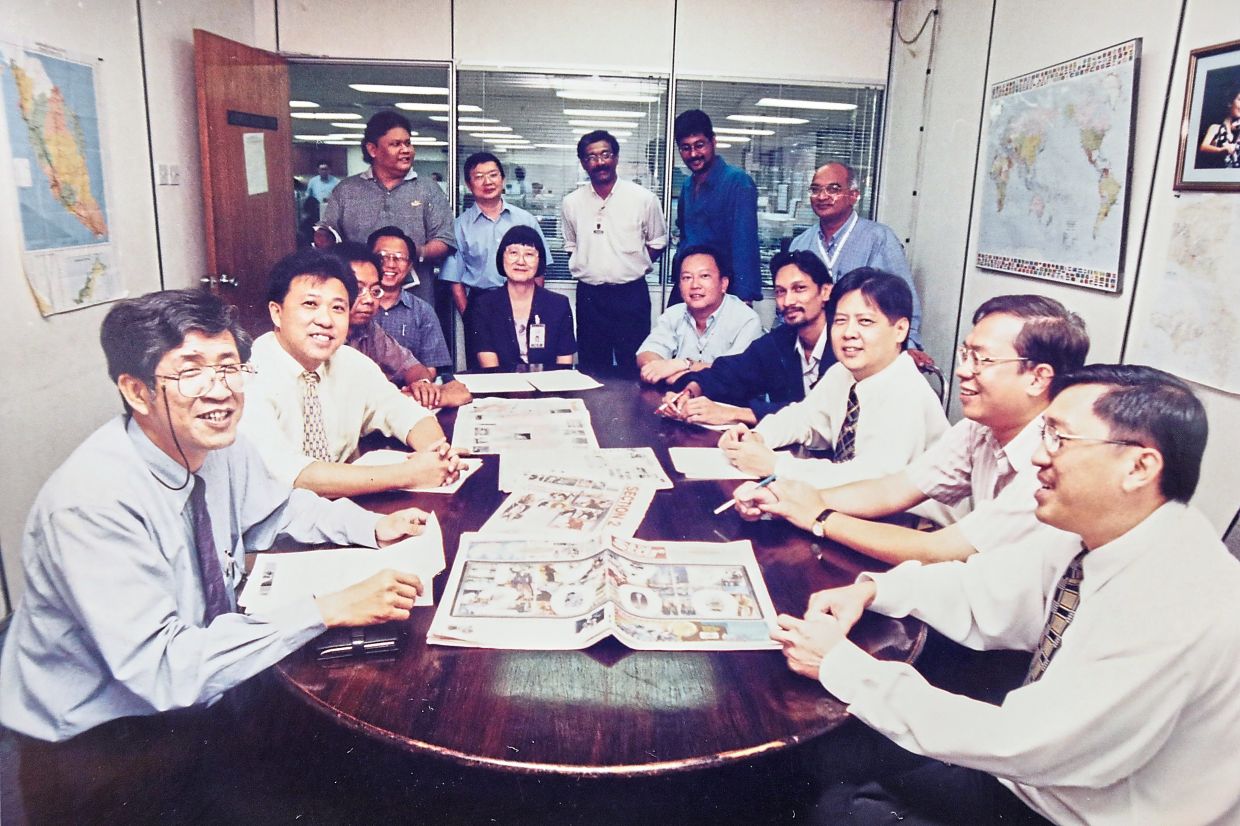
By 2000, however, SMG was conducting formal training courses for rookies.
Aeria reveals that this came about accidentally.
“Two editors and I were reassigned duties because we had stepped on someone’s toes.
“While I took charge of the Sunday Star, the other two editors were sent for training at the Thomson Reuters Foundation Journalist Fellowship and a short work stint in Germany, respectively.
This structure was boosted by the 1993 launch of the Human Resources Development Fund. At the time, SMG had also become part of US-based global news group Newsplex, which trained media workers to produce content for online audiences. Aeria says that this marked the start of multimedia journalism training at the company.
He also points to local tertiary education institutions that had begun to offer journalism programmes.
“Eventually, new company seniors realised the need to train younger people.
“That’s how the BRATs programme came about,” he says, proudly holding up the first Star BRATs issue from 1993.
Through the annual year-long BRATs Young Journalist Programme that trained selected Malaysian youths aged 14-22 in journalism, photography, and video production, SMG drew in more young readers.
“Increasing readership and circulation were among the programme’s goals. Star went into all the colleges where we held meetings, sessions, and related activities,” he adds.
Aeria shares how SMG also learnt about engaging youth from its regional peers who were part of the Asia News Network, set up in 1999 to promote the coverage of Asian affairs by Asian journalists, for readers in Asia.
The people’s paper
Reflecting on his own young reporter days, Aeria ponders on the most important lesson he learned about fulfilling The Star’s role as “The people’s paper”, before and after it was shut down for 149 days from Oct 28, 1987, to March 25, 1988, during the Operasi Lalang era.
“A lot of credit for what SMG is today has to go to its second managing director and 1977-1983 editor-in-chief H’ng Hung Yong who built The Star in terms of journalism as well as by bringing in various people, such as sub-editors and staff from human resources and accounts, who were needed to form the structure of a strong news firm.
“He also pushed for Star to be ‘The people’s paper’. So for a lot of us, he was our hero,” explains Aeria.
He adds that, at the time, H’ng had been a special assistant to the fourth MCA president Tan Sri Lee San Choon. After having noticed that the main English-language newspaper of the day tended to report on the concerns of one race group, H’ng pushed for fairer coverage of events that impacted all Malaysians in The Star.
“Consequently, The Star became vocal on many issues, even ones that were being championed by opposition political parties.
“In filling this need by journalists as well as readers, The Star succeeded.
“And that foundation that we built was also carried through when SMG expanded,” points out Aeria.
“I think a lot of people sympathised with The Star when it was closed down. And when the paper returned to print (on March 26, 1988), a lot of people continued to support it.
“But The Star had to change.
“Because there was no way we could have continued like before,” he says soberly.
A tech pioneer
Aeria attributes The Star’s growth to the foresight of company leaders who knew that they had to rebuild on readers’ interests such as higher education, in tandem with the many colleges that were being set up with government support.
“Star saw this as a business opportunity; you had providers wanting to advertise and parents who placed importance on their kids’ education.”
He also credits SMG’s foray into new tech with its further success.
“In the old days, we had to make [printing] plates that the office boy on a motorbike had to deliver to the airport, to be flown to Penang for printing [the Penang or northern edition].
“Now, you can transmit content across online,” Aeria describes, laughing at the memory of lending his motorcycle to office boys whose bikes were often busted.
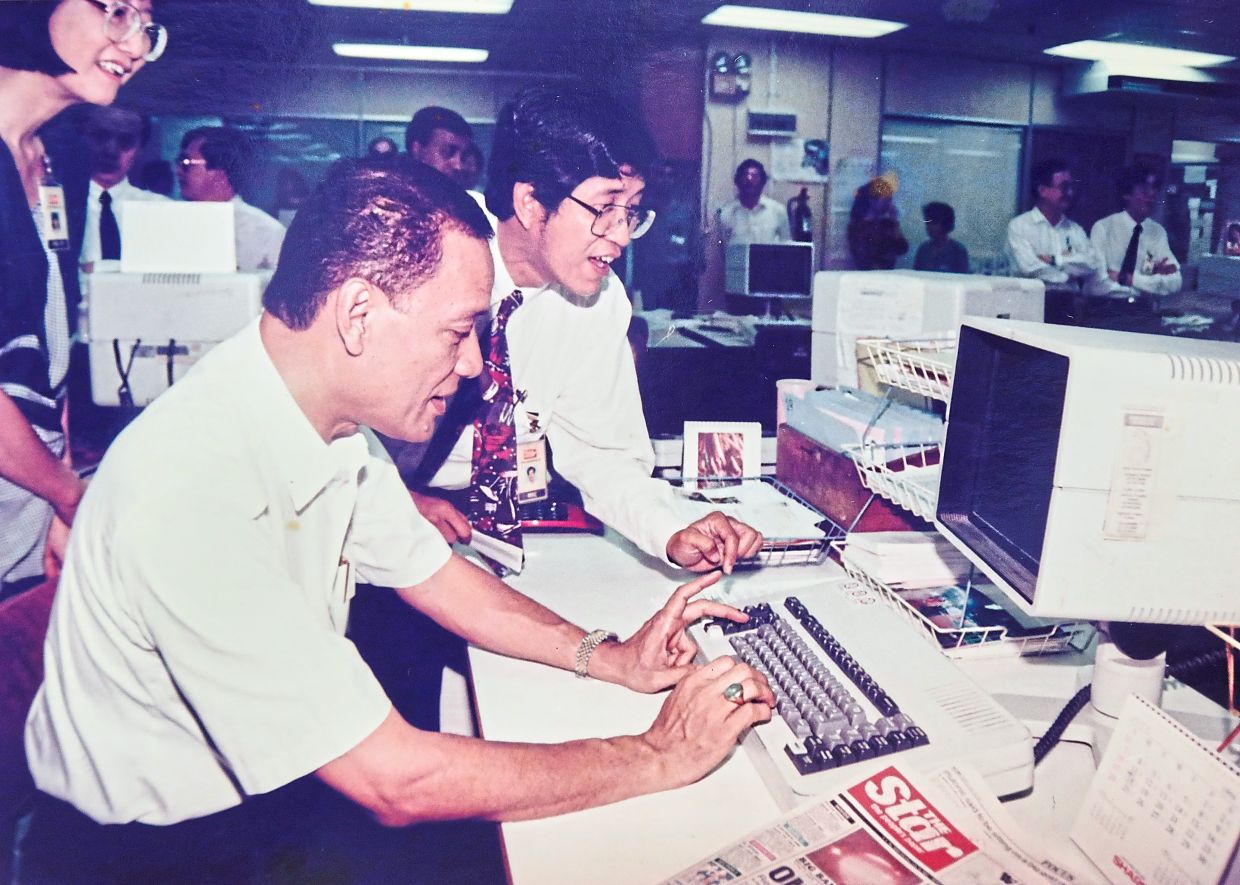
SMG’s then general manager Koh Beng Huat, who was always on the lookout for ways to modernise the production line, encouraged SMG to invest in its first computers that cost RM40,000 each. Buy-in came swiftly from reporters who had to previously type four carbon copies of each article on a typewriter, says Aeria.
To his excitement, his boss, the late 1992-2003 GCE Datuk Ng Poh Tip, left tech development to him and gave tech-savvy editors room to experiment.
“Many of us had been working and learning together for 20 years. We had a spirit of adventure and were dying to try new things,” he recalls, crediting his colleagues like then associate editor Davin Arul, senior product manager Gilbert Yap, and chief sub-editor Jaswant Singh with the multimedia developments in the company.
“The Star’s success has always been about teamwork. It’s like football where everybody seems to know their place and how to excel.”
Aeria believes another part of SMG’s success is the company’s can-do spirit in pulling off big projects and generating income while promoting The Star brand through related events, citing the example of 1986-2007 chief executive officer Datuk Steven Tan, who brought in the My Fair Lady musical and Manchester United Football Club.
Still, local community news is what matters to him most when he contemplates the media’s future.
“Even back then, some editors and I considered front-paging local community stories and increasing our coverage of bread-and-butter issues instead of national news,” he says.
“I’m sure if you tell people where to buy the cheapest fish, you’ll get more attention than when reporting on what a minister said.
“At the end of the day, it’s the content that counts.”