
FOR the first time, scientists are actively tracking monarch butterflies across much of North America, following individual insects from Ontario to their overwintering colonies in central Mexico.
The breakthrough could offer vital insights into the life cycles of hundreds of flying insects, many in steep decline.
“It’s incredible,” said Cheryl Schultz, a butterfly scientist at Washington State University. “Now we will have answers that could help us turn the tide for these bugs.”
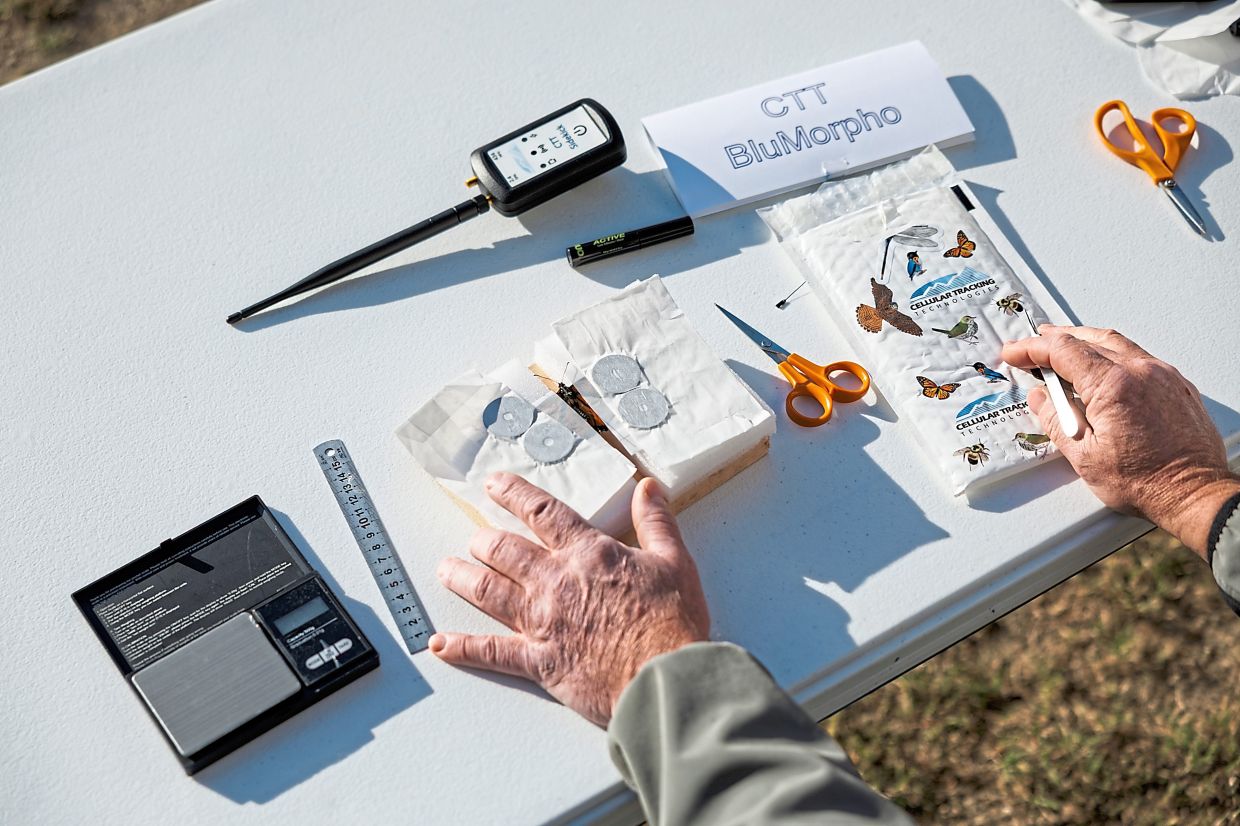
The key is a tiny solar-powered radio tag, weighing just 60mg – equivalent to a half-raisin carrying three grains of rice – that sells for US$200.
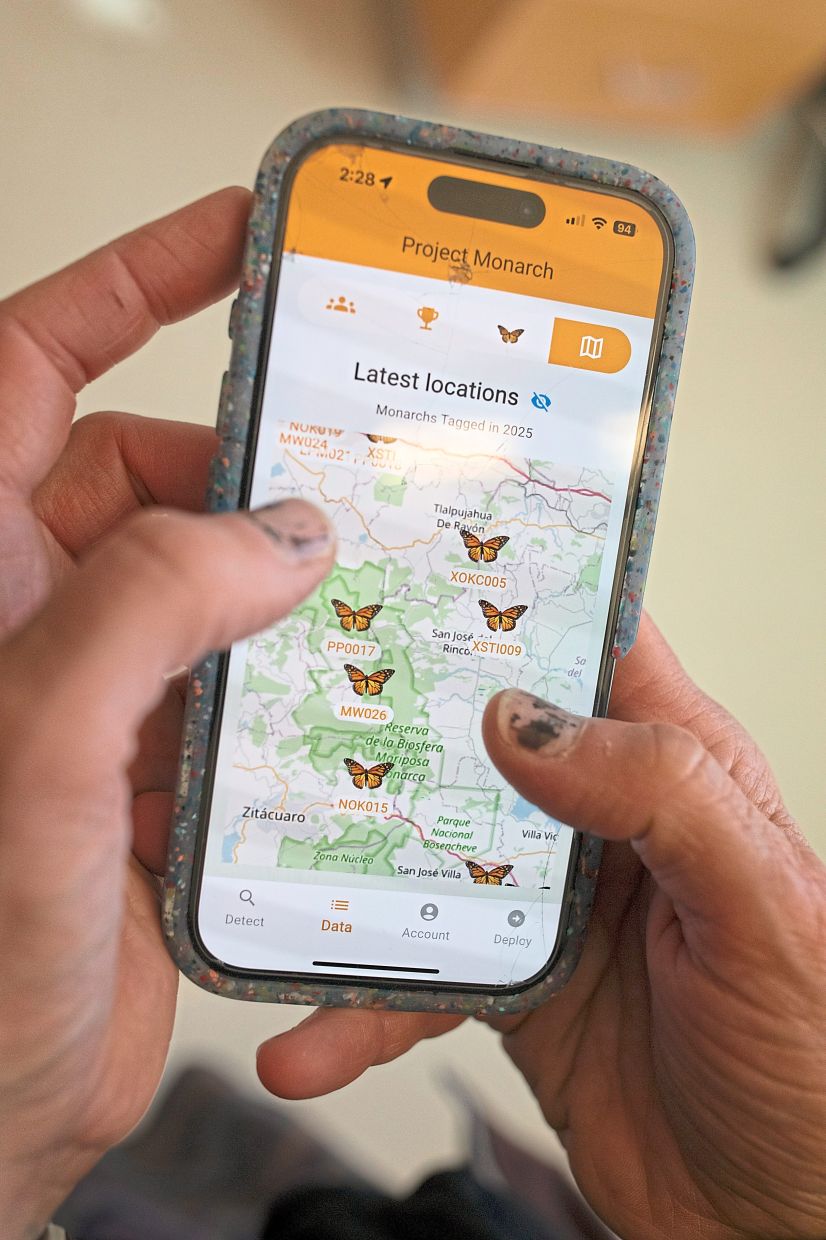
Researchers have tagged more than 400 monarchs this year and are following them via a cellphone app created by the New Jersey-based company that makes the devices.
The world’s most famous insect migration has long been cloaked in mystery.
Until now, tracking relied on sticker tags, which yield only a butterfly’s physical characteristics and where it was tagged, with fewer than one percent recovered in Mexico.

“Now that those pages are being filled in, the story of the migration is even more dramatic than expected,” said Orley “Chip” Taylor, a University of Kansas professor emeritus.
“Many monarchs are blown far off course but use their strong wings and remarkable navigational skills to get back on track.”
Monarchs rely on two sophisticated systems. They orient themselves by the sun and, when clouds intervene, switch to a backup compass using ultraviolet light and the Earth’s magnetic field.
Even so, no more than one in four survives the journey, threatened by winds, predators, vehicles and exhaustion.
Those that reach Mexico join a kaleidoscopic spectacle, roosting so densely on fir trees that branches bend under their weight.
Thousands hike up mountains each year to witness it, but the multi-generational migration is under growing stress.
Winter colonies once numbered in the hundreds of millions. Last year, the count was roughly 38 million.The West Coast population is even more vulnerable, with fewer than 10,000 seen in California.
Experts blame climate change, deforestation, pests and the loss of milkweed host plants in Midwestern farm fields.
Tracking these journeys has a social impact too. Monarch enthusiasts can follow individual butterflies on the free Project Monarch Science app, sometimes discovering new winter hideaways.
The first field tests began on Sept 12 in Ontario, when Canadian researchers tagged 30 monarchs.
“We could see them bombing across Lake Erie and making landfall in places like Cleveland,” said Greg Mitchell of Environment and Climate Change Canada.
More than nine weeks later, one monarch, LPM021, had flown far beyond the known colonies and was last detected 700km from Guatemala.
Soon, over 400 tags were distributed across the eastern United States and southern Canada, creating a live map of butterfly tracks and sparking a flurry of speculation among entomologists about which butterfly would reach the Mexican reserve first.
In the end, JMU004 won the metaphorical gold medal, detected on Nov 9 at 10.35am at the El Rosario colony, just hours before another tagged monarch arrived from Kansas.
Tagged by Leone Brown of James Madison University, JMU004’s journey delighted her seven-year-old daughter.
While the entomologists joked about a “race”, they stress that the real purpose is understanding migration patterns and survival.
“It’s not about winners and losers,” said Brown. “It’s about staying in the game.” — ©2025 The New York Times Company
This article originally appeared in The New York Times
Already a subscriber? Log in
Get 20% OFF The Star Digital Access
Cancel anytime. Ad-free. Unlimited access with perks.