
SABRI Kadib Alban needed seven tries to cross from Turkiye to Greece after fleeing Syria, and five more to reach Italy. He lost 13kg.
After six months, he arrived in Germany, drawn by the promise of good schools for his children, landing in the small western town of Daun.
Bashar Amin, also from Syria, first went west but later moved east to Leipzig, near the Polish border.
There, he faced a harder life than he had anticipated.
Over a decade, both men have discovered a stubborn fact: 35 years after reunification, economic opportunity in Germany is still heavily shaped by geography.
This inequality, long affecting native Germans, also shapes immigrant outcomes.
Since 2015, when Angela Merkel encouraged asylum-seekers from Syria to come, more than a million refugees have arrived.
Some followed friends or family; others were placed by the government across the country based on population and tax revenue.
Those who landed in the former West Germany have generally done better than those in the East.
Kadib Alban, in Daun, found a community where jobs were plentiful and locals were welcoming.
His family gradually settled in, his children finished school, and they speak fluent German.
“I was born a second time in Daun,” he said, holding back tears on a break from his work at a senior centre. “Walking the streets, I greet people, and they greet me back. This is my hometown.”
In Leipzig, Amin struggled with German, finding work was harder, and public hostility was more common.
“In the beginning it was easier; people were a bit more open,” he said. “But now it has become more difficult or more closed.”
Unemployment in Saxony, where Leipzig sits, remains about 1.5% points higher than in Rhineland-Palatinate, where Daun is.
Research shows that refugees in the East face fewer job opportunities, lower pay and more local opposition, including support for the anti-immigrant AfD.
Anecdotal evidence suggests newer arrivals, like Serhii Pashchenko and his family from Ukraine, encounter similar divides.
In Leipzig, Pashchenko struggles to learn German, which he must do before applying to a work-training programme, and relies on public support.
Overall, refugees who arrived in Germany a decade ago now work at nearly the same rate as native-born Germans, including self-employment.
They also appear to fare better than refugees in most other European countries, according to Herbert Brucker, head of migration research centres at Humboldt University Berlin and the Institute for Employment Research in Nuremberg.
“But there is still a substantial distinction between the former East and West, and between the experiences of refugees in each region,” Brucker said.
Federal spending has tried to close the gap, but the East remains poorer.
“Sending people to a less prosperous, rural part of eastern Germany will naturally create problems,” Brucker added.
By contrast, Daun struggles to find enough workers, even with new migrants, said mayor Thomas Scheppe.
“Jobs are not a source of conflict here,” he said.
Kadib Alban retrained in elder care after arriving. Once an assistant to an anaesthesiologist in Syria, he learned German and has worked in a residential senior centre since 2015.
His family, Kurdish Muslims, were among the first refugees in the town.
The transition was not easy. His youngest daughter, Jian, 20, was bullied in school. His older daughter, Joudi, 27, had to repeat grades.
Yet some locals smoothed their integration, offering help and friendship.
Volunteers at Daun’s Cafe Asyl teach German and help refugees navigate bureaucracy.
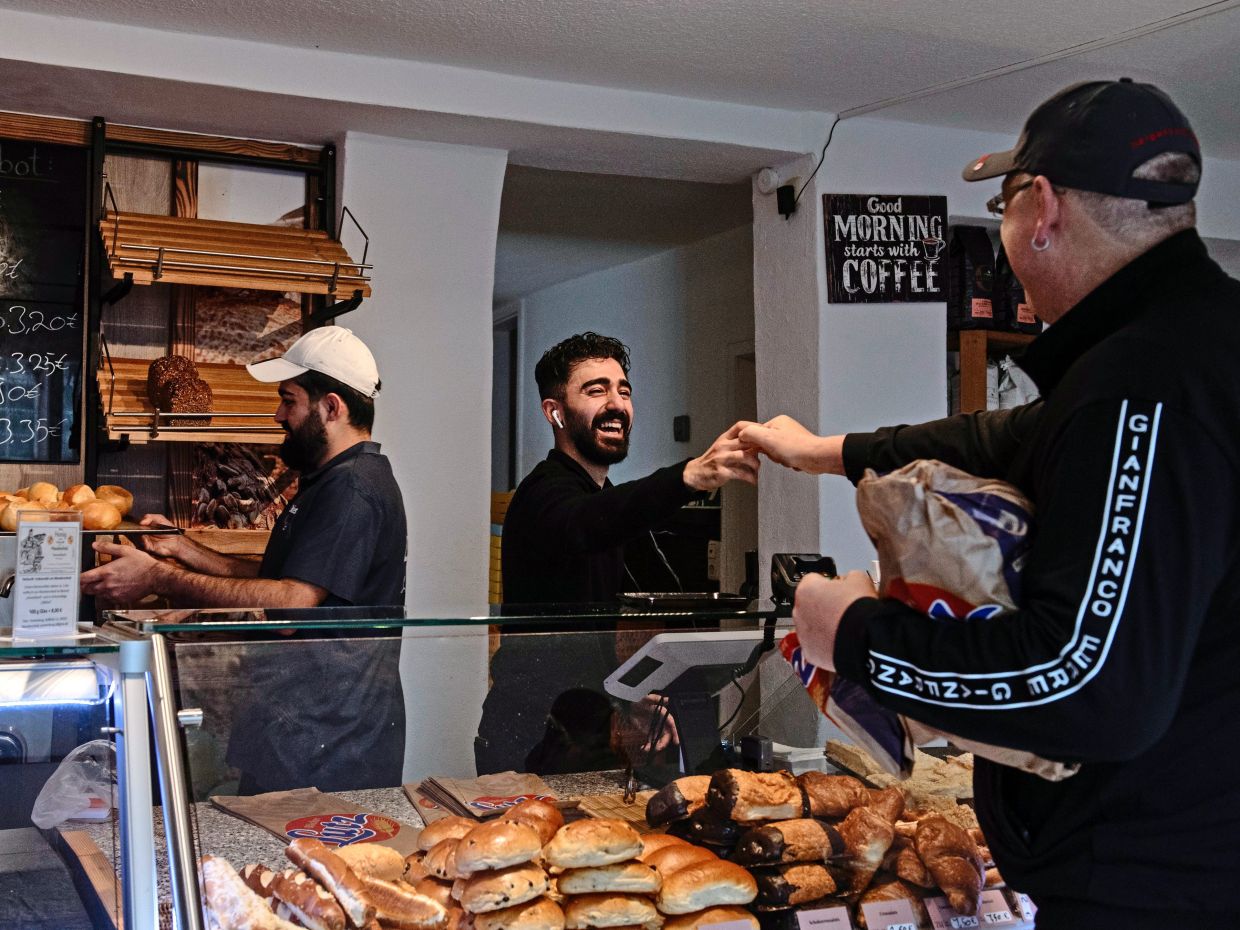
In nearby Manderscheid, Kurdish refugees opened the town’s only bakery and a restaurant, becoming an integral part of the community and sparing their neighbours a 15-minute drive to buy bread.
Mihan Hasan arrived with her four children in 2016 to join her husband.
On a recent morning at the bakery, she and her eldest son, Jakar, 23, greeted locals and tourists alike.
“We know a lot of people here,” she said. “If we had been anywhere else, none of this would have been possible.”
The decade-long experience of Kadib Alban, Amin, and others highlights a persistent divide in Germany. Geography still shapes opportunity, shaping not just the lives of native Germans, but the futures of the country’s newest arrivals. — ©2025 The New York Times Company
This article originally appeared in The New York Times
Already a subscriber? Log in
Get 20% OFF The Star Digital Access
Cancel anytime. Ad-free. Unlimited access with perks.