



ALBANIA’s coast is being hit by a double whammy of climate change and chaotic tourist development.
From Velipoja in the north where the waves are swallowing a century-old forest, to the tourist hotspot of Golem where galloping construction of hotels and restaurants is accelerating erosion, the country’s often spectacular Adriatic coast is under threat.
“Out of Albania’s 273km of coastline, some 154km are affected by erosion,” said urban planning specialist Besjana Shehu.
Tourism in the Balkan nation is booming, from 5.1 million visitors in 2018 to 10.1 million in 2023. But new hotels, restaurants and beach bars are also taking their toll on nature.
Rising sea level due to climate change is further complicating the situation.
In Velipoja, a protected area close to the border with Montenegro, the sea is advancing more than 5m a year.
It has already eaten 210m into the coastal forest, threatening an entire ecosystem that cannot live in salt water.
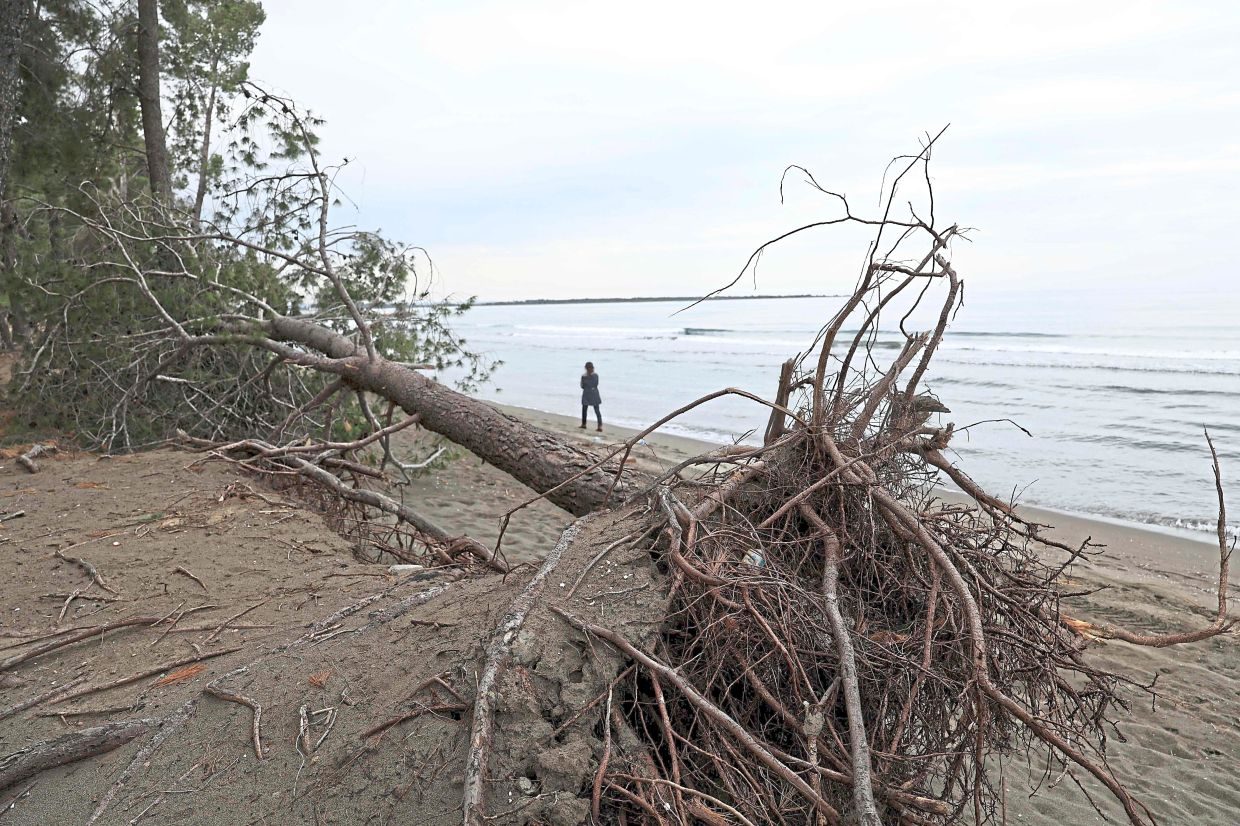
Dozens of pine trunks lie strewn on the sand, many uprooted by violent storms recently.
“Velipoja Park is shrinking,” warned Agim Dardha, head of the protected areas agency for the Shkodra region.
“In the past 10 years alone it has lost more than 30ha,” he said.
Franz Jozeph island at the mouth of the nearby Buna River still figures on the maps and tourist guides.
But it actually vanished in 2012 after being swallowed by the sea.
Named by Austrian cartographers in 1870 after Emperor Franz Joseph I, the island was made up of rich alluvial soil.
Located only 150m from the coast, its 19.5ha were covered with trees and wild vegetation.
“A paradise for many species of seabirds, a haven of peace for us too ... it is totally gone,” lamented Lule Coli, who runs a small beach bar nearby.
But the construction of dams and hydroelectric power plants in the area hastened its death, said Ervis Krymi, geography professor at the Shkodra University.
In Kune, a few kilometres further south, locals are also worried.
There are more big storms every year and the shore now looks like a tree graveyard.
“As a result of climate change in recent years, the sea has become very aggressive, advancing towards the land at a frantic pace that exceeds all forecasts,” said Jak Gjini, an environment expert.
In some areas it is pushing 20m inland every year, he added.
Communist-era bunkers built along the coast in the 1970s have disappeared under the waves.
But the storms also took small seaside bars run by locals. The force of the sea was so strong the sandbag barriers they put up were useless.
“There used to be two bunkers here. Now they’re submerged,” said Vera Faslliaj, who runs a small restaurant called Poseidon, named after the Greek god of the sea.
“The sea is coming and will take everything ... In four or five years there won’t be anything left here,” she added.
Albanian authorities say that rising sea levels pose severe flood risks to many of the country’s urban areas.
By the end of the decade, more than a third of coastal areas will suffer direct consequences of flooding, according to the national civil protection agency.
In Golem, just south of the resort city of Durres, hotel owners are worried about the authorities’ seeming indifference to finding solutions and curbing uncontrolled building along the coast.
“The sea cannot wait for the authorities to wake up,” hotel administrator Edvin Dule said.
Around 70m of Golem’s beach has been lost in the past 16 years.
Hotels springing up like mushrooms have further exacerbated the erosion and are shrinking the beaches on which they depend to attract tourists, locals say.
“It’s a very worrying phenomenon that directly impacts the economy and tourism,” Dule said.
“If we cannot offer what tourists expect – umbrellas, deckchairs and activities on the sand – we reduce the quality of what we offer, which will translate into lower visitor numbers.” — AFP
