




WHEN Dan Grebow returned to Altadena, California, to sift through the ashes of his family’s home, he was determined to rebuild.
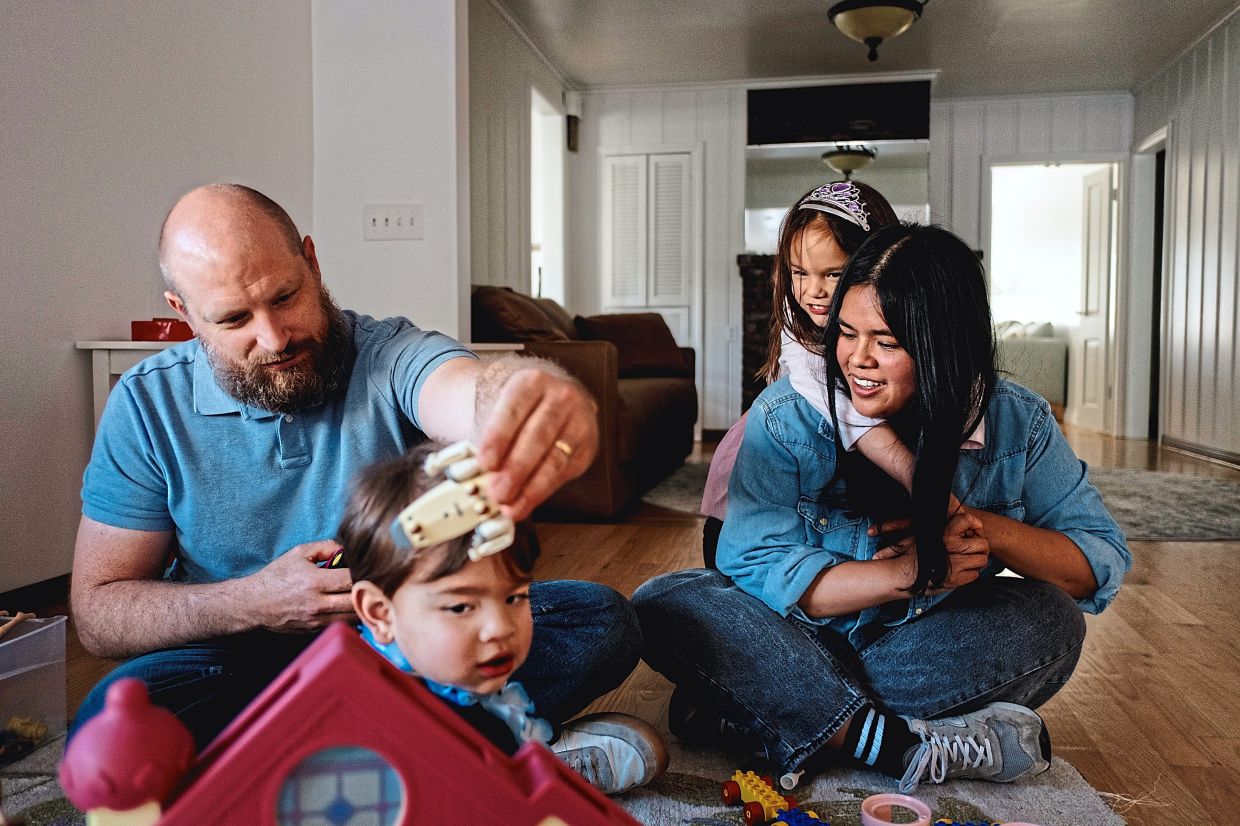
It had been his home for 15 years, a place where he and his wife Carmina had raised three children.
But as he navigated the maze of insurance claims, mortgage payments, and temporary housing, the enormity of the task began to weigh heavily on him.
“How long would it take to rebuild? How much would it cost? Would the house be insurable in the future? Would it be safe?” Grebow recalls wondering as he considered the daunting questions ahead.
He wasn’t alone. Across Altadena, where thousands of homes were destroyed by the January Eaton fire, residents are facing a difficult decision: stay and rebuild or leave for good.
Their choices will shape the future of a neighbourhood long cherished as an emblem of middle-class prosperity nestled in the foothills of the San Gabriel Mountains.
By early March, more than 60 burnt properties in Altadena had been listed for sale, according to local real estate agent Jim Tripodes.
Of these, nine have sold, and 17 are currently in escrow. Prices range from US$520,000 to US$790,000.
Many homeowners, however, are finding that their insurance won’t cover the full cost of rebuilding, particularly in a market where building materials and labour are in high demand.
After weeks of living in temporary housing, the challenge of rebuilding is proving overwhelming for some. For others, selling up and moving on seems like the easier option.
“The list of things we were concerned about with rebuilding just seemed to grow,” said Grebow. “There’s a lot more uncertainty in the numbers for rebuilding.”
The prospect of long-time residents leaving Altadena has sparked alarm among community members, who fear an exodus could open the door for developers to reshape the area, erasing the local character.
Once home to middle-class Black families who established strong neighbourhood bonds, Altadena is known for its eclectic mix of Craftsman houses and midcentury modern homes, as well as its small-town feel.
Now, that very character is at risk.
As residents wrestle with rebuilding, text messages started circulating, offering all-cash payments for their land.
Real estate agents have been inundated with inquiries about inexpensive property.
In response, a movement known as “Altadena Not For Sale” has emerged in the wake of the fire.
Members have planted yard signs across the area, urging homeowners to hold on to their land and resist offers to sell.
In February, a group of activists gathered on a street corner in Altadena with signs declaring, “Altadena Not For Sale!” as passing cars honked in support.
“It represents the idea that we’re not moving, we’re not selling, that we’re strong as a community,” said Melissa Michelson, an activist and organiser of the movement.
The Altadena Not For Sale group has also been providing guidance to uninsured and under-insured residents, encouraging them not to sell their land under pressure.
“Everybody’s in a different position,” Michelson added. “There’s no way we could just glibly say, ‘Don’t sell, stay here.’”
Altadena is not alone in facing these questions.
After the Palisades fire, which destroyed over 6,800 structures, residents of nearby Pacific Palisades expressed concerns that affluent buyers would snap up prime real estate, turning the area into a playground for the ultra-rich.
Similarly, in Hawaii, residents of Lahaina feared that their town would be sold to developers following the devastating 2023 fire.
Even Santa Rosa, California, which lost over 3,000 homes in a 2017 blaze, faced similar dilemmas over rebuilding.
“The biggest concern up front is the concern of the unknown,” said Gabe Osburn, director of planning and economic development in Santa Rosa. “You just don’t know how it’s going to come back.”
Zoning regulations in Santa Rosa eventually ensured that rebuilding preserved the character of the community, with residents forming an even tighter-knit group.
For some homeowners, rebuilding no longer makes sense.
Real estate agent Brock Harris, who has five properties in escrow or listed in Altadena, said many homeowners are now opting to sell.
“Spending the next three to five years rebuilding just isn’t in the cards for them,” Harris said.
For Grebow, the decision to sell was agonising. After much deliberation, he and Carmina listed their home in mid-February. They wept together when the listing went live.
In just a few days, the house attracted three offers, one of which was nearly US$30,000 above the asking price.
Grebow and his wife saw this as their chance to start fresh, with the hope of buying a new home nearby so their eldest child wouldn’t have to change schools.
However, their hopes were dashed when their agent called to inform them that the buyer had pulled out.
The house was back on the market, but now, the offers were US$100,000 less than before.
Grebow and his wife are uncertain about their next move.
“We saw this window that maybe we could get as close to being back to where we were as possible,” Grebow said.
“Now, I feel like that window has closed.” — ©2025 The New York Times Company
This article originally appeared in The New York Times
Already a subscriber? Log in
Get 20% OFF The Star Digital Access
Cancel anytime. Ad-free. Unlimited access with perks.
