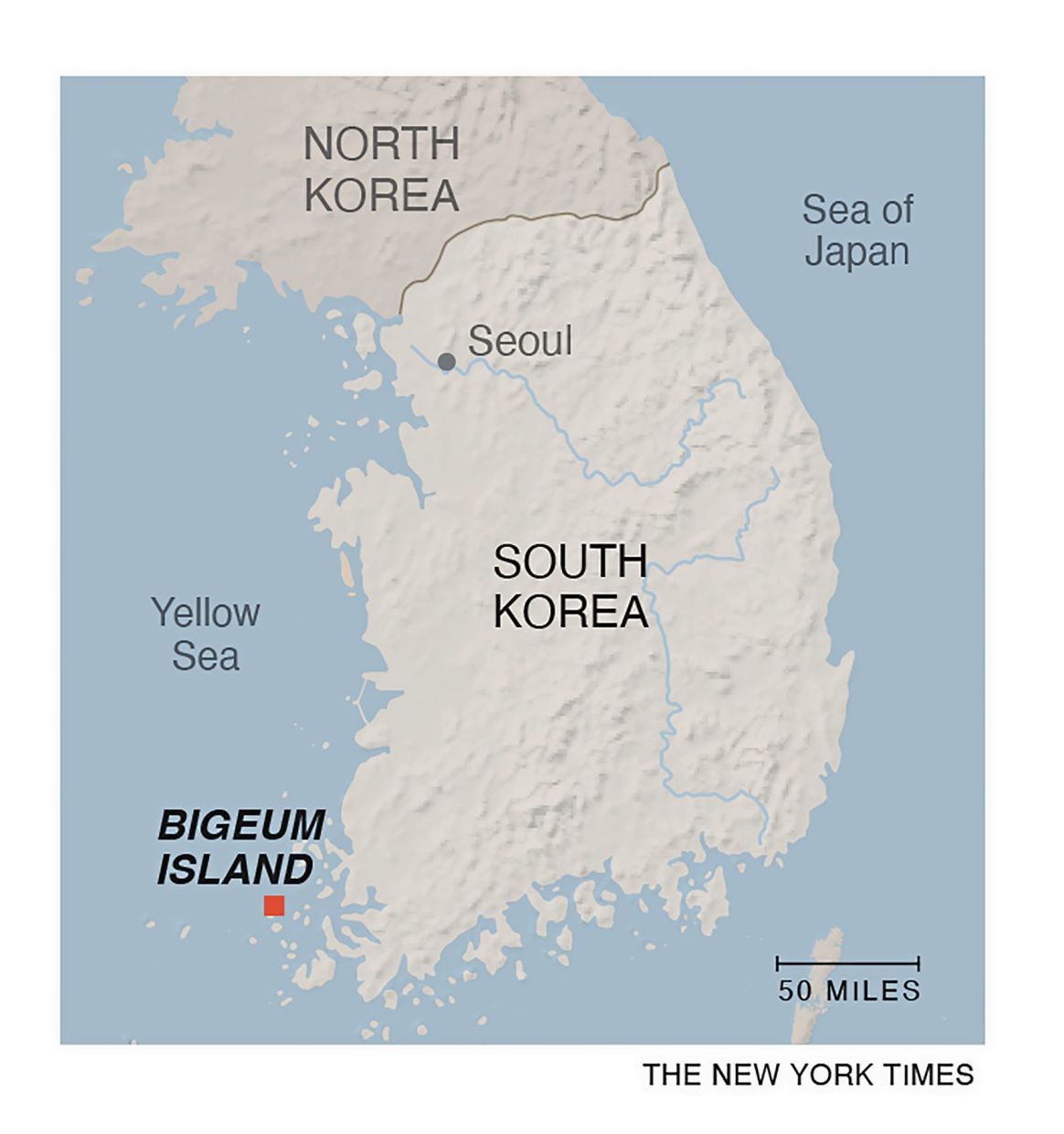
THE French whaling ship Narwhal braved the Atlantic, rounded the howling tip of Cape Horn, and threaded the Pacific by way of Tahiti and Honolulu. Then, in 1851, a year after it began its voyage, the sea turned.
The ship splintered off Korea’s southwestern coast, drowning one crew member.
When the 29 surviving sailors staggered onto a powdery beach hemmed in by jagged rocks on Bigeum Island, they had every reason to fear.
Sailors at the time swapped grim rumours of cannibalism in uncharted territories, and Korea, then known as the “Hermit Kingdom”, offered no comfort.
It turned away foreign trade ships and had recently beheaded French Catholic missionaries.
Nine of the Narwhal survivors gambled on a small whaleboat and rowed to Shanghai. There, the French consul mobilised an armed rescue expedition and set sail for Bigeum Island.
Then came a twist.
Instead of a massacre, the encounter ended in what the consul called a repas pittoresque, a picturesque meal.
Korean islanders welcomed the foreigners with makgeolli, a milky, lightly sweet rice wine. The French shared champagne, marking the first time in recorded history that Koreans tasted French bubbly.
As the consul later reminisced: “Rarely have I seen men drink as Koreans do.”
Fast-forward 175 years to June 13,
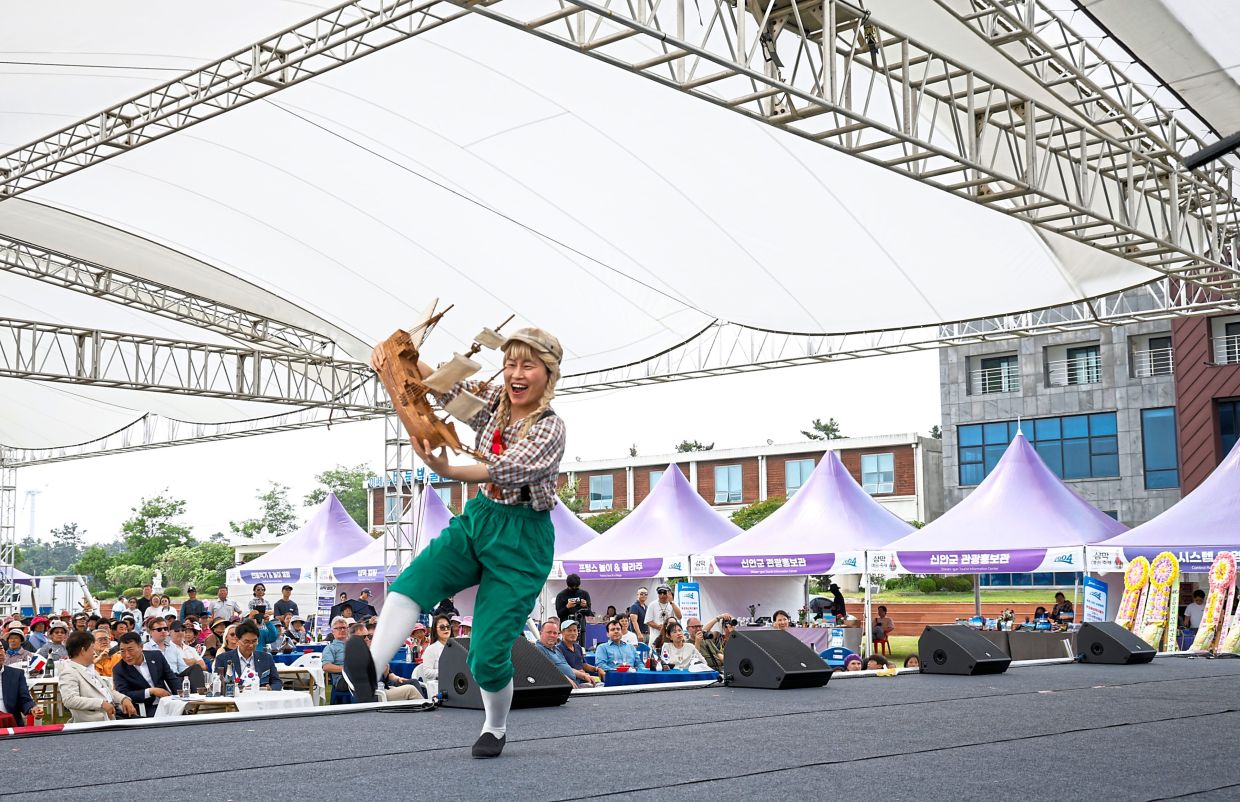
when Bigeum hosted its third annual Champagne-Makgeolli Festival.
Hundreds of locals and mostly European expatriates gathered on a lawn.
If the islanders of 1851 met the outsiders with curiosity and fear, their descendants welcomed them with open arms.
Tables were crowded with earthenware makgeolli jugs and bottles of French sparkling wine, not all of them champagne.
Watching the celebration with a mix of pride and disbelief was Noh Myong-jin, a local salt farmer.
“Our small island is finally getting recognition,” Noh, 66, mused, “all thanks to what our ancestors did for those French sailors.”
South Korea today is worlds apart from its 19th‑century self.
The land where French missionaries were once executed and a nation that barred Westerners now thrives as a global trading power.
Yet amid this dazzling transformation, rural areas like Bigeum, which is part of Shinan county in South Jeolla province, face an existential crisis: depopulation.
The waters off Shinan remain as beautiful and treacherous as when the Narwhal arrived.
Hundreds of islands shift like mountain ranges in the fog.
Ferries carve white trails between them, and when the tide recedes, vast wetlands emerge – a haven for marine life, but a deathtrap for untrained sailors.
For centuries, crabs, clams, octopuses and sea salt sustained Shinan’s economy. But decades of urban migration and falling birthrates have hollowed it into a rural backwater.
When Noh was a child, Bigeum had five bustling primary schools. Today, only two remain and are largely empty.
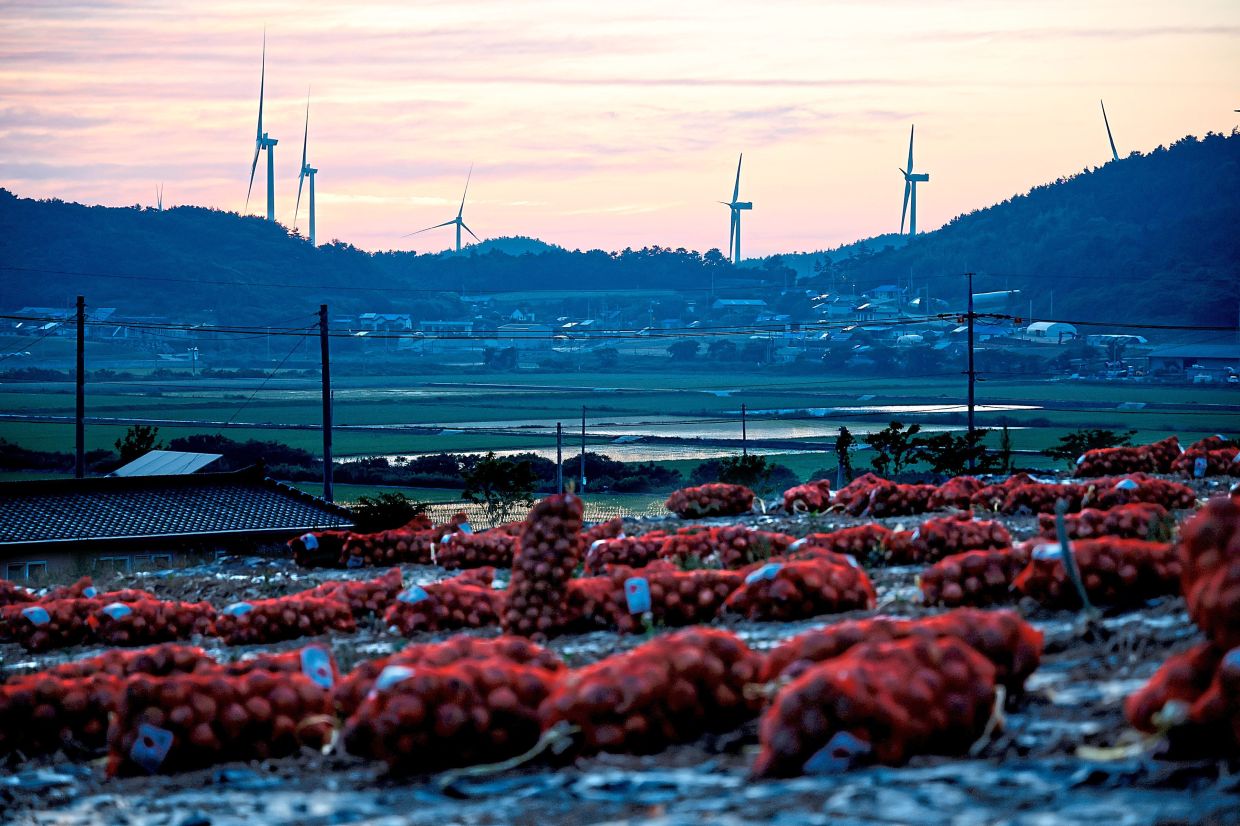
Villages appear deserted, save for elderly residents in mobility carts and South-East Asian migrant workers tending to onions and spinach farms.
Salt farms, once the lifeblood of Shinan, now lack labour, with many converted into solar energy fields.
The region last made national headlines when its salt farms were exposed for slavelike labour practices – a scandal that cemented its reputation as a place few choose to visit or call home.
“We won’t have any children here without foreign brides like me,” said Alma Barbarona, who is from the Philippines and married a Shinan salt farmer in 2003.
In response, Shinan turned to history and art to reinvent itself, starting the Champagne‑Makgeolli Festival and inviting international artists to transform its islands into an “art archipelago”.
“You can only go so far with onions and spinach,” said Kang Hyoung-kee, architect of the festival and chair of Shinan’s Arts Island Foundation.
“We want Shinan to be a destination offering experiences Seoul and other big cities cannot.”
Shinan islands host works by Icelandic-Danish artist Olafur Eliasson, British sculptor Antony Gormley and Swiss architect Mario Botta.
Last month, Japanese artist Yukinori Yanagi installed a piece in which ants tunnel through country flags made of coloured sand, carrying grains across borders.
“Borders are created by politics,” Yanagi said.
“But nature and ants know no borders.”
This theme reflects what happened on Bigeum in 1851.
The long-forgotten story resurfaced in recent years after Pierre-Emmanuel Roux, a history professor at Universite Paris Cite, found files on the episode in French government archives. His book about it followed a Korean comic book adaptation.
The story begins in 1850, when the Narwhal set sail from Le Havre.
When its shipwrecked crew washed ashore on Bigeum in April 1851, locals found their appearance startling.
“Their eyes had different colours, like blue and yellow,” royal Korean records noted, “and their hair was no different from sheep’s wool.”
Unable to communicate verbally, local officials relied on gestures and drawings to grasp the strangers’ wish to go home.
“They formed the shape of a boat with their hands, shaped a double mast with their fingers, and blew wind with their mouths,” the records said.
The Korean kingdom agreed to provide the castaways with a ship, housing them in huts until favourable winds returned.
Unaware of this plan, Charles de Montigny, the French consul in Shanghai, led an armed rescue party to Bigeum aboard a Chinese lorcha in May 1851 – making him the first known Western diplomat to set foot in Korea.
James MacDonald, an English merchant travelling with Montigny, described the islanders’ hospitality and curiosity in Shanghai’s North-China Herald.
“An entertainment was soon spread out for us in the open yard,” featuring high-quality veal, he wrote.
While servants kept the crowds back, women watched from behind nearby dykes. Whenever a stranger looked their way, MacDonald said, “down went their heads out of sight like ducks”.
Villagers soon traded tobacco and picked up French words like soleil and terre.
Montigny welcomed local officials aboard his ship with a three-gun salute.
“I plied them with various wines, champagne and spirits,” he wrote in a report to the French Foreign Ministry that Roux later unearthed.
The Koreans reciprocated, seating the 50-odd crew members from the Narwhal and the lorcha at small tables laden with food, while “attendants armed with jugs and cups darted about, pouring drinks”.
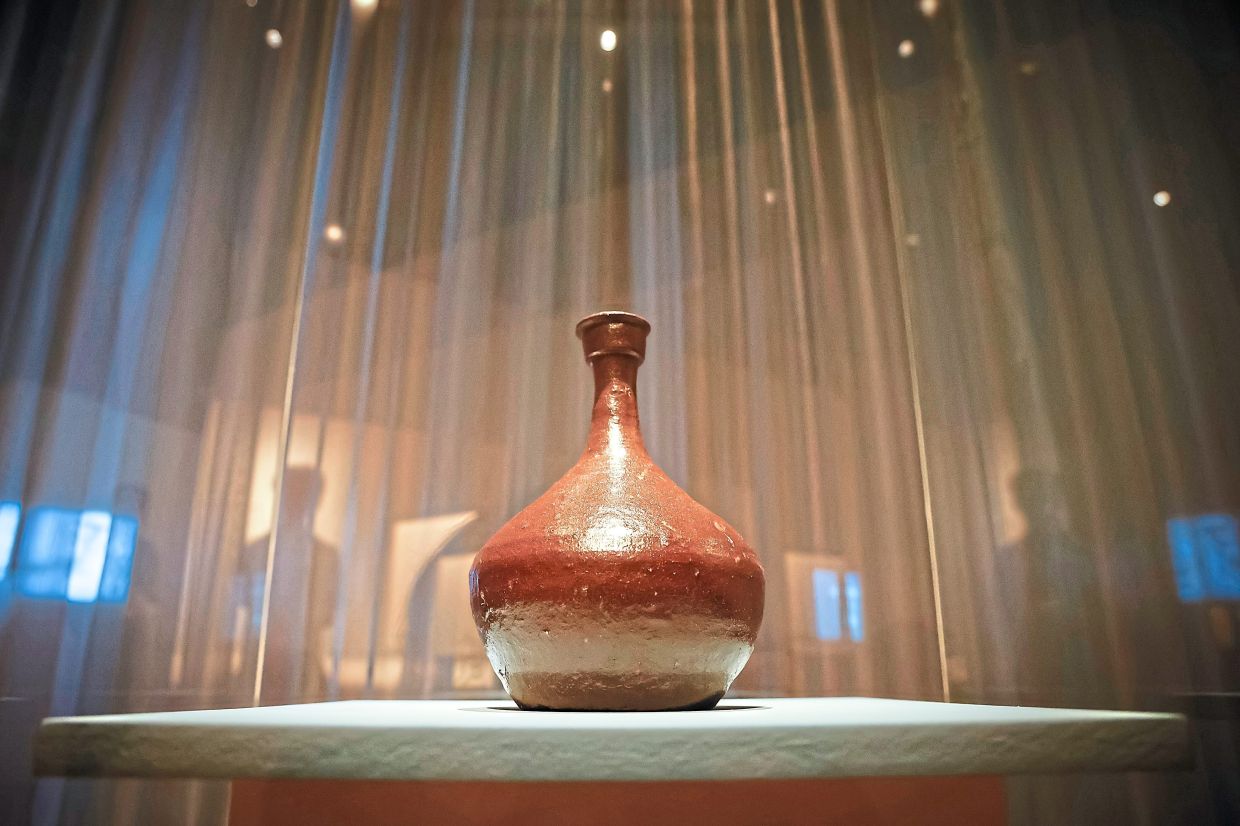
Supplies and gifts were exchanged before Montigny’s ship departed, carrying with it makgeolli jugs – rare relics from a place still unknown to the West. Three of those jugs remain in France’s National Ceramics Museum today.
Nineteenth-century Korean documents branded Westerners seeking trade or religious converts as “foreign barbarians”, yet the kingdom felt bound to care for shipwrecked Europeans, Roux said.
Francois Alonso, 32, a Frenchman who attended the Bigeum festival, said the episode still holds a lesson today.
“They didn’t know each other at the time, and still something good happened,” he said.
“Today we have so much information, and we are still fighting all the time.” — ©2026 The New York Times Company
This article originally appeared in The New York Times
Already a subscriber? Log in
Get 20% OFF The Star Digital Access
Cancel anytime. Ad-free. Unlimited access with perks.