
THIS is the month of Rajab, which in the Muslim calendar is one of the most auspicious of months, and is the precursor to the holy month of Ramadan which is barely a month and a half away.
Its relationship to Ramadan is demonstrated by a similar practice of fasting, but during Rajab it is intermittent fasting – to prepare for the spiritual climax in Ramadan.
The significance of Rajab lies not just in its proximity to Ramadan but also because it was in this month that the Holy Prophet made the journey from Mekah to Baitul Maqdis (Jerusalem) or to be precise the Al-Aqsa Mosque, and therein was taken up to the heavens in what is known as 'Isra' and Mi'raj' or the Night Journey. This day falls on the 27th of Rajab every year, which coincidentally falls on Jan 27 this year.
This year’s Rajab is obviously even more significant especially when we are witnessing events that have been happening in the Middle East, particularly in the holy land of Jerusalem and its environs, including Gaza.
The strip has been pummeled into total destruction while its people, particularly the women and children, have been killed in a massive slaughter by the Israeli forces; at the last count just before the ceasefire, an estimated 47,000 Palestinians have died.
While the situation has been dire in that region ever since the Nakba of 1948 (catastrophe of 1948) , the latest operation by the Zionist regime since October 2023 has been of utmost concern due to its devastating effect, rendering Gaza into heaps of concrete rubble.
How is Rajab with the commemoration of the Night Journey connected to the genocide that is going on in Occupied Palestine?
Since the Night Journey of the Prophet took place at the Al Aqsa Mosque as the focal point on Earth, and considering that Muslims all over the world celebrate this occasion by commemorating its spirituality, what is happening since 1967 in al-Aqsa and its surroundings must be given utmost attention.
By giving attention, we need to look into the spiritual importance of al-Aqsa in a very broad sense. It is a question of acceptance or faith for the Muslim with regards to the event itself. But beyond that Muslims should understand that the Night Journey took place in Palestine.
The Palestinian resistance launched its operation on Oct 7, 2023 and named it “Tufan al-Aqsa” meaning the al-Aqsa Flood, despite the operation being carried out from Gaza. This in itself demonstrates the level of attachment al-Aqsa has with the Palestinians.
The fact that Palestine remains under occupation and several smaller nakba, recur time and again with even the al-Aqsa mosque coming constantly under attack, more so over the past few years from militant fanatics from among the Israeli settlers, the future of Palestine looks very bleak indeed. The amount of suffering the Palestinians have been through and continue to go through is simply outrageous.
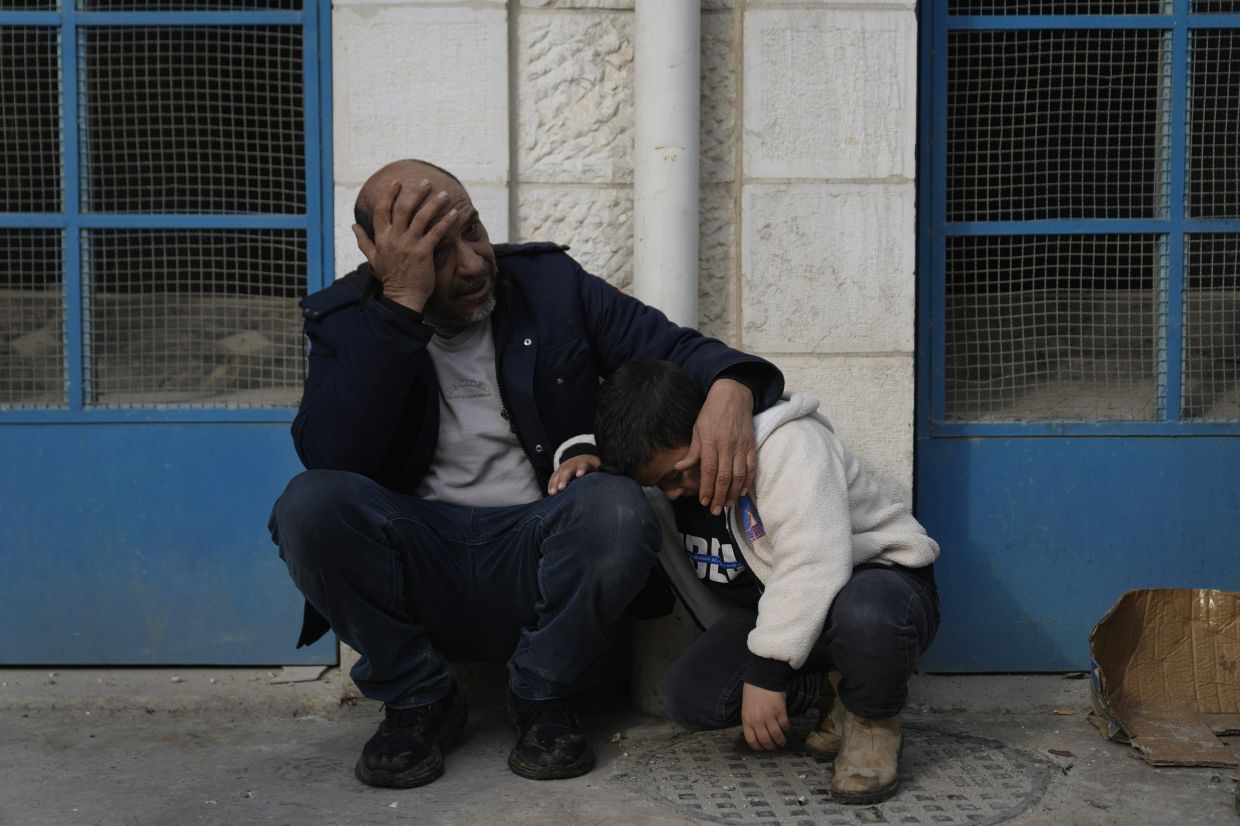
So, can Muslims remember the Night Journey by forgetting al-Aqsa and the occupation? Yes, the sad fact is Muslims seem to be detached from this aspect of the Night Journey. Currently talks are being organised about the event but they only narrate the manner in which it took place and its relationship to faith. Period. And this has been going on for years.
Against this backdrop, it is not difficult to understand why most Muslims show measured sympathy for the suffering Palestinians. True, they are angry at the ongoing atrocity but are the non-Muslims not reacting similarly?
Comparatively, I would say that the public in Western capitals are more responsive and consistent in their demands – that Israel to cease its attacks and for Palestine to be free – than practically every capital in the Muslim world.
In the United Kingdom for instance, protest marches are held regularly and attended by thousands. Way back during the early phase of Israel’s invasion of Gaza, only a few hundred turned up to demonstrate. Muslims seem to have developed a “they” and “us” attitude where they do not look at the Palestinian issue as the ummah's issue, but one only for the Palestinians.
Hence, given the circumstances, the only conclusion we can come up with is that there is not going to be any change; what happened 1,400 years ago in Palestine where sits the holy al-Aqsa mosque, and where the Night Journey took place will continue to be presented as always – an occasion of spirituality, an occasion of worship in the narrow sense.
Now, what is the cause of this malaise?
Year in and year out, the same old, sterile message on 'Isra' and Mi'raj' has been recycled for the faithful.
The Night Journey continues to be described as it happened then and emphasis is made only on the core teaching that should be gleaned from it – reinforcing one’s faith; instead of the significance of the Night Journey in the context of present-day Palestine.
Isn't it time to adjust to current ways of thinking?
Dr Abdul Latiff Mohd Ibrahim is Head of Research and Publications Division at the International Institute of Advanced Islamic Studies (IAIS) Malaysia. The views expressed here are solely the writer’s own.