



US president-elect Donald Trump has reignited controversial ambitions for American territorial expansion, openly declaring his interest in bringing both Greenland and the Panama Canal under US control.
With his characteristic bluntness, he has framed these ambitions as crucial to safeguarding American security and advancing commercial interests.
Unlike his previous, light-hearted remarks about Canada becoming America’s “51st state”, Trump’s recent statements come with a striking seriousness.
On Dec 22, while appointing a new ambassador to Denmark – which oversees Greenland’s defence and foreign affairs – Trump revived his 2019 proposal to purchase the massive Arctic landmass.
This time, he suggested that Denmark may soon face an offer it cannot refuse.
“For purposes of national security and freedom throughout the world,” Trump posted on social media, “the United States of America feels that the ownership and control of Greenland is an absolute necessity.”
Trump’s interest in Greenland stems from its strategic Arctic location and vast reserves of rare earth minerals critical for advanced technologies.
As climate change opens new Arctic shipping routes and geopolitical competition intensifies, Greenland’s significance has surged.
While the Danish government remained diplomatically silent, Greenland’s Prime Minister, Mute Egede, was unequivocal in his rejection.
“Greenland is ours. We are not for sale and will never be for sale,” he declared.
Greenland, an autonomous Danish territory with a population of just 56,000, has long aspired to economic independence but remains financially reliant on Denmark.
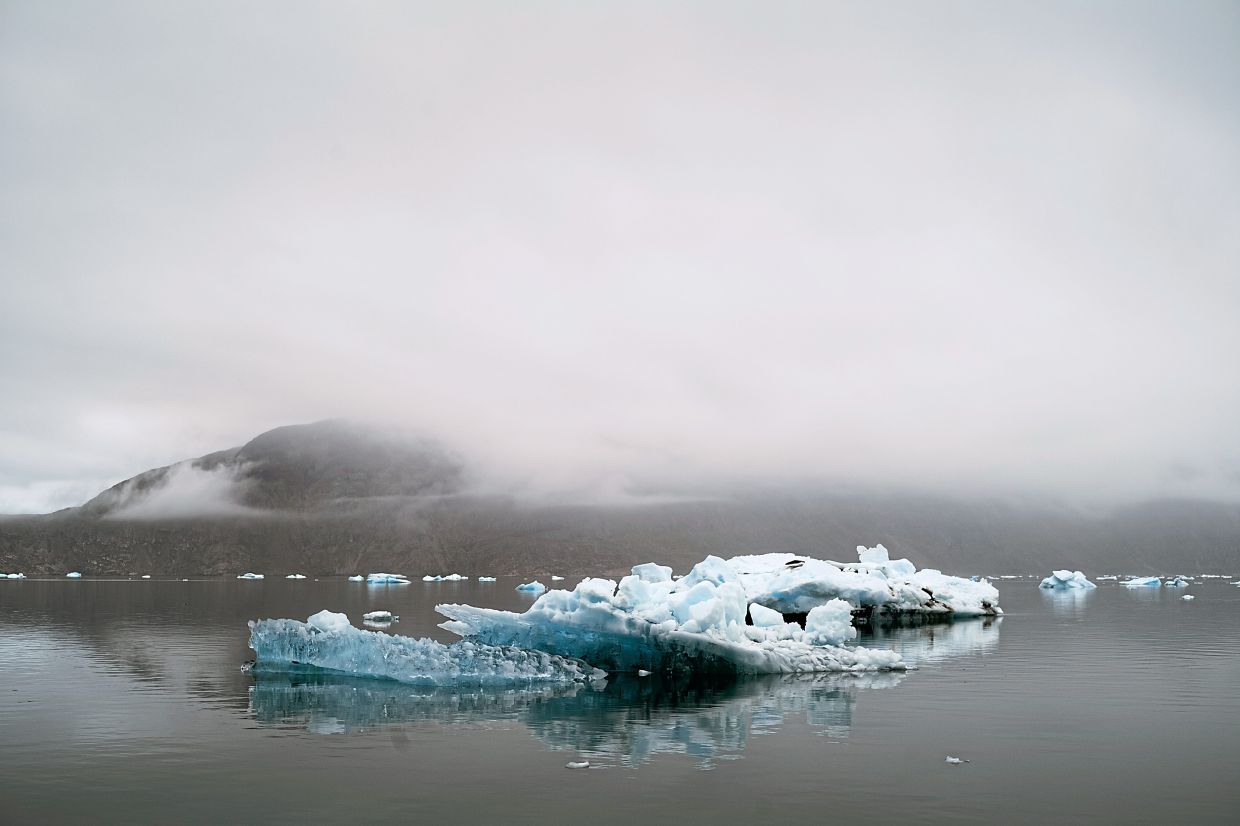
Trump’s revival of this idea echoes a historical precedent: President Harry S. Truman’s post-World War II attempt to buy Greenland to thwart Soviet expansion. Today, the perceived threats come from China and Russia, both vying for influence in the Arctic.
Sherri Goodman, an expert on Arctic security, emphasised the region’s strategic importance.
“We want territories near our mainland to protect us and prevent adversaries from gaining a foothold,” she said
However, she added, “Greenland’s fate must be decided by its people.”
Experts also suggest that Trump’s renewed interest could create opportunities for Greenland to secure greater US investments in mining, tourism and infrastructure. However, concerns remain about the environmental and social impact of such developments on Greenland’s indigenous communities.
The Panama Canal, another focal point of Trump’s expansionist rhetoric, has also drawn his ire.
Accusing Panama of “price-gouging” American ships, Trump hinted at renegotiating – or even abandoning – the 1977 treaty that handed control of the canal back to Panama.
“The fees being charged by Panama are ridiculous,” Trump wrote online, calling the charges a “complete rip-off”.
He also raised alarm over the canal’s vulnerability to falling into “the wrong hands”, referencing China’s growing economic influence in the region.
Panama’s President Jose Raul Mulino pushed back firmly.
“Every square metre of the Panama Canal is part of Panama, and it will continue to be,” he stated, dismissing any possibility of negotiations.
Trump’s grievances with Panama may also be personal.
In 2018, the Trump Organisation lost a protracted legal battle over its management of the Trump International Hotel in Panama City. The eviction of Trump’s company, accompanied by the removal of his name from the property, reportedly left lingering resentment.
Trump’s territorial ambitions reveal a vision of “America First” that is anything but isolationist.
His rhetoric mirrors the expansionist zeal of Theodore Roosevelt, whose presidency saw the United States solidify control over the Philippines and build the Panama Canal.
Yet Trump’s approach contrasts starkly with traditional diplomatic norms.
His admiration for President Vladimir Putin’s 2014 invasion of Ukraine as “genius” exemplifies his willingness to question the sanctity of national borders.
Even now, Trump’s calls for peace in Ukraine lack explicit support for restoring the country’s territorial integrity – a critical demand of Nato allies.
The commercial and strategic stakes in Greenland and Panama are clear.
Greenland boasts untapped reserves of more than 43 critical rare earth minerals, essential for clean energy technologies like electric vehicles and wind turbines. Meanwhile, the Panama Canal remains a vital artery for global trade and military mobility.
Marc Jacobsen, an Arctic security expert, noted that Denmark’s reaction to Trump’s bid for Greenland had been one of “fury”, with some Danish politicians calling the proposal “a strange way to treat an ally”.
However, Greenlanders may see this as a chance to deepen economic ties with the United States, potentially advancing their quest for independence. David Goldwyn, a former US State Department official, warned that developing Greenland’s resources must respect local sovereignty.
“Resource extraction cannot be forced on an unwilling population,” he said. Instead, he advocated for collaboration with Denmark and Greenland on sustainable development.
As for the Panama Canal, Trump’s focus on sovereignty and commerce underscores his transactional worldview.
While critics dismiss his expansionist ideas as impractical, they highlight a broader shift in America’s global posture – one where commercial and strategic dominance takes precedence over international norms.
Whether Trump’s ambitions for Greenland and Panama gain traction or fizzle out, they serve as a stark reminder of his unconventional approach to geopolitics.
With the power of the world’s largest military at his disposal, Trump’s negotiating tactics now extend far beyond the boardroom – and the stakes have never been higher. — ©2025 The New York Times Company
Already a subscriber? Log in
Get 20% OFF The Star Digital Access
Cancel anytime. Ad-free. Unlimited access with perks.
