



BACK in 1962, then deputy prime minister Tun Abdul Razak stood before Parliament to espouse Article 15A of the Federal Constitution, saying the provision was meant to give the government discretion to register a person under 21 as a citizen in cases where it would be in the interest of the child and the country that the child be registered as a citizen.
Over six decades later, the government is now seeking to lower the age limit from 21 to 18, among other proposed citizenship amendments.
These amendments also include removing the term “permanently resident” from Section 1(a) Part II of the Second Schedule, which currently states that anyone born in Malaysia to a parent who is a citizen or someone “permanently resident” in Malaysia is automatically granted citizenship.
Unsurprisingly, some of the proposed amendments generated a huge backlash from civil societies, politicians and other stakeholders, who say the “regressive” amendments will exacerbate the issue of statelessness in the country.
The concern has not abated even though the government has dropped two other disputed proposed amendments involving the fate of foundlings or abandoned and stateless children.
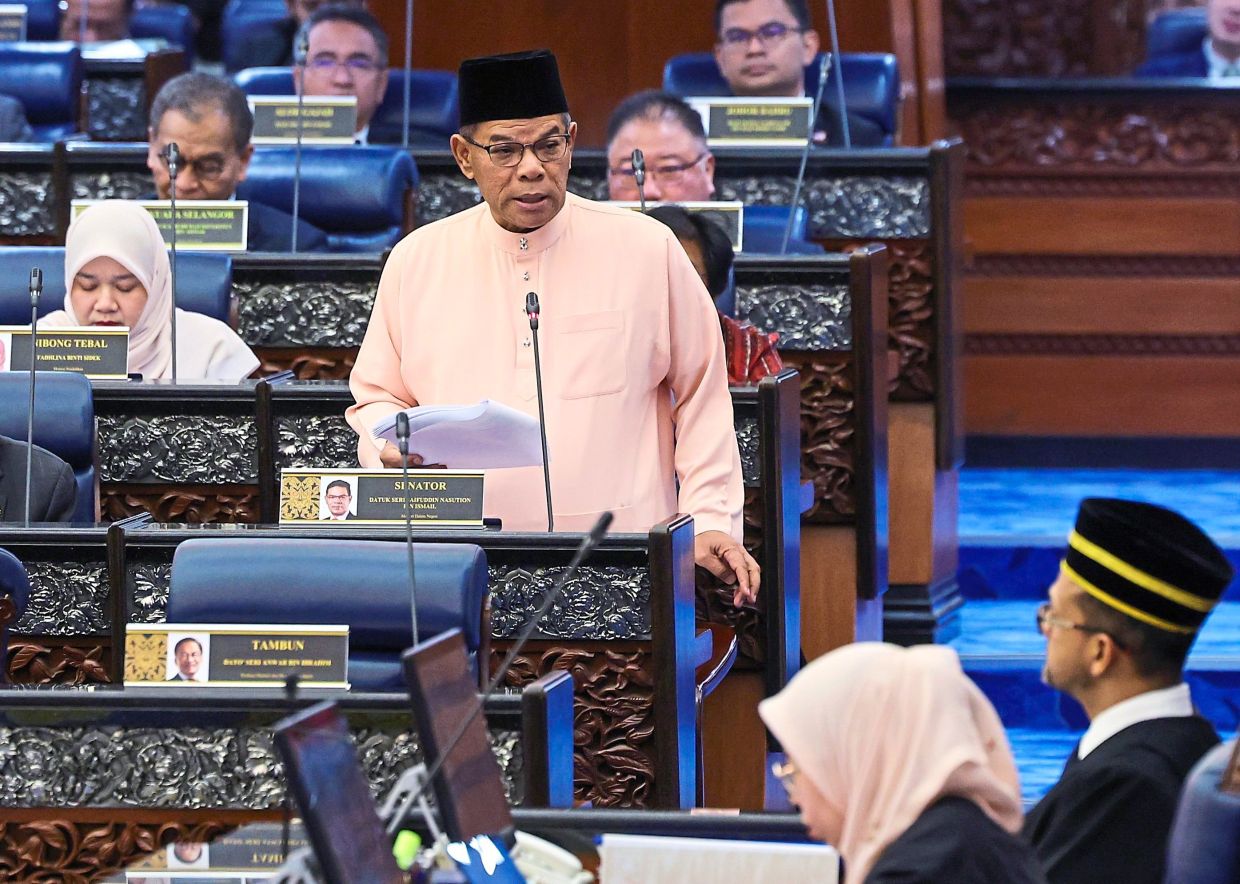
It has even tempered the cheer for the amendment to give Malaysian mothers the equal right as fathers to confer automatic citizenship on overseas- born children, as tabled in Parliament on March 25.
“To be honest, the only amendment we ever needed was the mothers’ amendment. That’s all. The rest of the amendments do not address the root causes of statelessness in the country at all,” says Development of Human Resources for Rural Areas social protection director Maalini Ramalo.
On the contrary, experts and civil societies say the other amendments will only further worsen the issue of statelessness in Malaysia.
Narrower window
Reducing the age limit for a child to apply for citizenship will make it much harder for the child to successfully get citizenship, says lawyer Annou Xavier, who handles many stateless cases.
“By reducing [the age limit] your window of applying becomes shorter, narrower and more difficult.
“In Malaysia, for children below 21, they fill up a form called Borang 15A. They will then hand over the form with supporting documents to the National Registration Depart-ment. By the time NRD reverts to you, it takes about 12 to 36 months.
“So you do the maths. If the child is 18 years old, by the time the NRD reverts he or she will be 21. You have missed your chance already.”
Removing “permanently resident” from the relevant provision will also narrow the scope of who gets to become citizens of Malaysia like an “artery block”, says Annou.

He points out that there are many people who are born in Malaysia who are stuck with red identity cards denoting them as permanent residents.
“Do you know there are many poor children from estates who cannot determine who their parents are? Those children, they have never gone out of Malaysia, never been a citizen anywhere else, and they can never have citizenship with this provision.
“Many Orang Asli who have difficulties registering their birth certificates are given red ICs, and if they have red ICs, with this proposed amendment, where they cannot determine whether a parent is a citizen or not, [statelessness] passes down to the children and become generational,” he says.
He points out that Malaysia is a signatory to the United Nations’ Convention on the Rights of the Child and as such, should hold children’s rights paramount.
However, Annou acknowledges that times have changed since the late Tun Abdul Razak spoke about citizenship laws in the Dewan Rakyat in 1962.
“If you compare 1962 with current times, there were no issues of refugees and foreign workers in Malaysia in 1962. The only foreign workers at the time were from India and China.
“In modern times, you have intermarriages, refugees, foreign workers who get married to Malaysians and have children here. The landscape has changed.”
Not just Constitutional changes
Voice of the Children president Sharmila Sekaran says there are many ways statelessness could happen now, including what she describes as “manufactured statelessness” such as children who are born out of wedlock.
ALSO READ: Who are the stateless?
The government has said its amendments are taking national security into account, but Sharmila say the opposition to the amendments does not mean that civil society is against these considerations.
“It is in our interest to have national security but taking away rights from vulnerable groups is not something that we can accept.”
ALSO READ: Life in limbo
On the contrary, she says, there are other ways to resolve these issues, including sitting down with stakeholders to formulate a statelessness determination process.
“The narrative of national security and such can be resolved internally by having clear procedures and does not require Constitutional amendments.”
For example, while she does not support children being born out of wedlock, there must be enough sexual reproductive health education and awareness being taught to the people.
“What we’re saying is we need to deal with the consequences such as children being born [out of wedlock].
“What is going to happen to the child, because we are stuck with the child.”
She also suggests that Malaysia hold a roundtable engagement session with the relevant ministries and their counterparts overseas to address crossborder statelessness.
“Yes, there are problems with this but they are not insurmountable, there are pathways [to overcoming the problems].”
Meanwhile, Annou points out that Malaysia does not have a specific law on citizenship, as all relevant provisions are embedded in the Federal Constitution.
This is unlike other countries such as India, the United Kingdom and Indonesia which have discrete laws on citizenship.
“By having a specific law on citizenship, then I think the laws can be clearer and more widely defined, rather than to go back to the Constitution.
“It will be better to have a very clear, concise law.”
But he cautioned that if the law were to incorporate “these types of regressive amendments”, it would take things back to square one with statelessness remaining an issue in the country.
As civil society and other stakeholders continue to call attention to the problematic amendments, the government has decided to hit pause on the Bill.
The amendments are expected to make their next appearance in the coming Dewan Rakyat session in late June.
Already a subscriber? Log in
Get 20% OFF The Star Digital Access
Cancel anytime. Ad-free. Unlimited access with perks.
