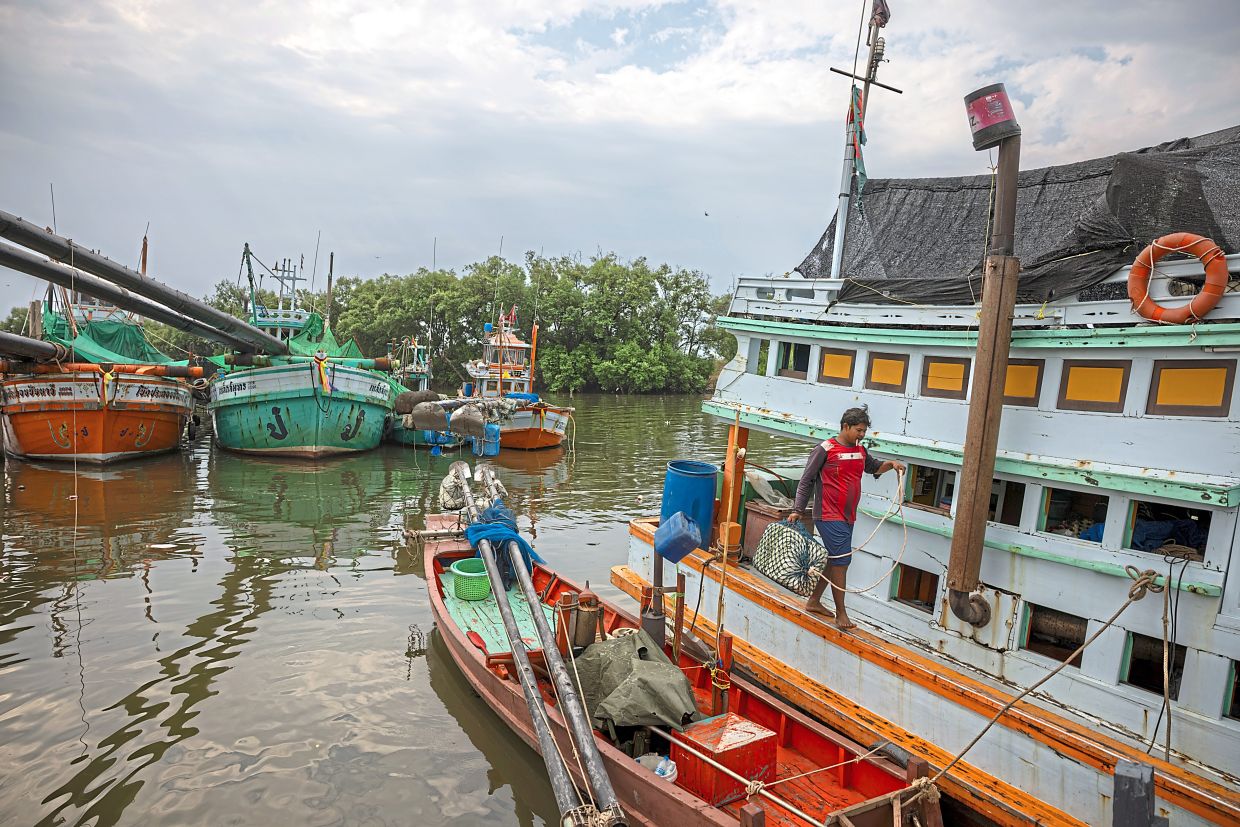
LIKE its neighbours, the shrimp boat Lucky Blessings has been docked all month at a pier in central Thailand.
Wittaya Lekdee, the owner, cannot take it out to sea because he can no longer afford fuel, the price of which has spiked 75%.
“It’s the worst that it has ever been,” he said of his plight.
About 160km away near Thailand’s largest deep-sea port, Laem Chabang, a driver, sat by a convoy of parked trucks, part of a protest about rising gas prices. The driver, Prayoon Srisawat, said his income had halved in recent days.
In the Philippines, 48-year-old Richard Arcana has fished his whole life. But now he is looking for another job.
The oil shock from the Iran conflict has rippled through South-East Asia, upending lives, straining local economies and increasing public discontent.
While many countries are contending with the fallout, experts say the region of more than 600 million has been one of the hardest hit.
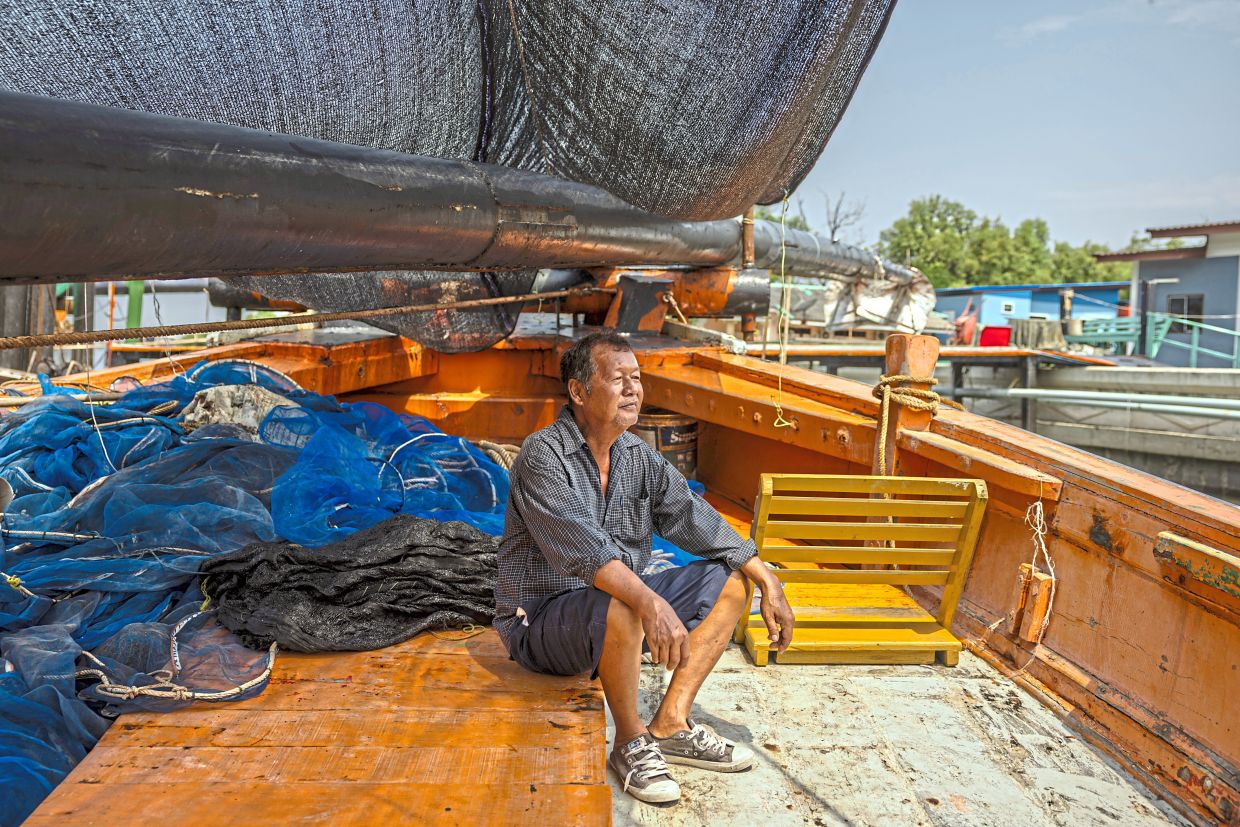
“It’s a crisis abroad,” said Suchart Kendang, the head of a coastal fishermen group in Samut Sakhon province in Thailand. “But we are the ones who get screwed.”
In the Philippines, the government is handing out the equivalent of US$84 each for tens of thousands of motorised tricycle and jeepney drivers around Manila.
In landlocked Laos, which buys fuel from now oil-strapped Thailand, over 40% of the gas stations have been forced to close because they ran out fuel.
Similarly, in Cambodia, which imports fuel from Thailand and Vietnam, nearly one-third of the gas stations have closed.
In Vietnam, the government has strongly encouraged non-essential office workers to work from home.
Thailand’s prime minister is wearing short-sleeved shirts and exhorting his fellow civil servants to do the same because air conditioners in government offices are now set at a minimum of about 26°C.
Public servants there and the Philippines have been told to take the stairs instead of elevators.
In Laos, the government has told schools that they have to reduce in-person teaching to three days from five.
Unlike the United States or Europe, South-East Asia is heavily dependent on oil that sails through the Strait of Hormuz.
Nearly 80% of the region’s crude oil imports come from the Persian Gulf and about one-fourth of its liquefied natural gas imports have to pass through the strait, said Sam Reynolds, an analyst at the Institute for Energy Economics and Financial Analysis.
Many South-East Asian countries have precariously low oil reserves, unlike their richer neighbours such as Japan and South Korea, both of which have built up stock that can last more than 200 days.
Indonesia and Vietnam hold only 20 to 23 days’ of supply; Myanmar has 40 days’ worth; and until recently, Thailand had enough for 60 days.
With no long-term plan in place, governments are scrambling.
In the Philippines, President Ferdinand Marcos Jr has declared a national energy emergency, saying that high oil prices caused by the war in the Middle East were threatening the country’s energy security.
In Vietnam, whose kerosene costs 84% more since the war started, the government has tapped a state-managed fund.
In Thailand, the authorities imposed a 15-day cap on diesel prices and told gas companies to increase their fuel reserves to 3% of annual trade volume, from 1%. But that led to panic buying and lines of drivers carrying jerrycans.
Several temples said they were struggling to cremate bodies because of a shortage of fuel.
Last month, Thailand said it had signed new oil contracts with Angola and the United States. But it also said it had to let gas prices rise because it could no longer borrow billions of baht more from the government oil fund.
“I’m not happy and am running out of ideas,” Phipat Ratchakitprakarn, Thailand’s deputy prime minister, told reporters.
For now, it is the poor who are suffering.
In Wawa, a fishing community south of Manila, Linita Buenaventura, 52, said her husband had to abandon the family’s boat to find a job in another town because of high gas prices.
She is temporarily living with a friend because they can no longer afford to pay rent for their small hut.
“We were proud fishermen who owned our own boats. Now we are reduced to begging for jobs,” she said. “It really is a hard life.”
For Myanmar, where the economy was upended by a coup five years ago, the oil shock is a fresh blow. Last month, the junta mandated an alternate day driving system for private vehicles to save fuel.
In Yangon, Myanmar’s biggest city, Tin Hlaing Moe said she was fined 30,000 kyats (about US$7.50) because she was forced to flout the law to take her mother, who had a heart attack, to the hospital.
“The real suffering is for people like us, the lower and middle class,” she said.
Higher prices have cascaded down to some of Thailand’s biggest export industries – seafood, agriculture and pet food – and Vietnam’s coffee sector.
Phannaphat Totup, general manager of Thailand-based Bluefalo Petcare, said her company was grappling with a jump in the cost of plastic pellets, which go into making pet houses and food packaging – of 30% to 40%. Oil is a key ingredient in plastic pellets.
The price for cassava is up 15% because of rising fertiliser costs, she said. The price for tuna is up 10%.
“It has affected all aspects of our supply chain,” Phannaphat said, adding that the company would eventually have to pass on the cost to consumers.
In Vietnam, Cam Thi Mon, 36, the head of Ara-Tay Coffee, a cooperative in the mountainous northern province of Son La, said the cost of fertiliser had risen by nearly 30% in a couple of weeks.
“I am very worried,” she said.
Even in the wealthy city-state of Singapore, the government has warned of higher electricity prices.
Last year, 47% of its liquefied natural gas came from Qatar.
President Tharman Shanmugaratnam said Singaporeans must “brace ourselves for a long storm of global political instability”.
If oil prices continue to rise, Suchart, the Thai fisherman, said he will have to stop fishing, a job that he’s been doing since he was 13.
Fifty one-year-old Suchart took reporters out to sea using diesel from a one-litre plastic water bottle.
The government has capped the amount of diesel he can buy to about 500 baht, or US$15, which he said is less than one-fifth of what he uses a day.
But there would be no catch that day.
Even though it was not the height of the shrimp season, Suchart said he could usually catch krill. Not this time though.
Steering the boat around, he headed home. — ©2026 The New York Times Company
This article originally appeared in The New York Times