



SINGLE mother Ani*, has not bought any new school uniforms for her children in the last two years.
“It has been a waste as they would just end up wearing their PJ uniform when it gets really hot,” she says, referring to sports clothes worn for Pendidikan Jasmani, or Physical Education.
“So what I do now is invest in more school tracksuits and T- shirts. Luckily, my kids can still fit into their old uniforms and they still look new,” says the 30-something e-hailing driver.
Like Ani, many Malaysians have been adapting to the recurring heatwaves, which are having tangible effects in our daily lives – sweltering afternoons, restless nights, and rising electricity bills as air conditioners work overtime.
The government has also introduced various measures, especially short-term strategies and solutions, to help people cope every time the temperatures rise.
However, experts say we cannot only rely on reactive approaches to deal with the rising temperature; We need to come up with coordinated heat resilience policies across public health, urban planning, and labour protections.
Not a seasonal inconvenience
If you feel like the weather has been getting hotter in recent years, you’re not just imagining things.
In the past 10 years alone, data from the Malaysian Meteorological Department (MetMalaysia) shows that annual temperatures have consistently exceeded historical norms, with the highest average temperature recorded in 2016 at 27.84°C.
Hot weather episodes are also becoming more frequent and lasting longer, particularly between February and June, with some linked to the El Nino weather cycle.
Just last week, MetMalaysia released several heatwave reminders across northern Peninsular Malaysia, with parts of Kedah, Perlis, and Perak being placed under a Level Two alert, indicating maximum daily temperatures between 37°C and 40°C recorded for at least three consecutive days.
And this is why the first priority is to treat heat as a systemic risk, not just a seasonal inconvenience, stresses Dr Fong Chng Saun, a senior lecturer from Universiti Malaya’s Institute for Advanced Studies.
“Heat is not just a weather issue.
“It cuts across urban planning, public health, labour, schools, social protection and local government,” he says.
He notes that Malaysia has made progress in climate governance, such as implementing weather monitoring, health advisories, and workplace guidelines, but these efforts remain fragmented across agencies.
“The biggest gap is coordination – who leads, who activates, what measures are triggered, and how national guidance translates into local implementation.”
The risks of extreme heat are also multi-dimensional, with Sahabat Alam Malaysia president Meenakshi Raman pointing out that it affects not only human health but also food security, water systems, and ecosystems.
“At the national level, impacts are already being observed,” she says.
In 2024, padi farmers in the Muda Agricultural Development Authority areas in Kedah experienced a 40% reduction in income due to a prolonged heat spell that significantly affected crop yields.
“This raises concerns not only for Malaysia’s food security but also for broader ecosystem health and biodiversity,” says Meenakshi.
Exposure and vulnerability
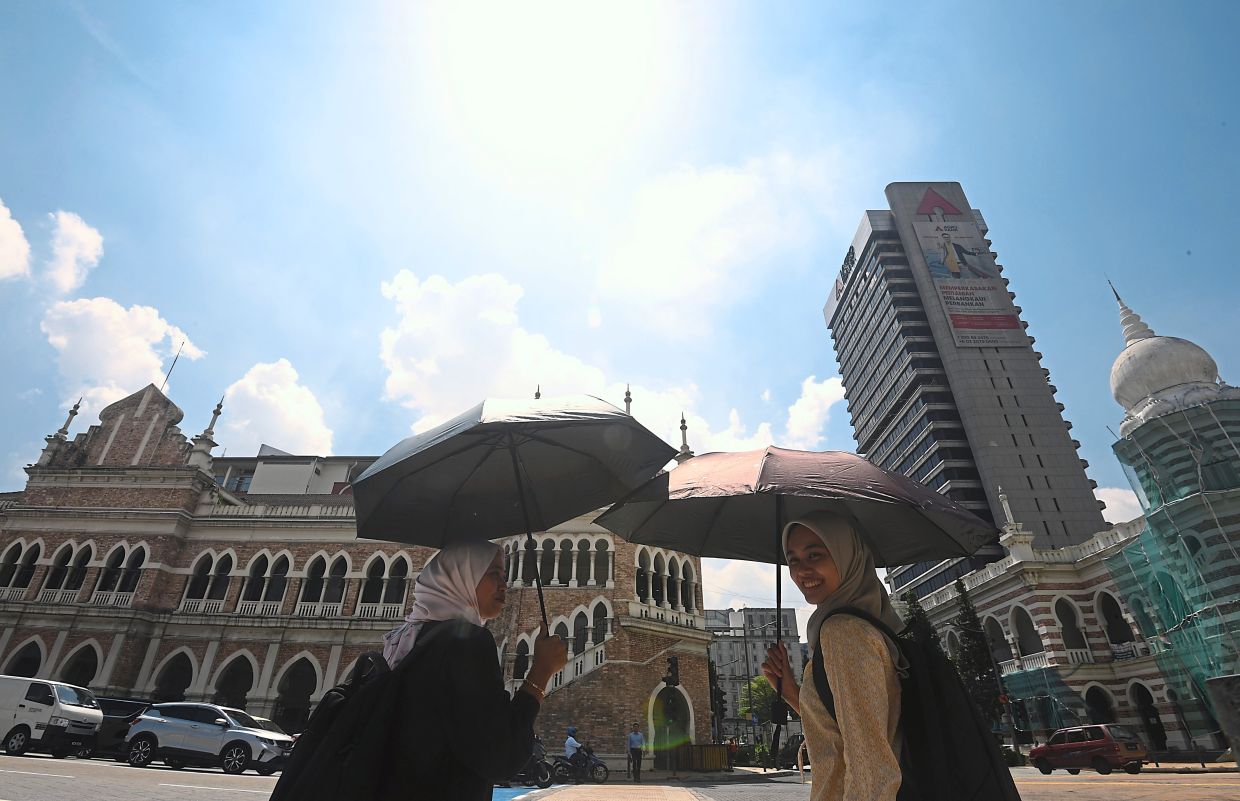
Urban areas also face their own unique heat challenges, as densely built environments tend to face higher exposure due to the urban heat island effect, where concrete and asphalt trap heat.
Environment Protection Society of Malaysia vice-president Randolph Jeremiah says this phenomenon can significantly raise temperatures, especially at night.
“In Kuala Lumpur, nighttime temperatures can increase by approximately 6°C, compared with rural regions.
“This translates into higher utilisation of energy consumption for cooling purposes, which means higher costs and greenhouse gas emissions into the atmosphere,” he says.
There is, however, a difference between exposure and vulnerability.
Meenakshi says vulnerability to heat goes beyond exposure and is shaped by the interaction of exposure, sensitivity, and adaptive capacity.
“For example, we naturally understand that elderly persons, young children, and individuals with pre-existing medical conditions will be more vulnerable due to physiological sensitivity.”
But there are also structural and socioeconomic factors that need to be considered.
“Higher-income communities are generally better able to adapt through technologies such as the purchase of multiple air-conditioning units.
“In contrast, lower-income groups, including migrants and informal workers, lack the resources to implement corresponding measures,” she points out.
Not just about temperature
As mentioned, the government is taking steps to manage heat-related risks.
MetMalaysia monitors temperatures through a network of nearly 300 stations, and classifies hot weather into three levels, ranging from “alert” and “heatwave” to “extreme heatwave”.
Information is updated daily and disseminated through official channels, including television forecasts and social media.
Various agencies have also issued guidelines, from health advisories to workplace safety measures, to help the public cope with heat stress.
However, experts say these measures, while important, are not yet sufficient.
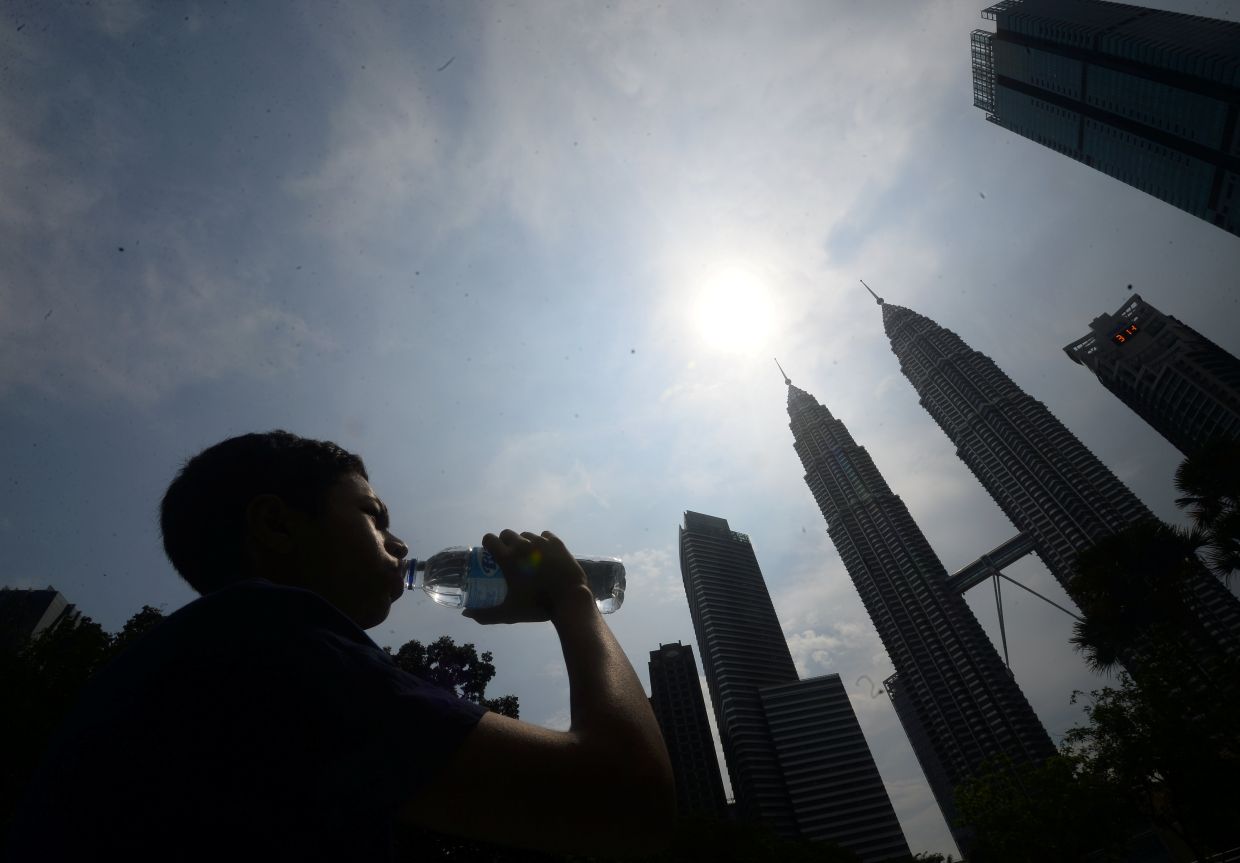
One key limitation, says Meenakshi, is that the current system tends to focus on temperature alone, without fully accounting for humidity, which is a critical factor in determining how the human body experiences heat.
“Wet bulb temperature is a heat stress metric that measures how well the human body can cool itself through sweat evaporation.
“Under high humidity conditions, the body’s ability to cool down is reduced, and core body temperature can rise to dangerous levels, leading to heat exhaustion or heat stroke, even when temperatures are below 35°C.
“Hence, there is a need to expand towards a heat index approach that combines both temperature and humidity to better reflect actual human heat stress,” she says.
Different contexts, same principles
Singapore is in a similar situation to Malaysia heat-wise, and recently the city-state has decided to establish a dedicated heat resilience office to coordinate its response to rising temperatures.
The office will oversee efforts across sectors, including urban planning, public health, and infrastructure.
Fong says Malaysia does not need to have the exact same model as Singapore, “but the principle is relevant”.
“Malaysia should seriously consider a more dedicated and coordinated institutional mechanism for heat resilience.
“A dedicated national focal point, task force, or heat resilience unit could help align data, early warning, public communication, sectoral standards and long-term adaptation planning,” he says.
Currently, responsibilities are spread across multiple agencies and ministries, including the Natural Resources and Environmental Sustainability Ministry, the Health Ministry, MetMalaysia, and the Department of Occupational Safety and Health.
Meenakshi also points out that Malaysia’s context differs significantly from Singapore’s, as we are not a single, highly centralised urban system but are instead made up of cities, suburbs, and villages that have their own diverse geographical and developmental contexts.
“So it makes sense that managing heat risks will require coordinated approaches at a smaller geographic level.
“At the same time, there is also a need for centralised coordination across these different local contexts,” she says.
In an effort to combat the rising heat globally, many cities across the world have also appointed “chief heat officers” to rapidly respond to heatwaves, including Athens, Greece; Melbourne, Australia; Dhaka, Bangladesh; Freetown, Sierra Leone; and Miami, the United States.
Relief for the most vulnerable
Beyond better coordination, the experts say addressing rising heat will require both short-term protections and long-term structural changes.
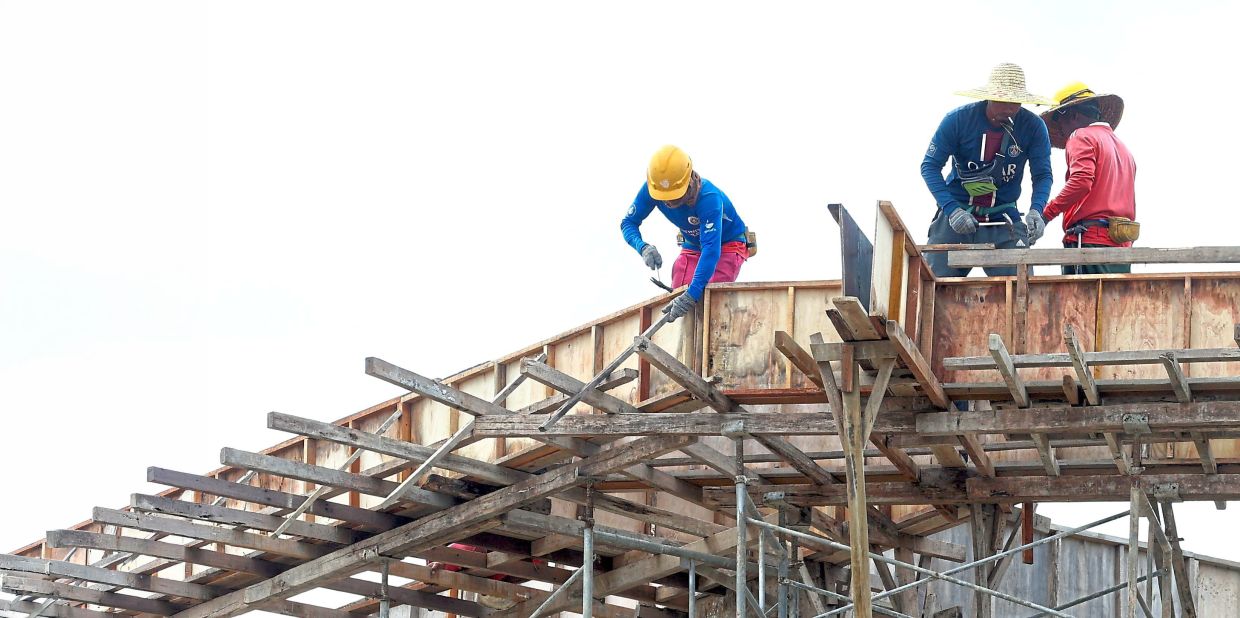
In the immediate term, stronger measures are needed to protect those most at risk, particularly outdoor workers.
Fong proposes that stronger enforceable standards may be needed around work-rest cycles, hydration, shaded rest areas, scheduling changes, and employer obligations during high-heat periods.
“There is also a need to look at other vulnerable communities like the gig workers community, where the risk to extreme weather events are entirely absorbed by the workers themselves.
“I am not sure if they are even covered under the current labour law or insurance policy,” he adds.
Meanwhile, Randolph points to existing efforts such as Kuala Lumpur’s Climate Action Plan 2050 which proposes the development of a Heat Management Plan targeting high-risk areas.
However, he notes that implementation remains an issue, particularly when balancing development pressures with the need to preserve green spaces.
“For our cities to be liveable, we need to find a balance between the preservation of urban green spaces, most importantly urban forest patches, and development.
“If a right balance can be achieved, there will be greater and broader returns that will contribute towards making cities resilient and liveable,” he says.
Malaysia does not yet have a national adaptation climate plan in place, though it is currently being developed and is expected to roll out sometime this year.
Meenakshi says the plan is expected to include key pillars across various sectors, which is crucial as extreme heat is a cross-sector challenge.
At the same time, public awareness and community action will play an important role, as she says individuals and communities are often the first line of defence, from recognising signs of heat stroke to sharing tips on staying cool.
As temperatures continue to rise, the question is no longer whether Malaysia will feel the heat, but whether it is prepared to manage it.
* Not her real name

