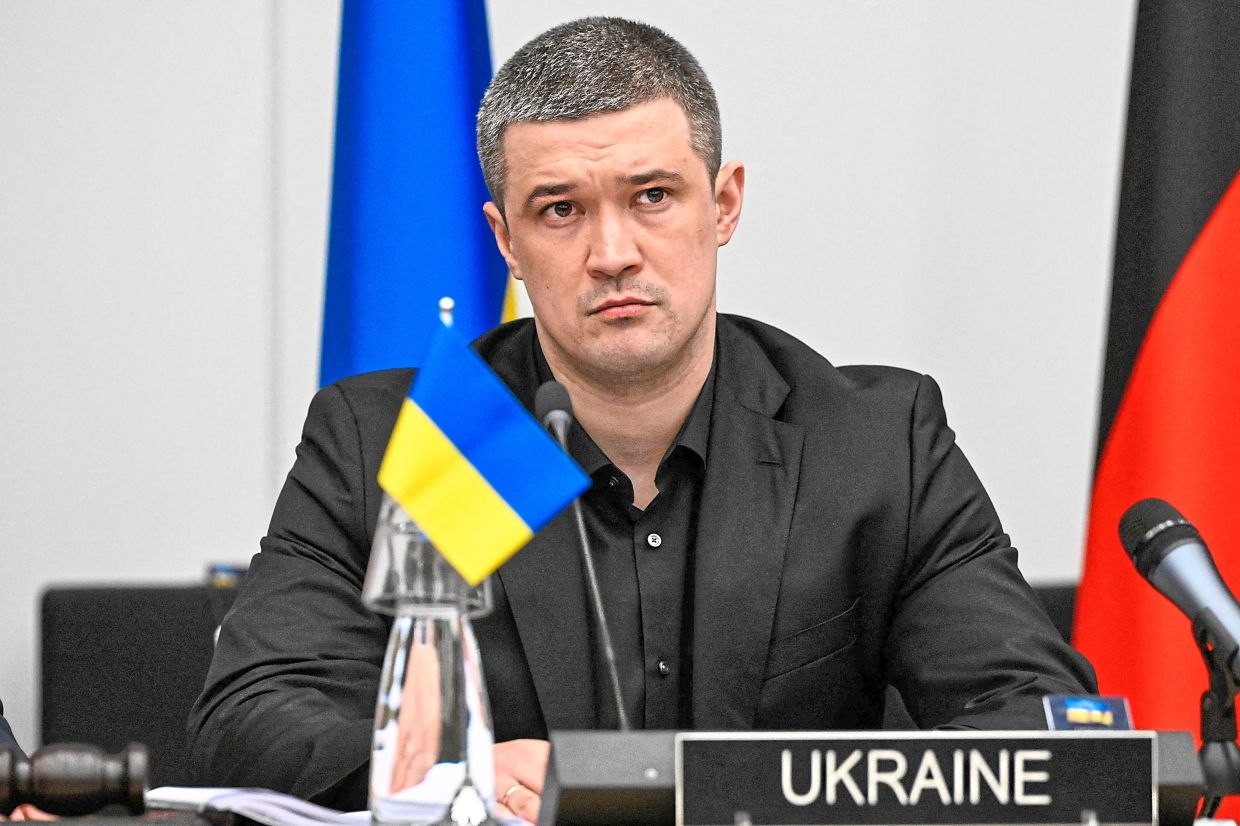
UKRAINE’s newly-installed defence minister Mykhailo Fedorov (pic) waltzed on stage like a stand-up comedian to take the mic in front of journalists in Kyiv as a sleek slideshow zoomed across a map of the country.
The Ted-talk style briefing – a departure from the ministry’s previously stiff approach – encapsulates the energy Fedorov is trying to inject into Ukraine’s war machine, four years into the Russian invasion.
Appointed in January, the 35-year-old with short salt-and-pepper hair is Ukraine’s youngest ever defence minister.
On a mission to modernise the army, he took over an apparatus facing stretched air defences, financial uncertainty, stalled peace talks, recruitment problems and widespread bureaucracy and war fatigue.
“We will turn the war into a data platform,” said Fedorov, wearing his trademark sweatshirt and jeans in a speech punctuated with jokes.
“We will take all the data and see what works. Everything that works well will proceed,” he said – a personal mantra that would not appear out of place in Silicon Valley.
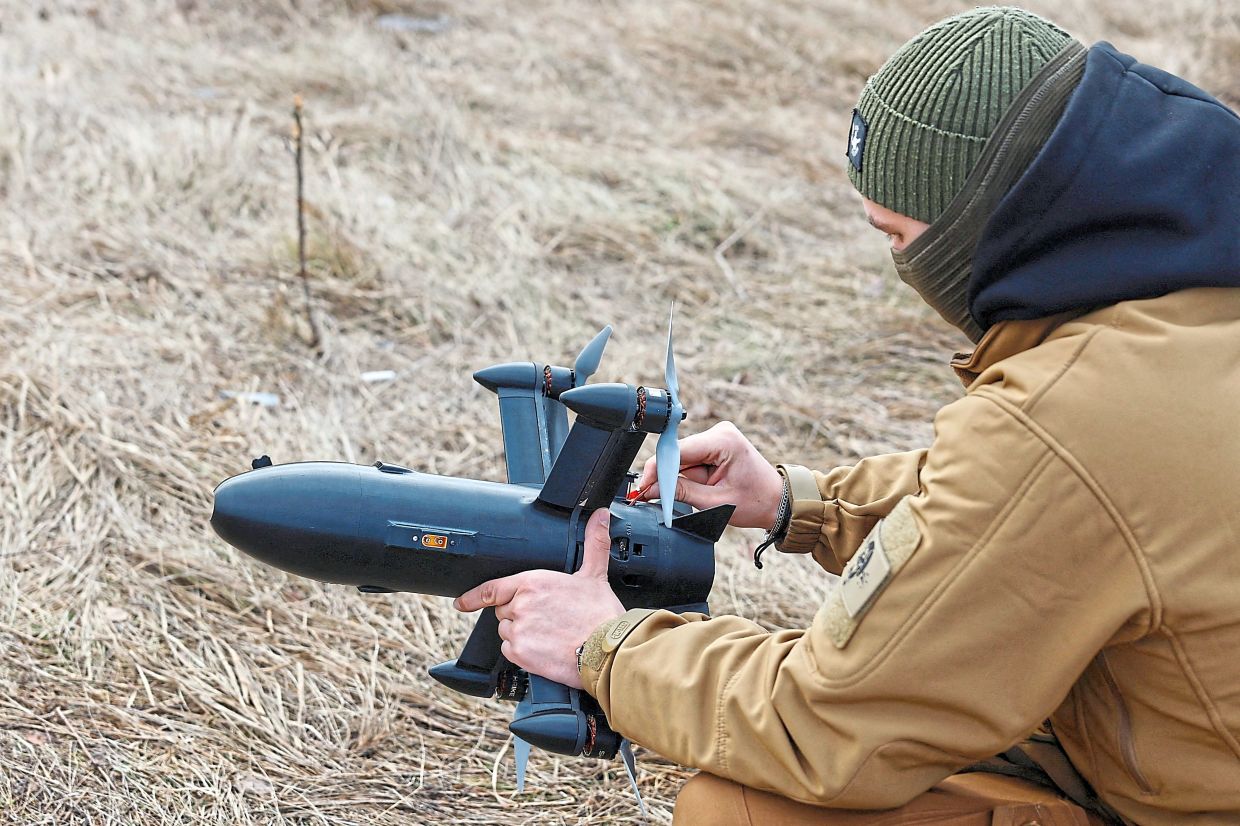
Fedorov has spent much of the war promoting advanced technology, like drones, as a way to offset Ukraine’s shortages in manpower, money and ammunition.
He began his career in digital marketing and his first roles in government were spearheading online services for citizens, including the country’s now ubiquitous state services app Diia.
Russia’s 2022 invasion – which saw his home town in the southern Zaporizhzhia region occupied – has only cemented his faith in technology.
“It was a moment of truth. When someone attacks your country, you do everything asymmetrical that is in your power,” said his then-adviser Anton Melnyk, summarising Fedorov’s philosophy.
His ministry for digital transformation took to social media to call out Western companies still working in Russia, shaming them into breaking ties.
He also reached out to US tech titan Elon Musk to secure Starlink satellite connectivity for Ukrainian troops.
His early bet on drones seems obvious now in a war that has come to be dominated by them.
But to many, he was a rare and vital early advocate.
In 2023, activist Sergiy Sternenko, known for his fundraising efforts for the army, posted an emotional video to his two million followers, pleading with the government to quickly invest in drones.
“Mykhailo was really the first to call me literally an hour or two after that,” said Sternenko, now an adviser to Fedorov.
Within two days, he had been invited to Fedorov’s office to discuss the issue.
“He was the driver of innovation, including of drones in the Ukrainian army, even when the Ukrainian armed forces leadership itself did not really want it,” Sternenko said.
One of Fedorov’s trademark initiatives was a controversial killing-for-points scheme, a data-driven system designed to reward the most effective army units.
Soldiers earned points for confirmed kills or destruction of Russian equipment – verified by uploaded videos – that can be used to purchase equipment, with league tables ranking the best performing units.
At the defence ministry, he is set on developing that approach.
One of his first initiatives is an audit of battlefield losses – ranking commanders based on casualty levels, in an attempt to address high levels of desertion among rank-and-file troops and the unpopularity of mobilisation.
Ukraine “cannot fight the future of war with an old system”, Fedorov said in a statement after his appointment.
He has fans among Ukraine’s Western partners, having courted Nato and EU representatives at the Ukraine Defence Contact Group.
“The minister came across as competent, realistic, highly knowledgeable and forward-looking,” said a diplomat at Nato.
“I strongly believe he can bring something new,” said another diplomat.
“He has the potential to bring faster warfare of the future,” they added.
But having never served, it is unclear if he can convince the rest of Ukraine’s traditional military leadership, which some say is still stuck in Soviet-style bureaucracy.
“We can try,” said Sternenko.
“Much depends on the military command, but Mykhailo has a vision of how to outsmart the system.”
Opposition lawmaker Solomia Bobrovska, who sits on the parliament’s defence committee and has been briefed by Fedorov, said, “It’s very ambitious and very promising.
“It’s early... The presentation is one thing, the other will be reality. I’m really interested in how society and the army will react.” — AFP