Human Writes: When the climate starts to shift


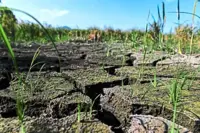
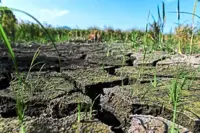
With more and more scientists predicting a 'super' El Niño weather cycle in the next few months, Malaysia should prepare not only for immediate heat and drought impacts but for possible persistent effects, including those related to heat stress, water resources, agriculture, and public health. — FAIHAN GHANI/The Star

As global attention remains fixed on war and economic shocks, another crisis is quietly intensifying: climate change. Extreme weather events are now so routine that they barely surprise us. But as more indicators flash red, we may be entering a new era of climate risk.

We’re moving beyond record-breaking temperature towards changes in the climate system itself – changes that may be more persistent and less predictable. That is a far more troubling prospect.

In a world warmer from human-caused emissions, natural climate patterns can have stronger impacts. A “super” El Niño weather cycle, forecast to develop by July, could amplify heat and push 2027 to become the hottest year ever recorded.

More worrying still, a recent study suggests that super El Niño events could cause climate “regime shifts” – abrupt, long-lasting changes in air and sea surface temperatures and also soil moisture – in vulnerable regions. One of these is the Maritime Continent, the island-rich region between the Indian and Pacific Oceans that includes Malaysia, Indonesia, and the Philippines.

The study, led by researchers from Seoul National University and published in Nature Communications, analysed super El Niño events in 1997-1998 and 2015-2016. The study found a persistent warming of around 0.5°C in the Maritime Continent after these events, even after accounting for long-term global warming trends and seasonal changes. This warmer shift may persist for years or even decades.

“When the baseline becomes warmer, hot days are likely to become more frequent, and heatwaves may become more intense or easier to occur,” says Dr Aoyun Xue, one of the study’s authors, in an e-mail interview.

Xue says if a future super El Niño triggers a similar warmer shift in an already warmer world, it could push regional temperatures to a new, higher baseline. However, he adds that this is a probability not a certainty, and the analysis was regional rather than Malaysia-specific.

Even moderate regional shifts could have significant consequences. Once the climate system is pushed into a new baseline, local feedbacks between the ocean, atmosphere, and land may maintain the shift. For example, drier soils lead to hotter conditions due to less evaporation.

Xue says countries such as Malaysia should prepare not only for immediate heat and drought impacts during strong El Niño events, but for possible persistent effects, including those related to heat stress, water resources, agriculture, and public health.

A return of hotter, drier weather in upcoming months would come at a difficult time. Farmers are already grappling with fertiliser shortages and higher input and fuel costs caused by the Middle East conflict. The last El Niño helped drive 2024 to become the hottest year on record, bringing intense heatwaves, severe droughts, dry reservoirs, and crop losses across South-East Asia. What might a stronger event bring this time?

We may be facing severe, long-lasting climate shocks and serious food security risks, yet these barely arise in public debate, which seems more consumed with petty politics and fighting over who gets to farm what where. Ironically, climate change, rather than any leader, may set the future of farming.

Climate adaptation urgently needs to be stepped up. That includes preparing for water shortages and crop failures, while identifying at-risk communities and resources. Planetary health expert Prof Tan Sri Dr Jemilah Mahmood (who writes the Planetary Health Matters column in StarExtra’s monthly Ecowatch pullout) has warned that local heat is becoming “lethally hot for longer”, challenging assumptions that we are adapted to it.

As risks escalate, world leaders are still failing to prioritise climate and adaptation. It’s even the converse: the current US government pulled out of the 2015 landmark Paris Agreement and favours oil giants, which incidentally, have profited by billions of dollars in the current conflict.

And this is despite clear evidence of warming. The past 11 years were the 11 warmest on record, and 2024 exceeded the critical 1.5°C target above pre-industrial levels – the threshold beyond which climate risks increase substantially and some irreversible tipping points become more likely.

The vital signs of our oceans – which regulate weather, rainfall and temperatures – are flashing red. The oceans absorb about 90% of the excess heat and about 30% of carbon dioxide generated from human activities, but at a cost: record ocean heat, devastating marine heatwaves, and increasing acidification. All this threatens marine life, including coral reefs.

One of the more alarming systemic shifts, highlighted by recent research, is the weakening of the Atlantic Meridional Overturning Circulation (Amoc), a key ocean current system that redistributes heat and helps regulate weather patterns.

If Amoc were to cross a tipping point and collapse, scientists warn it could trigger massive climate disruptions, including severe (even “ice age”) winters in north-western Europe, rising sea levels along North America’s east coast, and massive disruptions to rainfall and monsoon systems.

Researchers have assessed over 20 tipping points; one close to home is already underway: mass coral reef bleaching and die-off. According to Coralku and Reef Check Malaysia, record heat stress in 2024 led to 51% of corals bleached across survey sites nationwide. Our oceans are changing fast under climate impacts. But our policies and priorities are moving slowly. If this gap is not closed soon, we are choosing systemic collapse over ecological stability for our planet.

Human Writes columnist Mangai Balasegaram writes mostly on health but also delves into anything on being human. She has worked with international public health bodies and has a Masters in public health. Write to her at lifestyle@thestar.com.my. The views expressed here are entirely the writer's own.
Follow us on our official WhatsApp channel for breaking news alerts and key updates!

Next In Living

Katz Tales: Dealing with a cat who is losing his bum fur
This roman-style chicken is a great dish for a large group of hungry people
Displaced Lebanese grandmother feeds thousands of compatriots who fled war
Heart And Soul: Thoughts on a restored cultural symbol
The great cormorant bird is eating too much fish, with some calling for a cull
Famed restaurant Noma to re-open with new leadership after staff abuse scandal
An all-Indigenous football team is breaking barriers in Brazil
Recycling bins in malls is great, but streamlining the process will ease users
Heart And Soul: Malaysian family reconnects with relatives in China through TikTok discovery
MAW 2026 aims to reconnect architecture with people and communities

Others Also Read