
Through the use of wearable devices, remote monitoring and population health data, we are moving beyond asking, “How do we treat this patient?” to also asking, “Who is at risk of becoming ill?”, “Where are the gaps in care?” and “What can we do earlier to prevent deterioration?”
This shift from treating illness after it occurs towards anticipating risk and intervening earlier is one of the most important opportunities created by digital health. It enables us to move from a reactive approach to one that is more preventive, personalised and proactive.
Incorporating AI into healthcare systems also supports different aspects of care. Its processing power, combined with predictive analytics, can evaluate vast amounts of data from clinical records, laboratory results, previous admissions and remote monitoring to identify patterns that may indicate increasing risk before deterioration becomes obvious or complications occur.
Technology can also help overcome some of the daily challenges faced by healthcare practitioners and patients. It can reduce fragmentation, improve access and relieve the administrative burden on healthcare professionals, to name just a few.
Electronic health records can make relevant health information more readily available to clinicians and enhance multidisciplinary collaboration by bringing together data from different clinics, hospitals, laboratories and specialists. This allows patient information to move seamlessly across the healthcare system.
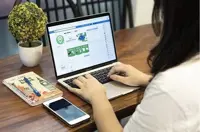
Its many applications also help improve access through telehealth, remote monitoring and digital platforms by extending healthcare services beyond clinics and hospitals. This can make a huge difference for those who face physical or socioeconomic difficulties accessing services.
Meanwhile, repetitive tasks can be automated and digitised, allowing healthcare professionals to spend more time on what technology cannot replace – listening, explaining, reassuring and understanding individuals behind the clinical data.
Clearly, tomorrow’s healthcare professionals will need more than clinical knowledge alone. They will increasingly require a combination of clinical, digital, data and human competencies.
Educators today must therefore prepare students to understand the capabilities and limitations of technology and AI, recognise issues such as algorithmic bias, appreciate cybersecurity and data privacy, and critically evaluate whether a digital solution is appropriate for a particular clinical environment.
This goes beyond teaching students which button to press or what software to use. With technologies changing rapidly, the ability to think critically about their use is far more valuable.
Students need exposure to real healthcare problems so that they can evaluate whether technology is an appropriate solution and whether it fits into existing clinical workflows. They must also be able to question the quality of the data, and critically examine the evidence.
Students must learn not only what AI and other forms of technology can do, but also what they should do, where their limitations lie and when human judgement must take precedence. Simply put, technology should not be presented as a solution to every healthcare problem.
Predictive analysis is not the same as decision-making. As AI becomes more capable, critical thinking becomes more important, not less. For instance, an algorithm may tell us that a patient is at higher risk, but healthcare professionals must still understand why, determine whether the prediction is clinically meaningful and decide what should be done. Furthermore, poorly designed technology can simply digitise an inefficient process rather than improve it.
The future, therefore, should not be framed as AI replacing healthcare professionals. Rather, it is about combining computational intelligence with clinical expertise and human judgement.
Healthcare education must therefore incorporate health informatics, data analytics, technology and the application of digital solutions to real healthcare challenges. In healthcare management, we need to help future leaders understand how data, technology and analytics can support clinical, operational and strategic decision-making.
Ultimately, the objective is not to produce healthcare professionals who simply know how to operate digital tools. Healthcare is fundamentally about people. A patient is not simply a collection of data points, and an algorithm does not experience fear, uncertainty or the personal consequences of illness.
The goal, therefore, is to develop medical practitioners who understand healthcare deeply enough to determine where technology adds value, where it does not, and how it should be implemented responsibly.
At the same time, we must preserve what has always been fundamental to good healthcare: trust, empathy, professional judgement and the human relationship between the healthcare professional and the patient.
Prof Saravanan Muthaiyah, School of Business and Technology dean at IMU University, is a seasoned academic with 37 intellectual properties to his credit. An active researcher in semantic technology, digital transformation, blockchain, data science and fintech, he is passionate about advancing knowledge and innovation at the intersection of technology and business. The views expressed here are the writer’s own.