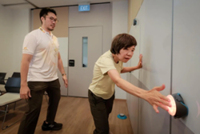
TREMORS are among the most visible symptoms of Parkinson’s disease, making everyday tasks such as eating, writing, dressing and holding objects difficult for patients.
While treatments such as medication, deep brain stimulation and rehabilitation can help manage symptoms, accessibility, affordability and long-term sustainability remain challenges for many patients.
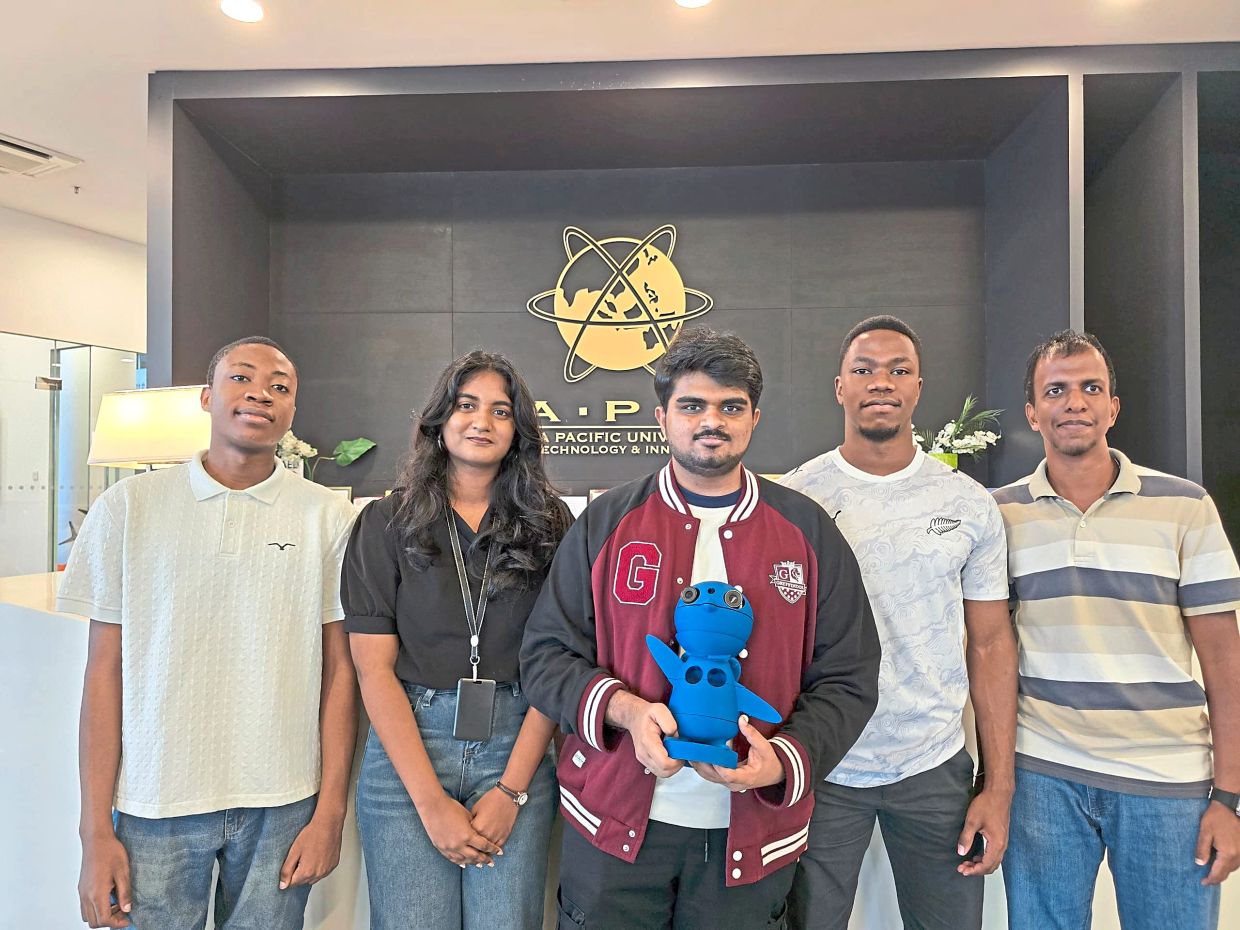
Seeking to address this gap, Hayley Nea Iaduray, a 24-year-old engineering student from Monash University Malaysia, developed a tuneable, battery-free wearable device designed to help reduce hand tremors.
Over the course of a year, she worked on it as her final-year engineering project, refining multiple prototypes and testing the concept using a custom-built rig that simulated Parkinsonian tremors.
The invention, named ZeMor, short for “Zero Tremor”, recently earned her the Malaysia National Winner title at the James Dyson Award 2026, along with RM27,160 in prize money.
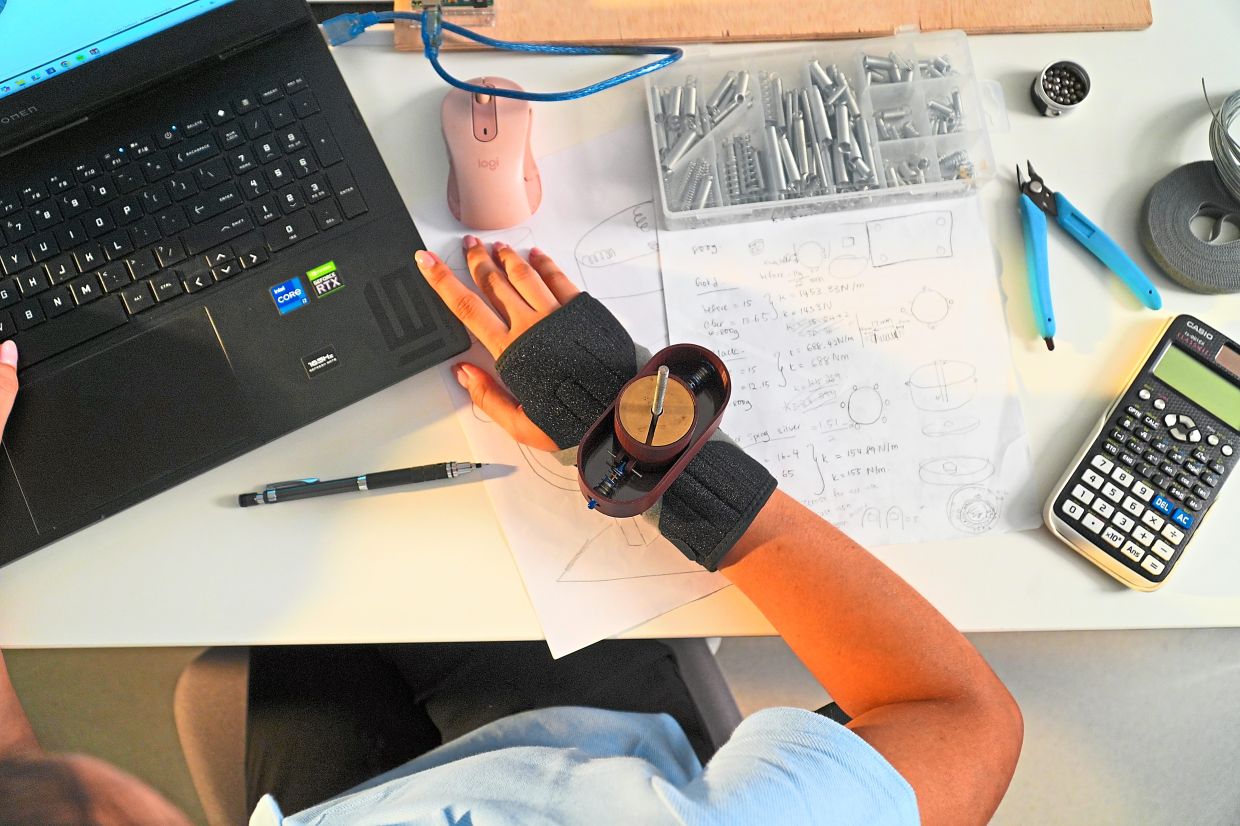
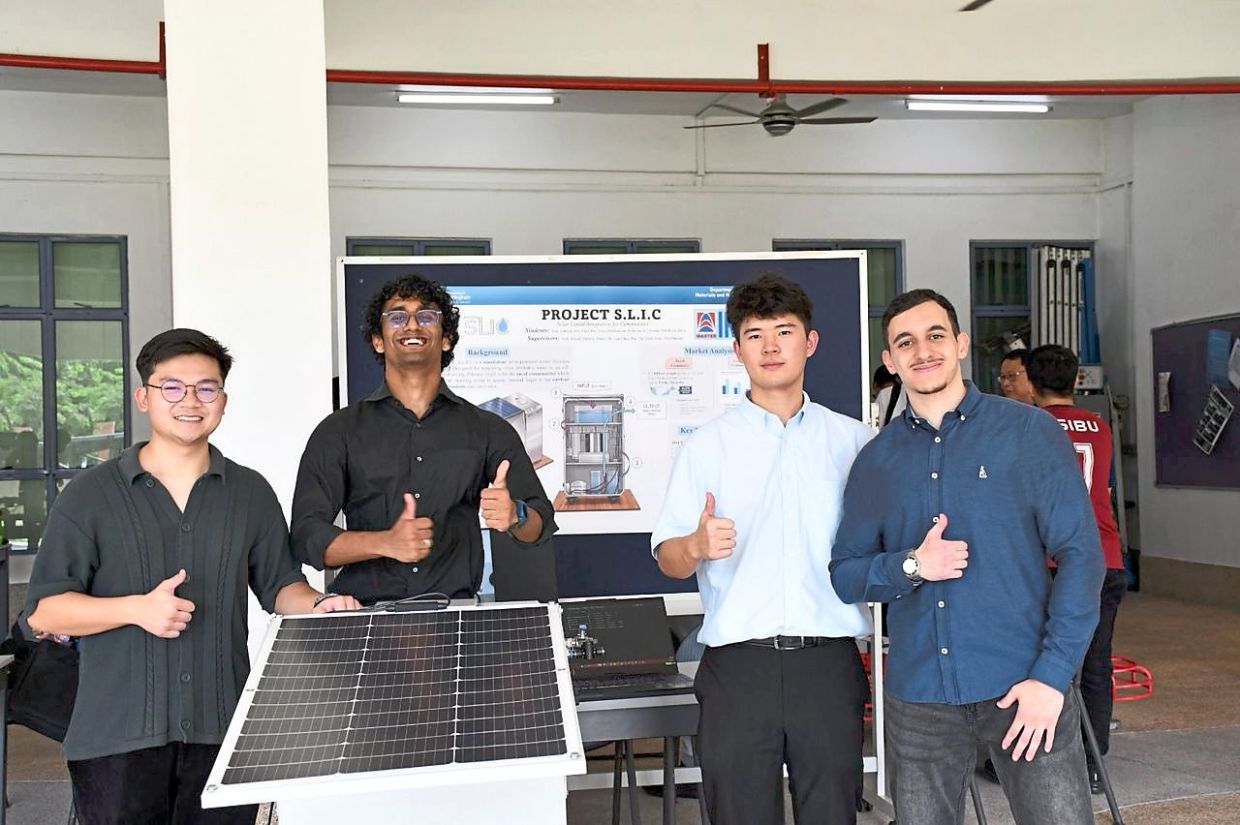
Hayley’s invention will now advance to the international stage of the competition, alongside runners-up S.L.I.C. (Solar Liquid Integration for Communities) and Pillay, for a chance to win RM162,999.
The international Top 20 shortlist will be announced on Oct 14, selected by a global team of Dyson engineers, while the international winners on Nov 4, selected by Sir James Dyson.
Reflecting on her achievement, Hayley said the recognition was a reminder that good ideas don’t always have to be complex; they just need to solve a real problem in a meaningful way.
“What excites me most is the possibility that a relatively simple piece of engineering could help people regain confidence in everyday tasks that many of us take for granted,” she said in a Sept 16 press release.
She added that the recognition was “incredibly motivating”.
“There is still a lot of work to be done, but this recognition gives me the confidence to continue refining the design and exploring how ZeMor can evolve in the future. If it can one day help even one person gain a little more independence in their daily life, every challenge and failed prototype along the way will have been worth it,” she said.
Inspired by the engineering systems used to stabilise skyscrapers during earthquakes and typhoons, ZeMor applies the same principle on a miniature scale to help reduce involuntary hand tremors.
It uses a miniaturised tuned mass damper, a mechanism commonly used in tall buildings such as Taipei 101.
When tremors occur, an internal weighted mechanism moves in response, helping to absorb and dissipate kinetic energy without batteries or electrical power. Unlike conventional passive tremor devices that rely on a fixed mass, ZeMor can be adjusted to suit different tremor frequencies by adding or removing weights.
The device uses readily available components like slotted weights, steel ball bearings, spring-based dampeners and other off-the-shelf hardware, alongside a 3D-printed housing.
This approach was intended to make tremor support more affordable and accessible across different communities.
Looking ahead, Hayley plans to use the prize money from her national win to develop the current single-axis prototype into a multi-directional system that can provide greater stability by responding to tremors from multiple angles.
The next phase will also involve working with medical professionals and research partners to evaluate the device with people living with Parkinson’s disease.
Dyson design engineering head Pae Yusof, who served as the judge for the 2026 James Dyson Award Malaysia, said ZeMor stood out for reimagining a familiar engineering principle in a way that addresses a real-world challenge.
“It’s a thoughtful example of how innovation often comes from looking beyond traditional boundaries and finding new applications for existing ideas.
“What impressed us most was the rigour behind its development. Hayley demonstrated a clear understanding of the problem, a willingness to test and refine her assumptions, and the persistence needed to translate an idea into a functioning prototype,” he said.
Run by the James Dyson Foundation, the award is an international design competition that challenges participants to devise a solution to a problem, be it a frustration in daily life or a global issue. Now in its 21st year, it has supported more than 400 problem-solving inventions with over RM8.18mil in prize money.
Runner-up inventions
S.L.I.C. (Solar Liquid Integration for Communities)
The challenge:
Access to clean drinking water remains a challenge in many remote communities, where safe water is often dependent on reliable infrastructure.
In areas such as Pos Kemar, Perak, some Orang Asli communities continue to rely on untreated surface water sources, while limited access to electricity restricts the use of conventional water treatment systems.
When clean water and reliable power are both difficult to access, communities are left with limited options for meeting one of the most fundamental daily needs.
The solution:
Developed by a team from University of Nottingham Malaysia (UNM), S.L.I.C. is a portable, solar-powered water purification system that combines multi-stage filtration, UV sterilisation, integrated heating and cooling technology, and real-time water quality monitoring to convert river, pond and rainwater into safe drinking water.
The suitcase-sized unit operates entirely on solar energy and can also provide power for basic household needs such as charging a phone and powering a fan.
By combining water purification, renewable energy and portability in a single solution, S.L.I.C. aims to bring clean water closer to communities where access remains limited.
Pillay
The challenge:
Obtaining accurate vital sign readings from young children can be challenging, as conventional screening methods often rely on physical contact that may cause discomfort or anxiety during examinations.
The solution:
Pillay, designed by a team from Asia Pacific University of Technology & Innovation (APU), aims to turn a clinical assessment of children into a more natural and engaging interaction.
Taking the form of a friendly penguin companion, the device uses optical, thermal and acoustic sensing technologies to measure heart rate, breathing rate, fever and cough patterns without physical contact.
Instead of relying on children to cooperate with unfamiliar medical devices, Pillay leverages their natural curiosity and attention to capture key health information, creating a more comfortable healthcare experience while helping healthcare professionals obtain accurate readings more efficiently.