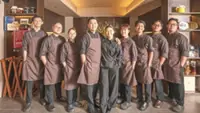
Embassy chef shares the philosophy behind Japanese cuisine
THE essence of Japanese cuisine lies not in elaborate techniques, but in the quality of its fresh ingredients and the precision with which they are handled.
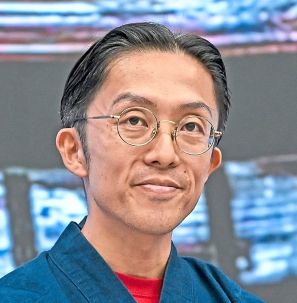
That philosophy guides Motomichi Takeno, official chef at the Embassy of Japan in Malaysia.
“Every morning, I wake up before 6am and head to Chow Kit Market to buy fresh fish and vegetables. Seeing the ingredients with your own eyes is what matters most,” Takeno told culinary students during a special lecture on Japanese cuisine at Taylor’s Culinary Institute, Taylor’s University, on July 17.
He explained that this approach is rooted in the Japanese concept of gochisou, which today refers to a wonderful feast but originally described a host running in all directions to gather the finest ingredients for their guests.
Takeno, a former chef for Japan’s Permanent Delegation to Unesco in Paris, added that the finest Japanese cuisine begins with the freshest seasonal
ingredients, enhanced only by subtle culinary refinement to bring out their natural qualities.
Another principle that has shaped his career is omotenashi, the Japanese philosophy of wholehearted hospitality.
“At the Embassy of Japan in Malaysia, I welcome and serve guests from all over the world, including Malaysians. The dishes I prepare are not strictly limited to traditional Japanese food,” he explained.
Instead, the menu changes almost daily as he tailors each meal to suit the guests’ backgrounds and preferences.
“I carefully consider their religious dietary requirements, age and gender. For repeat guests, I always check past records to ensure I never serve the same dish twice,” he said.
The lecture was the first of a four-part special series organised by the Japan External Trade Organisation (Jetro) Kuala Lumpur to inspire aspiring chefs who will shape the next generation of Malaysia’s hospitality and food service industry.
Following the introductory session, the programme will explore Japanese seafood and Wagyu beef before culminating in student presentations in November.
Also present at the event were Embassy of Japan in Malaysia minister and deputy chief of mission Nihei Daisuke and Taylor’s University global engagement pro vice-chancellor Prof Dr Anthony Ho Siong Hock.
In his speech, Nihei encouraged students to go beyond simply replicating Japanese cuisine.
“Instead, I encourage all of you to make the best use of the knowledge and inspiration you gain from this programme, and to combine it with your own creativity and Malaysia’s rich culinary traditions,” he said.
He added that culinary exchanges such as this play an important role in strengthening ties between the two countries.
“Japan and Malaysia have enjoyed a long-standing friendship, and I believe that young professionals like you will play a vital role in strengthening this bond in the years to come,” Nihei said.
Five Japanese culinary traditions
1. Training starts with a greeting
- In the Japanese restaurant industry, apprentices must first learn to greet others loudly and confidently (“Ohayo gozaimasu!”). Otherwise, no one will teach them how to cook.
- Proper greetings are also the first thing students learn at Japanese culinary schools.
2. The head chef is a father figure
- In traditional Japanese restaurants, apprentices address the head chef as “Oyajisan” (“Father”).
- The head chef mentors apprentices, who are expected to show the same respect they would show their own father.
3. Less is more
Traditional Japanese cuisine emphasises:
- Fresh ingredients
- Minimal processing
- Bringing out natural flavours
Japan’s access to fresh seafood and mountain produce meant there was little need for heavy seasoning.
4. Buddhist philosophy shaped the menu
Traditional Japanese cuisine was influenced by Buddhist teachings on moderation. That meant:
- Food shouldn’t be overly stimulating or intensely flavoured for peace of mind.
- Pungent ingredients like Chinese chives, Chinese onions, ginger and spring onions were traditionally avoided.
5. Meat wasn’t always part of the diet
- Meat was largely prohibited, while seafood remained acceptable.
- After Japan opened to foreign influence, the government encouraged people to eat more meat and adopt Western eating habits to build stronger physiques.
Source: Motomichi Takeno