
IN a fast-paced world, cultural heritage can sometimes take a backseat amid contemporary trends.
For two budding fashion designers from Tunku Abdul Rahman University of Management and Technology (TAR UMT), it became the inspiration behind their collection.
Seizing the opportunity to showcase their creativity and vision alongside aspiring designers from different parts of the world, Damia Najla Mohd Azman and Sai Geerthanjaly (or Anjaly) – both Bachelor of Fashion Design (Honours) students – presented their designs at Fashionology 2026 in Surabaya, Indonesia, recently.
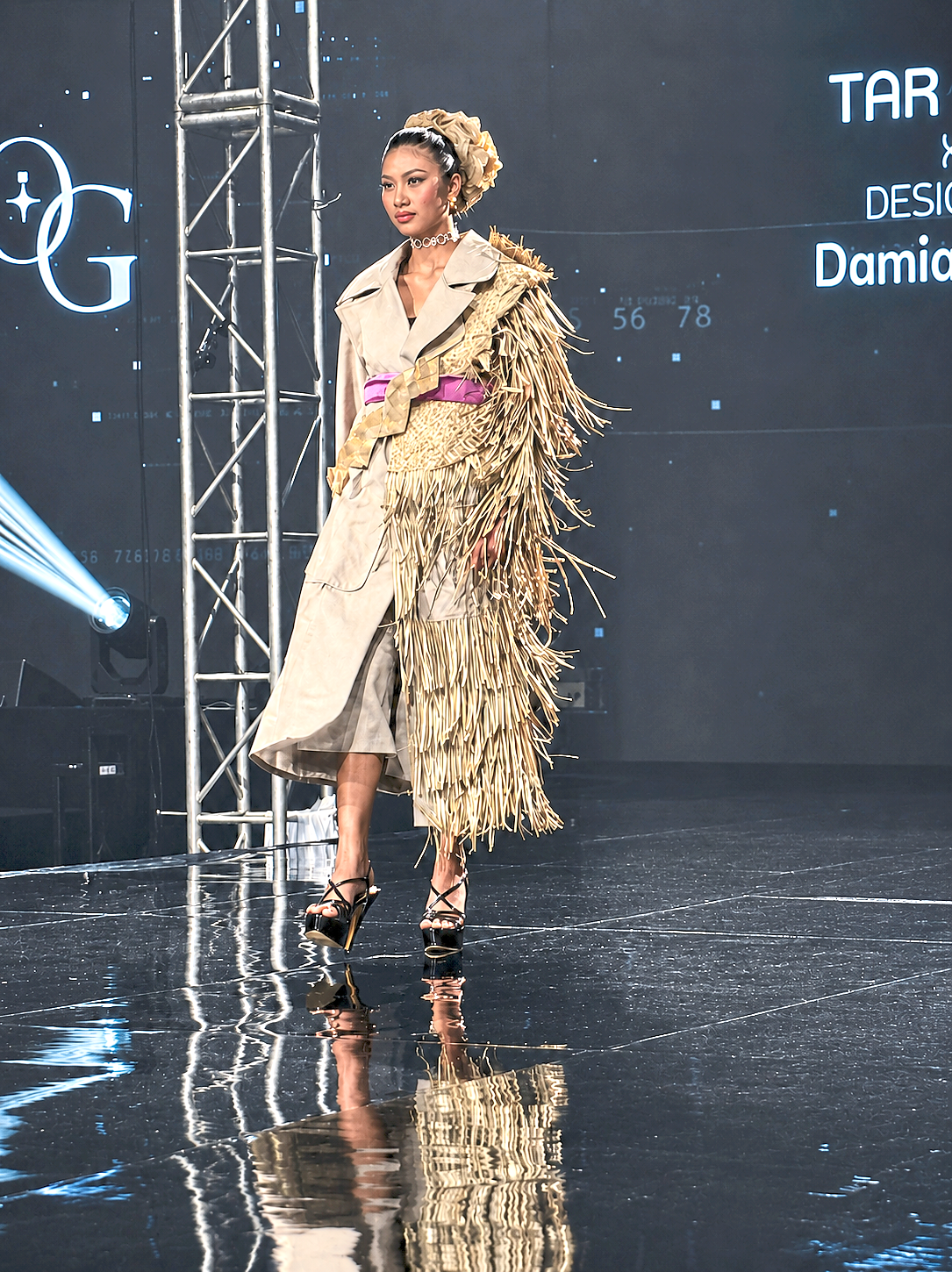
Held from June 4 to 7, the fashion show was organised by students from the Fashion Product Design and Business programme at Universitas Ciputra, a TAR UMT partner university.
Drawing inspiration from the traditions of Malaysia’s Senoi community, Damia Najla presented a collection celebrating indigenous heritage and folklore.
“I grew up in Sharjah, United Arab Emirates, and did not have much exposure to the rich Malaysian heritage. I often found myself wanting to learn more about my Malaysian roots, and this fashion show inspired me to explore and celebrate the richness of my own heritage through fashion,” she said in a June 24 press release.
“I was captivated by the beauty of the Senoi’s traditional craftsmanship, cultural practices and attire, especially the garments worn during their traditional Jo’oh dance,” she added.

The collection translates these influences into contemporary creative wear, featuring layered silhouettes and woven details.
“The layered silhouettes are inspired by the flowing forms of Lata Kinjang Waterfall in Chenderiang, Perak, while the woven details pay tribute to the Senoi community and their remarkable craftsmanship,” she said.
Reflecting on her experience at Fashionology 2026, Damia Najla described showcasing her work on an international runway as a meaningful milestone.
“It was truly a surreal and rewarding experience. Seeing the garments I personally handcrafted showcased on an international runway was a proud and emotional moment,” she said.
She added that the experience strengthened her artistic direction and deepened her appreciation for cultural storytelling through fashion.
Meanwhile, Anjaly presented her collection, Tinta, which explores batik as a medium for storytelling and artistic expression.
“My collection was developed as a reflection of my deep interest in the process of making batik and my appreciation for handmade textile craftsmanship.
“I became increasingly interested in treating fabric not simply as a material, but as a medium for storytelling and artistic expression,” she said.
Created entirely using the traditional batik canting technique, her collection emphasised patience and craftsmanship as part of her design philosophy.
“Rather than rushing the process, I allowed each piece to develop naturally over time,” she shared.
Anjaly also highlighted her intention to preserve traditional textile practices while reinterpreting them through a contemporary lens.
“In a fast-moving fashion industry, I wanted to create garments that celebrate time, handmade processes and thoughtful creation,” she said.
She added that seeing her work evolve from sketches into a completed collection on the runway felt “rewarding and emotional”.
“It reminded me that fashion is not only about garments but also about communicating stories and ideas across audiences.”