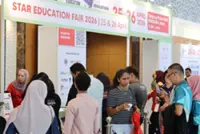
AS artificial intelligence (AI) reshapes industries, students today face a pressing question of what they should study to remain relevant.
The focus, education leaders say, should be on courses that build adaptable, future-ready skills that transcend disciplines.
Universiti Poly-Tech Malaysia (UPTM) Institute of Graduate Studies lecturer and master’s programme head Dr Syatila Che Saruji said as AI continues to evolve, the future belongs to those who can adapt, learn continuously, and apply their knowledge across different contexts.
“For students navigating this uncertainty, focus on building a strong foundation of skills, stay curious, and be open to change.
“In the age of AI, it is not the degree alone that determines success, but the ability to evolve with the world,” she advised.
She, however, emphasised that the starting point in choosing a course should be personal interest.
“Students should choose based on what they enjoy. When they are interested, they are more confident and motivated to excel,” she said.
At the same time, she emphasised the importance of staying aware of industry trends, particularly the growing influence of AI.
“Some fields require AI, while others still need the human touch.
“Students must balance their interests with what the industry demands,” she said, adding that rather than viewing AI as a threat, students must see it as an opportunity to enhance their capabilities.

These industries, he said, are undergoing rapid transformation, driven by both technological advancement and the global push for greener solutions.
“Students with AI and technical knowledge are very sought after – they are the ‘hot’ talent right now. We want our graduates to be at the forefront of that,” he said.
Yet, he cautioned against over-reliance on AI tools, as the ability to think critically, challenge assumptions and innovate remains uniquely human and highly valuable.
“AI is just a tool and if students simply accept what AI gives them without questioning it, they may get it wrong.
“What we want are graduates who can create, innovate and build new solutions, not just use existing ones,” he said, adding that this distinction is what will keep humans relevant in an increasingly automated world.
Blend of skills
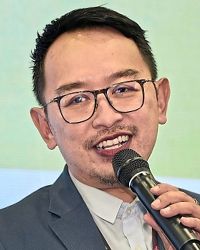
“MSU integrates future-ready competencies across all fields of study through its Personal Enrichment Competency courses.
“Regardless of whether a student is in medicine, fashion, or accounting, they are exposed to basic AI knowledge.
“It may not be at a professional level, but it ensures that every student understands what AI is, the fundamentals of it, and how it fits into their field,” he said.
He added that this integration must also go beyond the classroom.
“Nowadays, teaching methods are evolving, with both students and lecturers trained to use AI in learning and administrative processes.
“We want to make sure not just students, but also our staff are AI-ready,” he said, adding that educators continually learn from students, many of whom come with strong digital exposure.
However, he stressed that technical knowledge alone is not enough and soft skills remain critical in an AI-driven world.
“Communication, leadership and adaptability, which are often developed through extracurricular activities, are equally important.
“Communication is not just about public speaking; it includes written communication, teamwork, and how you manage real-life situations like organising events or handling stress,” he said, adding that these are the skills that will differentiate graduates.

“These skills are essential because they are relevant across all industries. We want our students to be well-rounded, not just technically capable.
“We are preparing students not just for current job descriptions, but also for roles that will emerge in five to 10 years,” she said.
Note: The academics were speakers and representatives of their respective universities at The Star Education Fair 2026, held at the Kuala Lumpur Convention Centre (KLCC) from April 11 to 12. The second fair is ongoing in Johor this weekend, ending today. Subsequent fairs will be held in Putrajaya and Penang in May. For details, visit @stareducationfair on Instagram or email edufair@thestar.com.my.
Weighing options
There were several key takeaways from the fair at KLCC as I explored tertiary courses I hope to pursue. One of my main considerations was local universities such as Universiti Malaya (UM), which I hadn’t seriously considered before. These universities offer majors directly aligned with my interests, such as international relations, politics and global studies. Combined with the significantly lower cost compared to studying abroad, this has made pursuing my studies in Malaysia feel far more attractive and realistic.
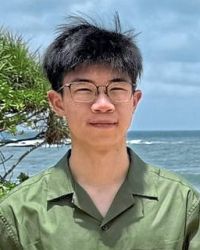
On the financial side, I also learnt about the wide range of funding options available in Hong Kong, including support from both universities and the government. The availability of programmes specifically targeted at Malaysians made the prospect of securing funding there feel much more achievable.
Caleb Chow, 17