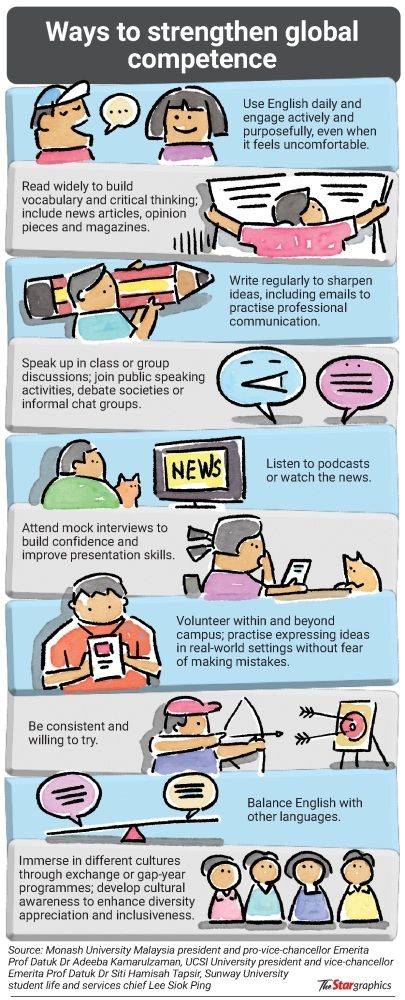
FUNCTIONAL English language skills, particularly the ability to communicate clearly, have become even more important in the age of artificial intelligence (AI).
Students must therefore strengthen their proficiency while pursuing tertiary studies and long-term careers (see infographic) – a call that the Star Education Fund’s partners-in-education advise taking seriously.
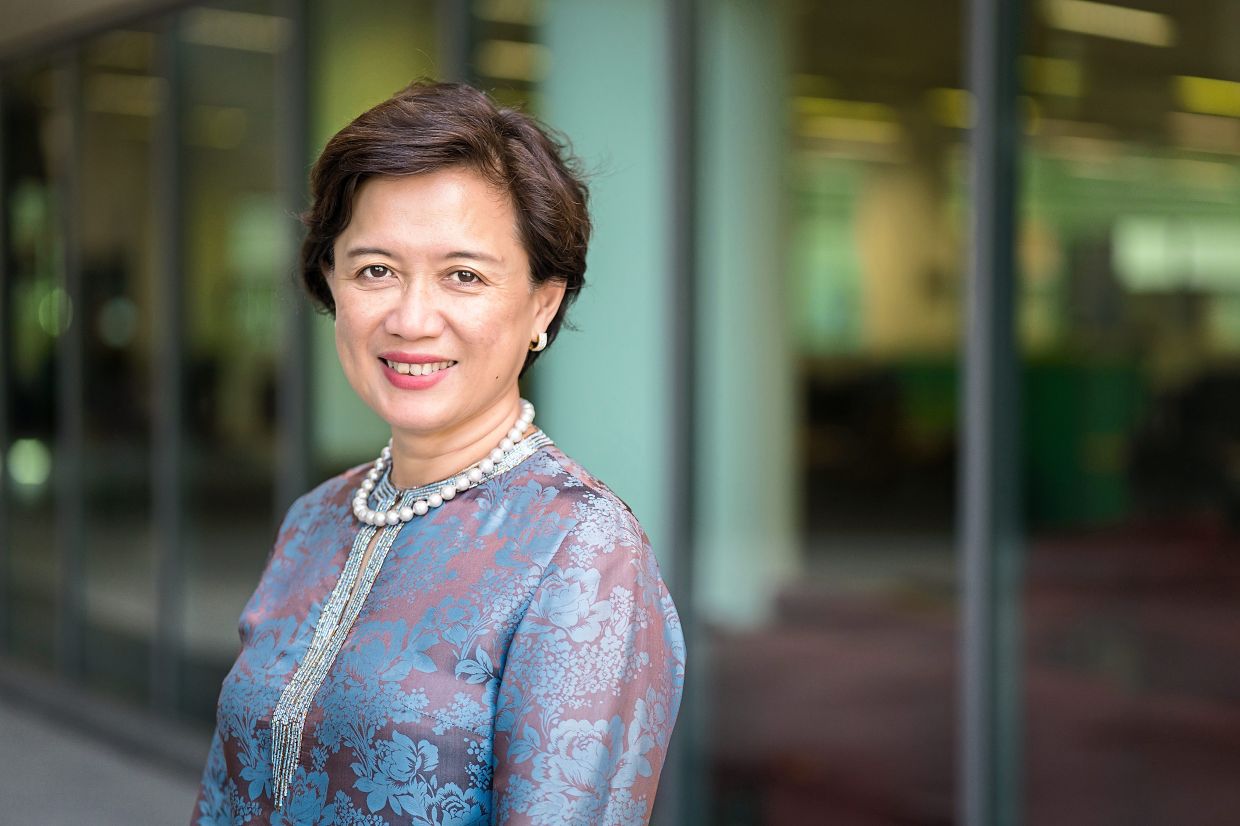
Noting that many of today’s leading AI tools and large language models are predominantly developed and trained in English, Monash University Malaysia president and pro-vice-chancellor Emerita Prof Datuk Dr Adeeba Kamarulzaman said students who engage confidently in the language are better positioned to access information, use digital tools effectively, and participate in emerging AI-enabled workplaces.
“English remains the main language of instruction, research and professional exchange in many disciplines.
“It continues to play an important role in higher education and the workforce, particularly in fields that are internationally connected and knowledge-driven,” she told StarEdu.
Prof Adeeba, however, emphasised that English proficiency should be understood less as linguistic perfection and more as the ability to communicate ideas clearly and confidently.
“Students do not need flawless grammar to succeed; they need clarity of thought and the confidence to express it,” she stressed.

Citing statistics, UCSI University president and vice-chancellor Emerita Prof Datuk Dr Siti Hamisah Tapsir said over 90% of global academic journals and scientific publications are in English.
“You can’t run away from it. Students with better English proficiency enjoy an advantage when it comes to accessing the latest research, resources and global insights,” she said.
Art of articulation
Sunway University student life and services chief Lee Siok Ping, reflecting on her role as Sunway Education scholarship committee chairperson, noted a lack of confidence among Malaysian students from diverse backgrounds in expressing ideas in English, particularly in formal or unfamiliar settings.
“Many students are able to understand lectures and written materials, yet hesitate when asked to speak up, present their views, or articulate their aspirations during interviews.

“Others struggle to organise their thoughts clearly, even when they have strong ideas and lived experiences to draw from. These gaps often reflect differences in exposure rather than ability, especially among students who did not grow up using English regularly at home or in school,” she said.
Tunku Abdul Rahman University of Management and Technology (TAR UMT) president Prof Datuk Dr Lee Sze Wei said presenting one’s thoughts clearly is crucial because a scholarship interview is essentially a test of leadership and vision.
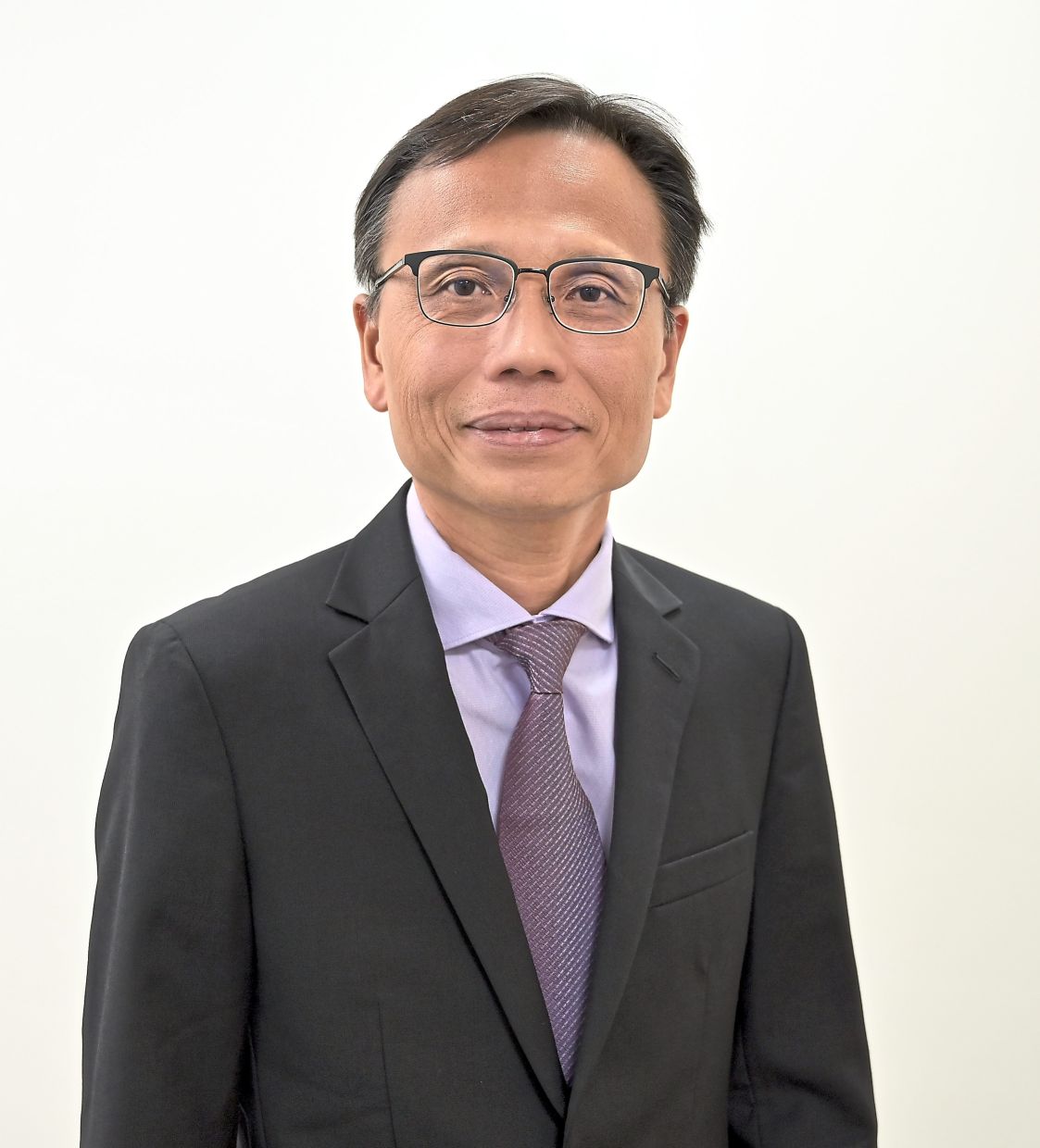
“An applicant may have a brilliant mind, but if they are unable to clearly share their aspirations, their potential may remain hidden. This does not mean the applicant is required to have a very high level of language proficiency; they just need to confidently share their thoughts and vision,” he said.
Ensuring equity
Agreeing, Heriot-Watt University Malaysia provost and chief executive officer Prof Mushtak Al-Atabi also cautioned that institutions and funding bodies must ensure students are not disadvantaged by unequal language exposure.
“This requires a commitment to fairness through holistic assessment practices that value ideas, reasoning and potential alongside language accuracy.

“Providing clear guidelines, exemplars and preparatory workshops can help level the playing field. Support mechanisms such as language programmes and interview formats that reduce excessive linguistic bias are also essential,” he said.
Oriental Nilam College of Nursing and Health Sciences chief executive cum principal Kathy Yu said language fluency should not overshadow a student’s academic merit, leadership potential or commitment to service, particularly in nursing and health sciences where practical competence and values are equally important.
“Institutions should create fair, inclusive and supportive assessment processes so that students are evaluated based on their potential and capability, not their language background,” she said.
Summing up, Prof Adeeba underscored that when access to education is paired with the right support, it becomes one of the most powerful drivers of social mobility and national progress.
“Our responsibility does not end at opening doors; it extends to ensuring that students are supported, empowered and equipped to thrive once they enter.
“This means investing not only in academic opportunities, but also in mentoring, well-being and the confidence to navigate unfamiliar environments. When we do this well, education becomes more than a qualification – it becomes a pathway to dignity, purpose and the ability to contribute meaningfully to society,” she said.
About the Star Education Fund
Launched in 1994 by the late Tan Sri Dr Sulaiman Daud – who was the education minister at the time – the Star Education Fund has benefited 4,601 scholarship recipients, with a total value of RM176mil.
For the 2025 scholarship cycle, 81 scholarships valued at RM6.9mil were awarded.
Among the top contributors to the Star Education Fund were Monash University Malaysia, UCSI University Kuala Lumpur and Springhill Campus, Sunway University, TAR UMT and HELP University.
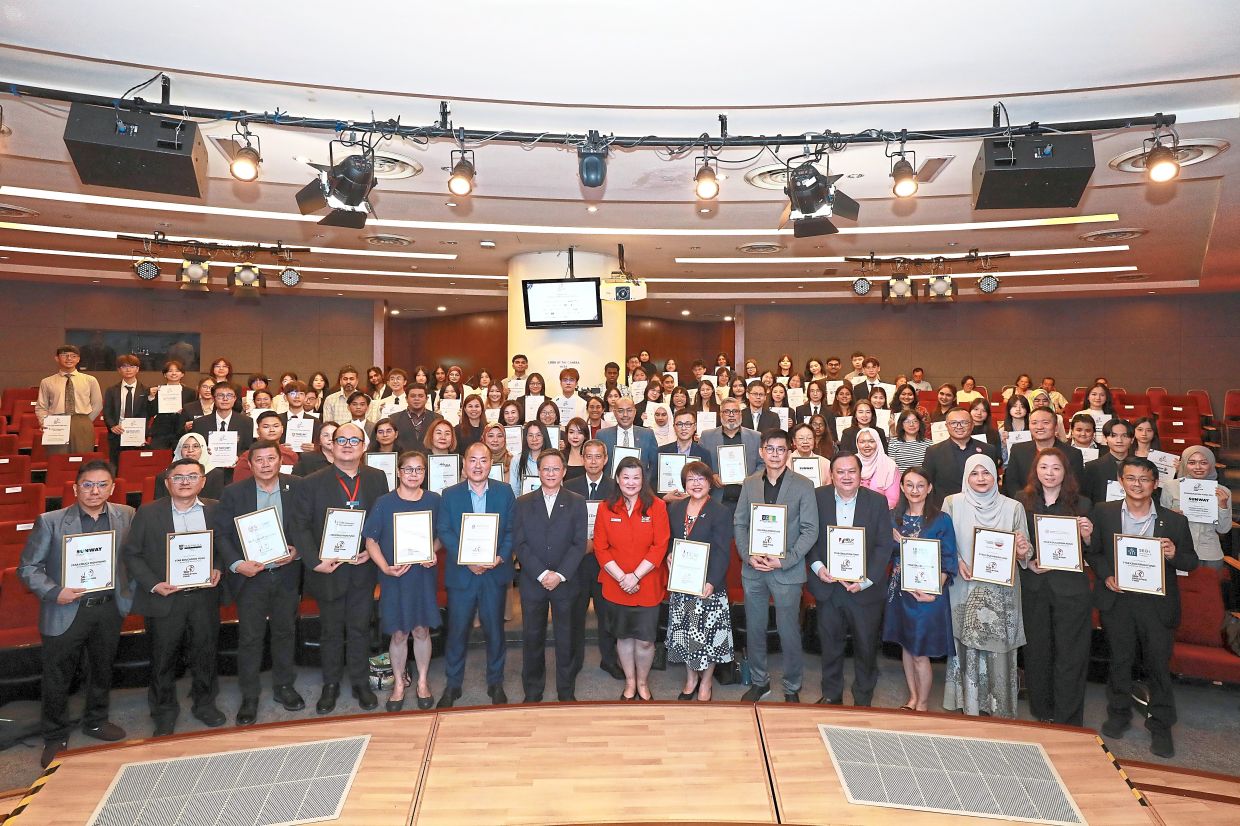
The Star Education Fund scholarship award presentation ceremony for 2025 was held at Menara Star on Feb 5.
At the ceremony, Star Media Group group chief executive officer Chan Seng Fatt also officiated the launch of the Star Education Fund Scholarship Awards 2026.
“I’m happy to announce that the outlook for 2026 is looking strong and we will be offering 217 scholarships valued at over RM14.71mil. For this, I’d like to thank our 29 partners-in-education,” he said.
The Star Education Fund will be making its 33rd consecutive run this year, with applications opening in March for students who wish to apply. For enquiries, email edufund@thestar.com.my.