TO rise in the fast-paced food and beverage industry, graduates must have knowledge beyond what books and lectures offer, says Prof Dr Neethiahnanthan Ari Ragavan.
Hands-on experience and real-world exposure are crucial, stressed the executive dean of Taylor’s University Faculty of Social Sciences and Leisure Management.
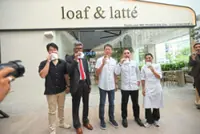
This, he added, is what the varsity wants to achieve through loaf & latté – its recently launched campus café that serves as both a commercial bakery and a training space to prepare students for challenges beyond graduation.
“Recognising that many graduates enter the workforce with strong theoretical knowledge but limited exposure to real bakery operations, Taylor’s Culinary Institute (TCI) aims to bridge this gap through the integration of a fully functional bakery into our academic structure – immersing our students in an authentic working environment where they can apply and refine their skills in practice.
“We aspire to develop the next generation of entrepreneurs in the patisserie scene,” Prof Neethiahnanthan said during the launch of the commercial artisan bakery in Subang Jaya, Selangor, on Dec 16.
TCI head of school Chef Frederic Cerchi said the bakery was created with a clear academic objective: to bring real industry operations directly into students’ learning journey.
“Many young pastry graduates enter the industry only to discover that real bakery operations are far more demanding than theory and controlled lab work.
“The integration of loaf & latté into our academic structure bridges that gap and reflects Taylor’s commitment to integrating industry practice into classroom learning.
“It gives students a true, hands-on bakery environment to build confidence, instinct and real-world readiness,” he said, adding that students at the institute will take part in a “bakery takeover project”, during which they are given full ownership of the bakery and its state-of-the-art kitchen for a couple of weeks.
The students, he said, are exposed to essential management skills such as food cost and profit margin analysis, inventory planning, manpower management, dealing and negotiating with suppliers, applying new technology and digital systems, and understanding issues related to cost of overflow, demand and quality control.
“This develops leadership, decision-making, creativity and entrepreneurial confidence,” he said, adding that students can also complete their internships there for three or six months.
Describing the bakery as a “living lab”, Cerchi said the kitchen can accommodate up to 20 students, allowing them to conceptualise, create, market and sell their products to other students and the public.
Plans are underway to conduct masterclasses in French boulangerie and French pastry for students outside the institute and the public, he added.
Going forward, TCI aspires to nurture the next generation of culinary entrepreneurs through its Business Incubator Programme, which includes an advanced track offering franchising opportunities for students who demonstrate strong interest and capability.
Students from Years Two and Three can apply to manage future loaf & latté outlets, supported by comprehensive training, standard operating procedures, brand guidelines and ongoing mentorship from TCI.