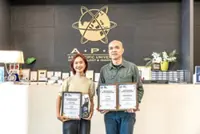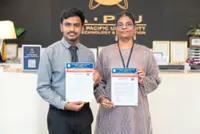
SIX Asia Pacific University of Technology & Innovation (APU) students recently made waves at the Heriot-Watt University Malaysia (HWUM) Datathon 2025 by securing top positions amid stiff competition.
Organised by the HWUM Society of Actuarial Science and Society of Logical Interpretation of Data, the datathon challenged varsity students and industry professionals to develop innovative solutions to real-world business problems using data science techniques.
Held on March 19, the competition saw Team WantanMe and Team Probabili-Tea claiming the first and second runner-up titles, respectively, in a show of analytical excellence and cross-disciplinary collaboration.
The former took home the RM6,000 cash prize, while the latter received RM2,000 for their effort. In total, the event featured a prize pool of RM12,500, underlining its importance as a key platform for fostering Malaysia’s future data talent.
“Our models didn’t just predict sales; they provided a roadmap for sustainable growth.
“For example, redirecting costs from zero-sales outlets into targeted online discounts could lower operational costs by 15% while significantly enhancing customer acquisition,” said WantanMe team lead Whitney Lim Wan Yee.
Meanwhile, Probabili-Tea focused on adaptive pricing strategies based on real-time data and market shifts, ensuring both competitiveness and long-term profitability.
“Balancing technical precision with business practicality was key.
“We designed a model that could flex with market demands while sustaining growth across seasonal cycles,” said Probabili-Tea team lead Janet Tan Hui Xin.
The road to the finals began with a preliminary round on Feb 22, where participants addressed risk classification using machine learning.
In the finals, the APU teams – comprising the varsity’s BSc (Hons) in Computer Science and BSc (Hons) in Actuarial Studies students – were tasked with using data-driven strategies to optimise sales operations for a global electronics retailer grappling with inventory management and seasonal demand fluctuations.
Guided by APU School of Technology senior lecturer Dr Kohila Malar Kalesamy, the teams showed resilience by navigating the nuances of Covid-19 pandemic-driven data anomalies, and refining their solutions to reflect both technical depth and strategic alignment.
Reflecting on the students’ achievement, Kohila said their solutions blended technical rigour with cost-benefit analysis – a hallmark of industry-ready graduates.
“The dynamic pricing models, particularly, showed an understanding of both accuracy and scalability that impressed the judges deeply,” she said in a press release.