POURING used cooking oil down the sink or drain may seem like an easy way to discard it, but it comes with consequences.

For Ong Jing Rou, Natalie Tham and Ng Wen Kai, the problem surfaced through a stubbornly clogged kitchen drain.
It was only after a plumber warned them about the cumulative effect of pouring oil down the sink that they realised the magnitude of this often-overlooked environmental challenge.
Taking inspiration from their personal encounter, the trio – industrial design students from the Asia Pacific University of Technology & Innovation (APU) School of Media, Arts & Design (SoMAD) – set out to find a sustainable solution.
Their invention, Unblok, which captures FOG at the sink with a palm-fibre waste filter, took shape after more than a year of development through cycles of prototyping and testing with real kitchen waste – from curry residue to cooking oil – and experimenting with multiple natural fibres such as coconut husks, sugar cane bagasse and rice hulls.
Their persistence was rewarded recently when they were named Malaysia National Winner of the 2025 James Dyson Award.
Run by the James Dyson Foundation – British inventor Sir James Dyson’s engineering education charity – the annual international design competition challenges students to develop effective solutions to problems through considered design thinking.
APU’s latest national winner title at the competition is the varsity’s fourth, adding to victories in 2020, 2021 and 2024, as well as a national runner-up finish in 2022.
“It started with the simple frustration of a clogged sink, but the deeper we researched, the more we realised how significant this issue is for urban environments. Fatbergs cause flooding, damage infrastructure and put sanitation workers at risk.
“We wanted a solution that wasn’t just effective, but also environmentally responsible. That’s why we turned to palm fibre – it’s natural, biodegradable, and locally abundant,” the 2025 champion team shared in a Sept 10 press release.
Their solution works through the placement of a modular filter beneath the sink. After the standard strainer catches food scraps, wastewater flows into Unblok, where its core, made from natural palm fibre – an agricultural by-product of palm oil often discarded or burnt – traps fats and grease. Once full, the core can be easily replaced.
“Simple to instal and maintain, the compact system fits discreetly into existing pipes in household kitchens, bustling restaurants or large-scale food outlets without the need for tools.
“The design not only protects private and public infrastructure from costly and hazardous blockages, but also creates a second life for agricultural waste,” the press release read.
With the RM27,800 prize money, the team, guided by certified industrial designer Eekang Ooi, plans to further refine their invention, expand pilot testing, and build partnerships for a closed-loop ecosystem, according to the release.
They also envision collecting used filter cores and processing them into fertiliser, biodiesel, or fuel pellets, closing the loop from waste to value, it added.
SoMAD head Debbie Liew Pooi Kuan said the team’s achievement is a proud moment for APU.
“It strengthens our resolve to keep shaping solutions that matter.
“We believe in design with purpose. Every project we nurture is about more than aesthetics; it is about problem-solving and impact,” she said.
Unblok, along with national runners-up Ecliptica and Flood Monitoring Alert and SOS System, will now advance to the international stage of the James Dyson Award.
The Top 20 shortlist, selected by Dyson engineers, will be revealed on Oct 15, with the global winners chosen by Sir James Dyson on Nov 5.
International winners will receive up to RM166,700 while international runners-up will be awarded RM27,800.
Celebrating the next generation of design engineers, the award runs across 29 countries this year and has supported more than 400 problem-solving inventions with over RM5.7mil in prize money.
Innovative runners-up
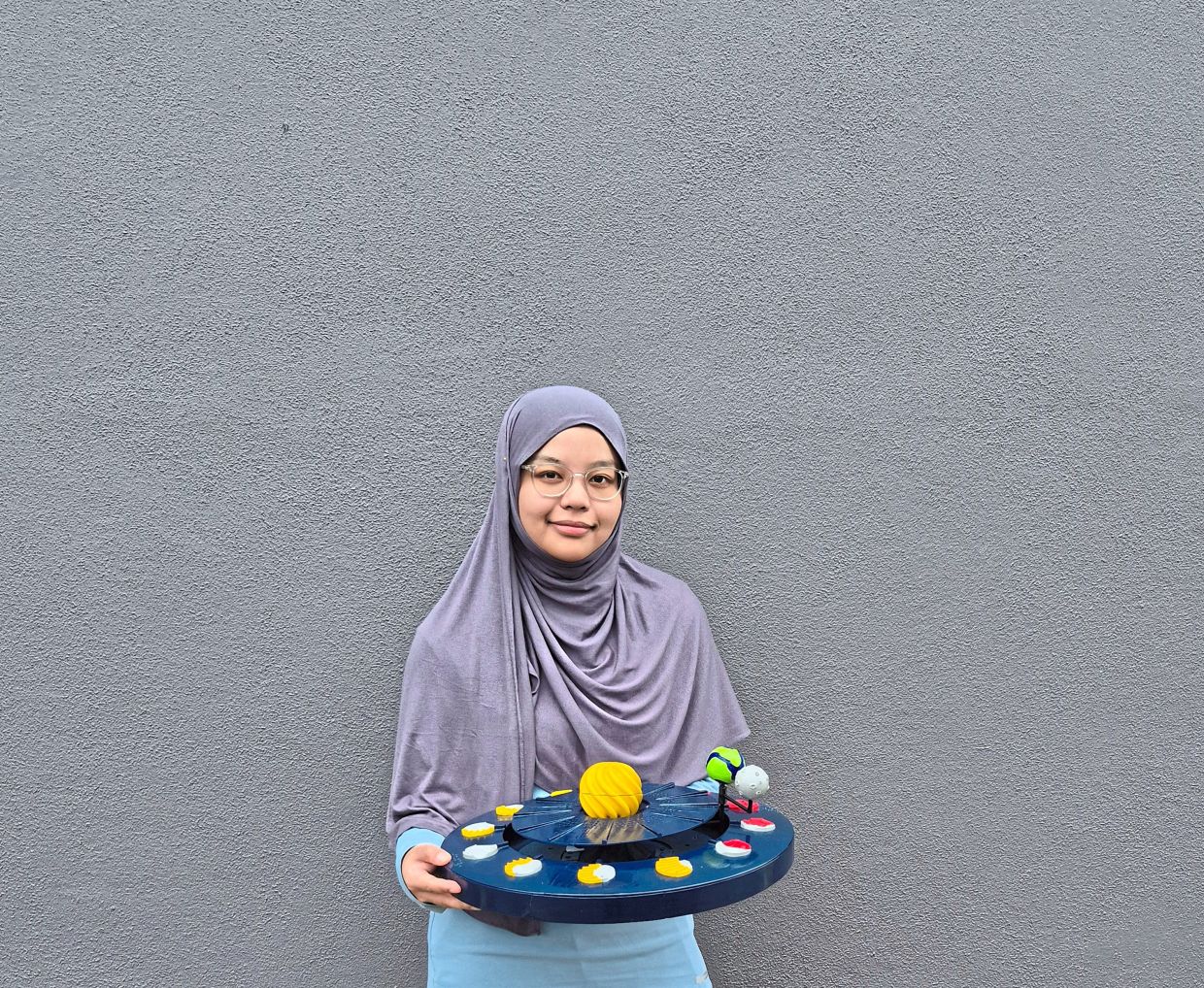
Ecliptica by Universiti Sains Malaysia student Nuha Annisa Mohamed Nazmi
A tactile and audio-based learning tool, Ecliptica was created to make astronomy accessible to B2 and B3 visually impaired students.
The system combines textured 3D models of the Sun, Earth and Moon with high-contrast visuals, spatial movement, and future audio guidance to explain eclipses.
Designed with inclusivity in mind, it also benefits sighted learners, making science lessons more collaborative and engaging.
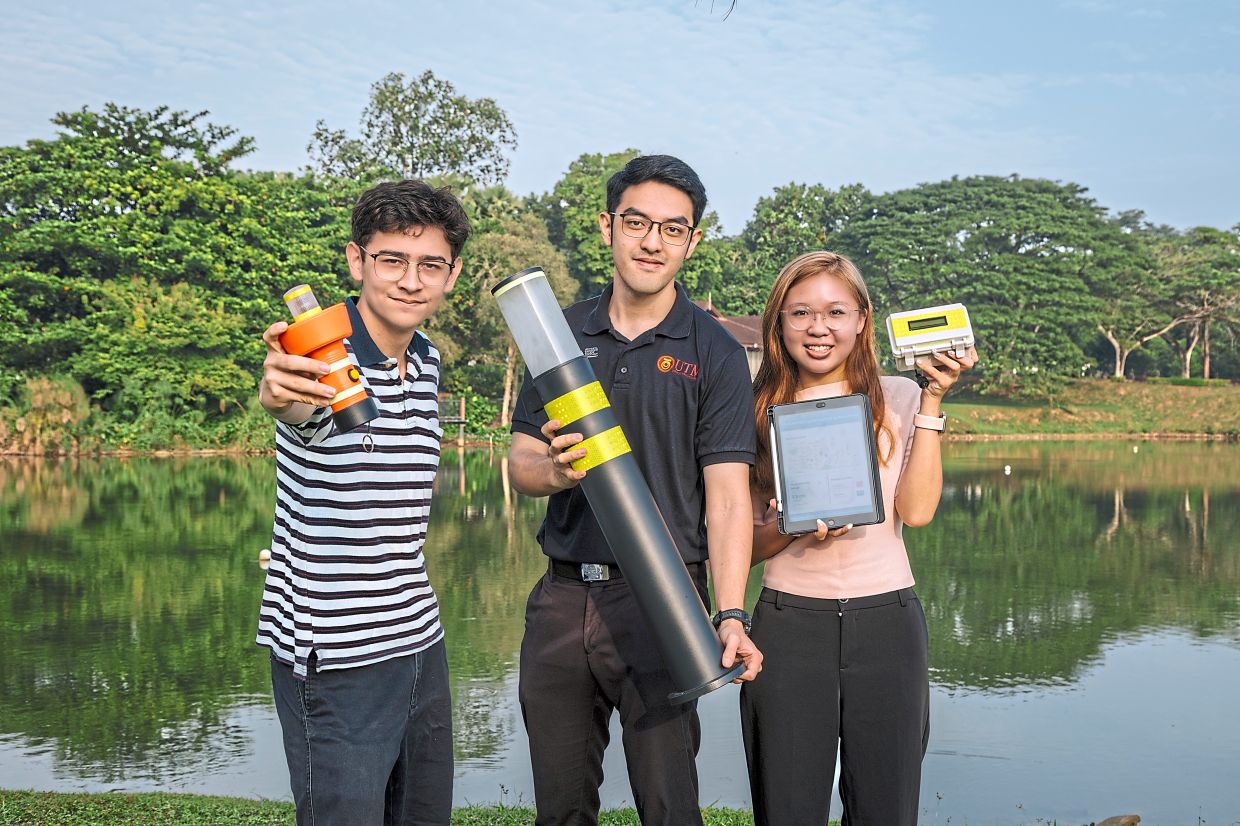
Flood Monitoring Alert and SOS System (FMAS) by Universiti Teknologi Malaysia students Ming Fong Chow, Magnus Gin Xiang Short and Zhi Ying Wong
FMAS was designed to help keep flood-prone communities safe with an affordable, easy-to-use network.
It consists of three parts: a solar-powered flood detection sensor that tracks rising water levels, a web-based dashboard that shows real-time data and sends alerts, and a household SOS beacon that warns residents and allows them to signal for rescue with their GPS location.
Unlike traditional systems that depend on mobile networks, FMAS runs on LoRa, a low-power, long-range communication technology that remains reliable during disasters.
By combining early warnings with a direct SOS channel, FMAS empowers vulnerable communities with faster response and better coordination to save lives when floods strike.