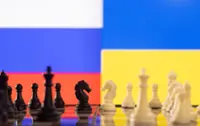
‘Chess educates as no lecture can’


More than a game: Chess cultivates a sharp reflective mind in living a quality life and managing business success. – 123rf.com

MANY old civilisations developed a tradition and culture of chess playing.

Xiangqi and Weiqi (or Go), both of Chinese origin, and International Chess are the most popular chess games.

Xiangqi has the largest number of players in the world, followed by Weiqi and International Chess. Each has its own rules and chess pieces with different roles and values.

Weiqi is the most complex, although the rules are simple, and each piece, black or white, is identical to the rest.

Presently, the countries which have the largest number of International Chess grandmasters are Russia, the United States and China.

A zero-sum game of strategy, chess requires disciplined thinking and imaginative visualisation about outcomes.

Although not a physical sport, it is mentally strenuous and emotionally stressful. A game can last five hours or more.

Mirroring life

There are many lessons we can learn from playing chess that can be applied to our lives and businesses.

It teaches us to: anticipate challenges and make contingency plans; strategise and choose alternative best moves; see the bigger picture; notice patterns and relationships; think creatively; sacrifice and take risks if necessary; make decisions without emotion; develop discipline, patience and concentration; value every move; prioritise our focus; and seize opportunities.

We also learn to lose graciously and appreciate the experience, and be mindful and physically, emotionally, mentally and intellectually fit for purpose.

Indeed, chess should be part of everyone’s lifelong experiential learning.

But, of course, life is more complex: it has more uncertainties and there are more exogenous variables.

Decisions are also not all made by our individual selves but are often interconnected with other individuals and circumstances.

In a way, life is one changeable game with rules constantly rewritten by those in power and by nature, like the Covid-19 pandemic.

In chess, most of the opening permutations are well worked out by artificial intelligence (AI), which can explain the best moves for any given game.

But AI cannot design nor decide our emotions in living our lives and forming or losing relationships. Life is almost always about relationships.

Still, there are useful lessons from playing chess, though the range of decision-making required is limited.

The right move

While chess games are restricted by the board and the rules, each move has a cumulative impact.

Thus, in a way, it is not how many moves we can think ahead; the decision is to make the right move every time.

This is a powerful reminder about “doing the right thing right” the first time.

So, each chess move, even by a humble pawn, is not inconsequential.

At the recently concluded 17th World Chess Championship 2023, Chinese grandmaster Ding Liren made a genius move.

Playing white, he moved the white pawn to D5 and created a brilliant checkmate.

This move, although appearing harmless, was the killer move that controlled the only space left for the black queen.

This was thought five moves ahead of the checkmate.

Imagine a humble pawn with little value – compared to all other pieces – becoming the most strategic power piece on the board. Sometimes, such situations happen in life too.

Every small move in life leads to the sum total of our journeys. While we may sometimes miss the right moves, life fortunately gives us many opportunities with different intensities and stages to relearn from our previous moves.

If life is a journey of many varied games, then we cannot avoid playing them. The answer is to learn to find coherence in the patterns and relations among the multiple variables that influence our lives now and the future.

Consistency in each move is thus the basis for success in chess and in life. Chess is played within a given duration. Life has its timeline too.

The practical lesson from chess is that it provides experimental learning for decision-making in a short time under pressure, and using cold calculation and imaginative creativity to optimise each move for the final win.

Life is, of course, more complex, but many aspects of chess, with regard to what next move to make, apply to how we make decisions in life and about life.The recent World Chess Championship ended in a draw between Ding and Russian grandmaster Ian Nepomniachtchi. They subsequently played a series of rapid games within a shorter duration until Ding emerged as the winner in the tie-breaker, thus becoming the first Chinese to win the championship.Life is the same: there are certain “games” that require solutions under very stressful circumstances with time limitations and limited resources.

Only resourcefulness, and perhaps fate, is left to decide the outcomes.

Learning how to play chess should thus be an integral part of lifelong experiential education. It educates as no lecture can, and cultivates a sharp reflective mind and other useful habits in living a quality life and managing business success.

Prof Datuk Dr Paul Chan is the co-founder, vice-chancellor and president of HELP University (Malaysia). The views expressed here are the writer’s own.

Get 20% OFF The Star Digital Access

Monthly Plan

RM 13.90/month

RM 11.12/month

Billed as RM 11.12 for the 1st month, RM 13.90 thereafter.

Best Value

Annual Plan

RM 12.33/month

RM 9.87/month

Billed as RM 118.40 for the 1st year, RM 148 thereafter.

Follow us on our official WhatsApp channel for breaking news alerts and key updates!

Next In Education

KL Education Dept to take legal action over viral student brawl
KL retains spot among world’s top 15 best student cities in QS 2027 ranking
Setting the scene for creative talent
Balancing tech with basics
Heritage on the runway
UKM lands �1.8mil mangrove grant
UTAR launches first OpenHarmony club outside China
Former CJ, real estate leader honoured
Oman scholarship
Shaping green behaviour

Others Also Read