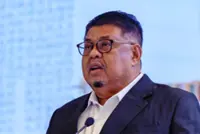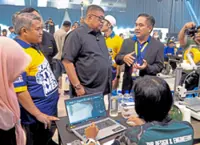
"During the days of Covid-19, we couldn’t get into classrooms to gain hands-on experience of working with equipment. We need to take a closer look at digitalisation - specifically, simulation models. These models which can be used for learning through the computer, may be able to simulate the hands-on learning experience. We need to look at re-engineering education and training because the world is facing an enormous disruption – the most recent being Covid-19 – which has a great impact on education."
Education Innovation for Development Consultancy, Hong Kong, founder and CEO Prof Rupert Donald Iain Maclean
"When it comes to digitalisation in TVET, there are major inequalities between learners, businesses and TVET trainers in their ability to use digitalisation. It is also a great challenge to transfer face-to-face experience for TVET to online learning. Most of us are still feeling our way to figure out how to create better interaction. No matter what, we need to be aware that face-to-face contact is still critical in any educational setting."
ICDL, Thailand, founder and managing director Dr Hugh Patrick O’Connell
"Government control is very important. We need regulations to ensure standards are met with a little flexibility to engage industries and tweak our syllabus. If there is no regulation, TVET colleges will be mushrooming everywhere. For us to embrace digitalisation, the way the regulatory bodies assess skills needs to change too."
Kolej Megatech CEO P. Sailanathan
"Most TVET students are from rural areas. We know that there are a lot of activities that can be done on online platforms but it is still difficult. How do you provide the same learning experience to TVET students when they are used to face-to-face learning? They know how to practise in laboratories and workshops. But what happens now when we have to move teaching and learning online and from home? With a digital platform, we can save time. We can conduct activities where the students themselves are encouraged to explore and learn on their own. There are plenty of benefits to us using digitalisation for TVET activities."
Universitas Negeri Yogjakarta, Indonesia, lecturer Prof Dr Moch Bruri Triyono
"Virtual training has a downside – you cannot feel what you are doing. We need a way to get some sort of feedback on top of virtual training to make sure it succeeds. There are other elements that we can carry out to ensure graduates who train virtually are just as good as those who undergo face-to-face training. Industry participation is another issue we struggle with. In our experience, industry players must be part of the students’ assessment. Until the industry takes on a bigger role in outlining assessments and the trajectories the trainees need to achieve, we won’t get far."
Shazinnovation Solution technology director Dr Rahmat Shazi
Note: Prof Wan Fauzi, O’Connell, Prof Triyono and Rahmat spoke at the TVET Expo and Summit 2021.
Already a subscriber? Log in
Get 20% OFF The Star Digital Access
Cancel anytime. Ad-free. Unlimited access with perks.