
The ‘heong peah’ or fragrant biscuit’s rise to ubiquity led to the opening of many businesses. The Tiger Head brand in Teluk Intan is one, and it has gone from strength to strength even as others fall by the wayside, reports KELLY TEY.
THE humble heong peah or beh teh saw, which translates as fragrant biscuits or horseshoe biscuits, has launched many a business in the local confectionery market.
The thing is: it was never really considered a special delicacy when it was first introduced. These sweet biscuits were just a regular treat enjoyed over breakfast or teatime, like bread or cream crackers.
Perhaps it was a hankering to upkeep something considered traditional or maybe it’s something about the recipe, but the heong peah found its way into consumers’ hearts and became a mainstay.
Lee Joo Heng, managing director of Sin Joo Heong Confectionery Sdn Bhd in Teluk Intan, has witnessed the change in trends over the years, having taken over his father’s business which makes the Tiger Head brand of biscuits.
He says the family business, founded in 1962, was in operations even before it was officially established.
“My father and his siblings ran a confectionery business before this. It did not revolve around biscuits, but rather seasonal offerings used in Chinese festivals such as fa gao, a Chinese cupcake type of pastry,” he explains.
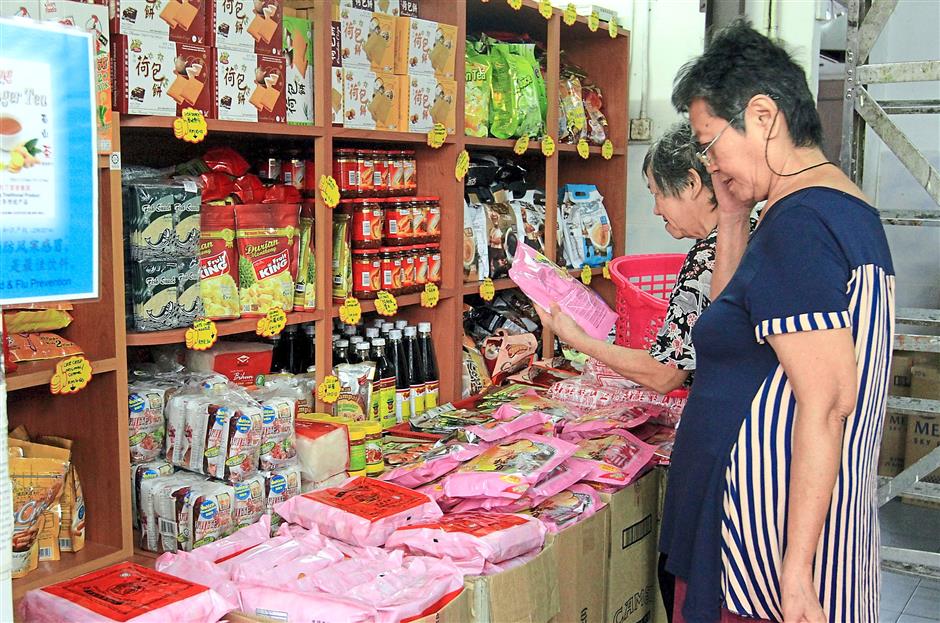
Lee says his father eventually ventured out on his own to focus on making heong peah, but he adopted the Tiger Head brand, which had always been a part of the family’s original logo.
“At that point, the biscuits weren’t even known as heong peah yet,” says Lee.
Even though they weren’t particularly in demand, his father thought the treat had the potential to be something bigger.
“A friend from Bagan Datoh taught my father how to make the biscuits because he thought my dad was a sincere person,” Lee remembers.
Having learned the recipe, his father took it upon himself to improve the biscuit until he was certain of the quality.
“My father was a very hardworking man. He would pack all the Heong Peah he baked into metal biscuit barrels, and every day, he would ride his bicycle to over 20 grocery shops to sell them,” reminisces Lee.
Slowly and surely, his biscuits started to fare well with the locals, and even began to pique the interest of visitors. It was around this time that people started presenting the heong peah as gifts or souvenirs, along with a number of other biscuits, including the tau sar peah (mung bean biscuits).
The popularity of the biscuits gave rise to many confectionery businesses. This was in the 1980s.
“In Teluk Intan itself, there were many companies making them. Even the staff who had learned the secret of the trade ventured out on their own,” Lee recalls.
Only a handful of the shops that flourished in those days remain today.
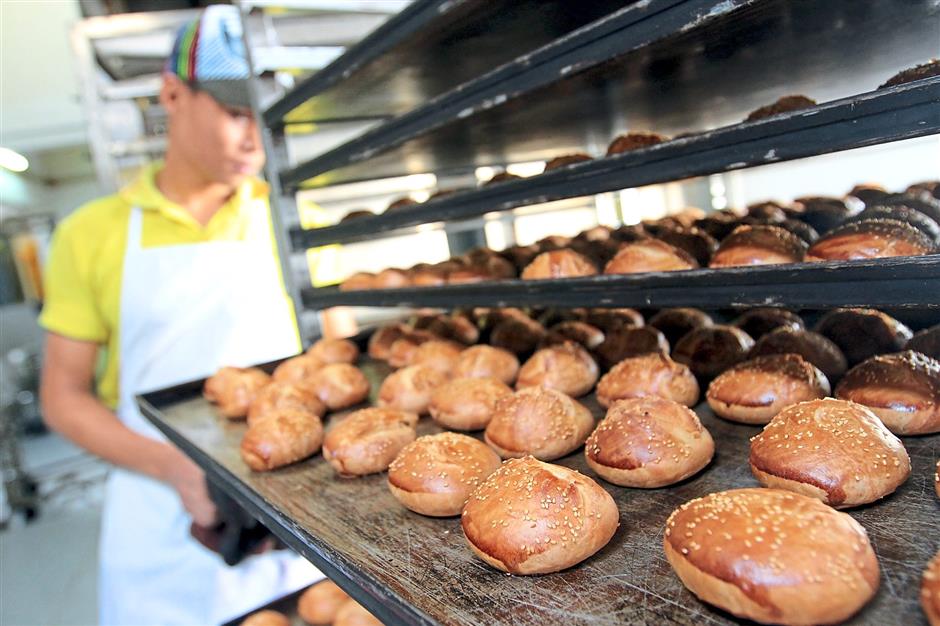
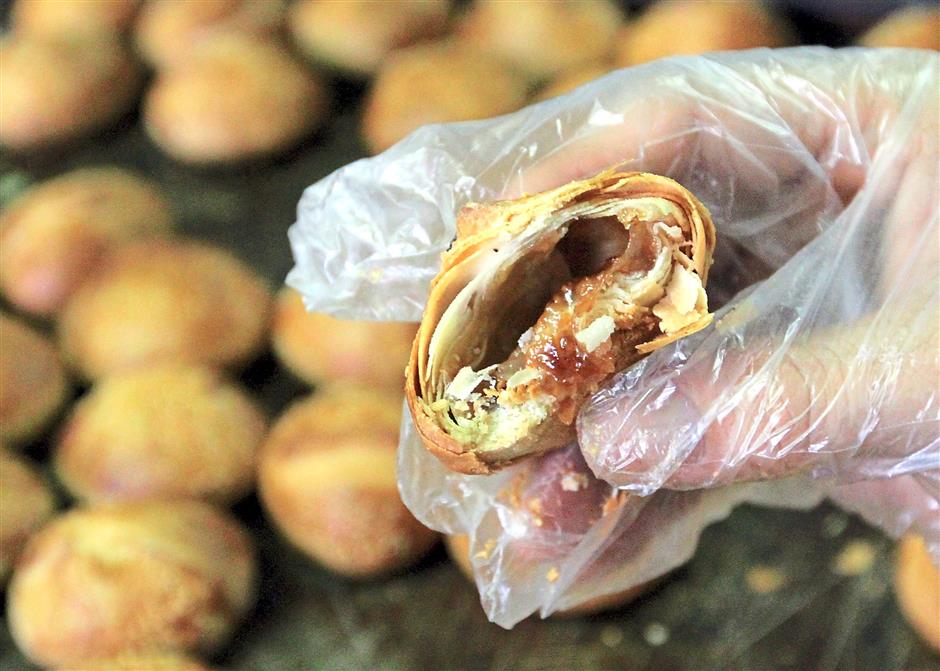
“Penang and Ipoh also has many brands, but we are not so much rivals as customers have different preferences,” says Lee. “Some have different ingredients, some are more crispy, some flaky; the biscuits are made to suit their specific set of customer demands.”
“People enjoy them differently,” he adds.
Today, Lee continues his father’s legacy by making sure the biscuits remain, as much as possible, as they have always been.
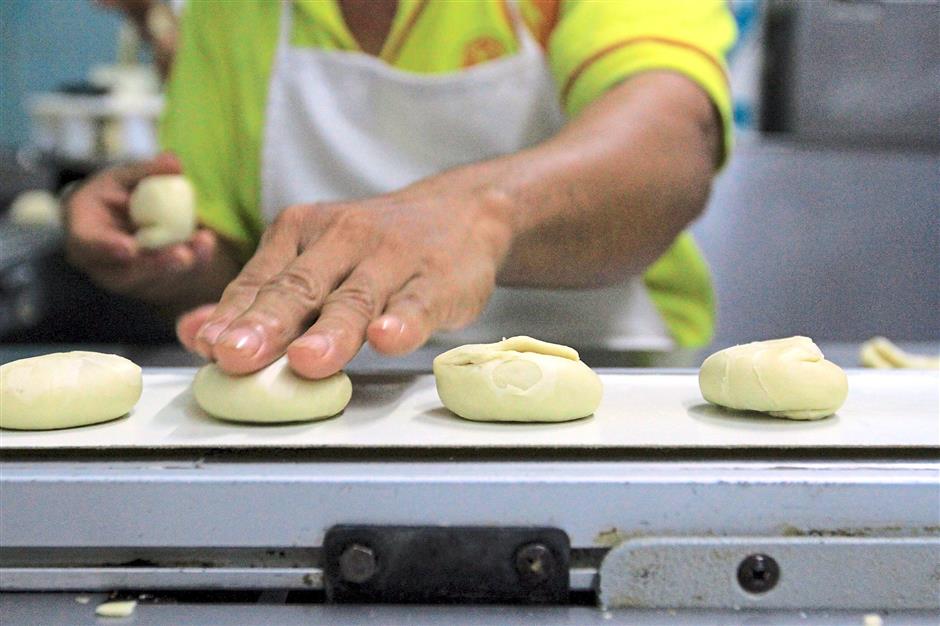
While machines have replaced much of the manufacturing process, Lee is staying true to his father’s style. One of the most important things that he insists on is that the dough be kneaded by hand.
“In the old days, there used to be an assembly line of about 30 to 40 people for the entire process. With help from the machines, we only need a staff of about seven now,” he explains.
Over the decade, Lee says he has made some adjustments to the recipe to suit the palates of today’s customers. He says, for instance, that their products have long stopped using lard a long time ago to appeal to a bigger market.
But it was only about three years ago that the company’s products obtained a halal certification.
Lee takes care of the manufacturing processes both in the main outlet in Teluk Intan, as well as the branch in Kuala Lumpur.
“Our priority is always quality. Customers will know the difference if the biscuits taste different. This is how our brand is recognised. That’s why I travel back and forth both locations to make sure the biscuit quality is consistent and the machines used to make them are in good shape,” says Lee.
Lee’s older sister manages the Kuala Lumpur branch, which was opened in 2000.
“In the earlier days, transportation was very inconvenient as it was hard to get good delivery services, so we decided to set up a small factory because we’ve got demand there. Since my sister stays in KL, we just took a leap and set it up without actually planning,” he recalls.
On top of the two locations, the Tiger Head brand of biscuits can also be found in Ipoh and Penang.
“We only set up shop where we are certain there is demand,” Lee notes.
He points out that the company name, Sin Joo Heong, is not much promoted because he wants to focus on the Tiger Head brand as a key differentiator.
“It’s just something that I believe our customers will be able to associate with,” he says.
As it happens, Lee’s older brother also runs a confectionery business of a different kind, making such delicacies such as shat keh ma (honeycomb cookies) and kacang tumbuk (peanut cookies).
His business, too, bears the Tiger Head logo, making their products complementary to one another.
“It’s a very family-oriented business,” shrugs Lee, who carries his brother’s products in all his shops.
Above everything else, he says, the heart of the business still beats in Teluk Intan. Having operated in the same location since 1972, the business does its best here.
The shopfront is open seven days a week, while the factory round the back runs for six days, producing about 20,000 heong peah and thousands of tau sa peah a day, among other things.
“We get a lot of traffic, sometimes even a bit of congestion due to the narrow road. Many people would drop by at the weekend. We likely have an average of about 900 to 1,000 customers on a regular day, and few thousand on a really good one,” Lee reveals.
“People come one after another. Even tour agents would arrange for tourists to come over.”
With business still heavily focused in Teluk Intan, Lee says his family plans to move all operations to a nearby location within the next two years.
“We will consolidate all manufacturing and packing process in a bigger factory, and we will manage all deliveries to the northern, southern and central region from the same place.”
Already a subscriber? Log in
Get 20% OFF The Star Digital Access
Cancel anytime. Ad-free. Unlimited access with perks.