Proposed finance centre to help local companies develop technologies and expand overseas
THE proposed Penang Technology Finance Centre (PTFC) is expected to propel Penang’s economy to new heights, strengthening its position as a global semiconductor and electrical and electronics hub.
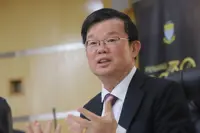
Chief Minister Chow Kon Yeow said the initiative aimed to complement the state’s manufacturing ecosystem by providing financing that would meet the needs of homegrown companies, particularly those seeking to develop and own their own technologies and intellectual property (IP).
He said PTFC would support Malaysia’s transition from “Made in Malaysia” to “Made by Malaysia” by encouraging greater local ownership of technology and innovation.
“By mobilising both domestic and international capital, PTFC will focus on financing hard-tech, deep-tech, venture capital, private equity and supply chains.
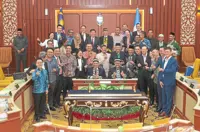
“This will enable local companies to expand their operations, commercialise innovations and compete in international markets,” he said when winding up the debate on the Supply Bill and the 2027 Development Expenditure Estimates (State Budget 2027) during the state assembly sitting at the State Legislative Assembly Building in George Town.
Chow said PTFC’s uniqueness laid in its role as a specialised financing platform centred on the technology industry, complementing rather than competing with existing financial centres like Labuan, the Tun Razak Exchange (TRX) in Kuala Lumpur and Johor’s Forest City.
He stressed that the proposal was not property-driven and would not require the establishment of a new regulatory body, as regulatory oversight would remain under Bank Negara Malaysia and the Securities Commission Malaysia.
He said the presence of financial institutions and professional service providers could further expand Penang’s services sector, while improved access to industry financing would help local companies scale up production and explore new markets.
He added that preliminary estimation indicated PTFC could generate RM12.1bil in gross domestic product (GDP) and support more than 71,000 jobs over 15 years, subject to implementation and the realisation of projected investments.
On the potential direct revenue for the state government, Chow said possible sources included rental or lease payments from state assets, dividends from equity participation and revenue-sharing arrangements through joint ventures should these mechanisms be incorporated into PTFC’s implementation model.
These potential revenue streams, he said, must be distinguished from the projected GDP and employment impact, which represented broader economic benefits.
“PwC’s (PriceWaterhouse Coopers) study must provide greater clarity on the sources of revenue, how the returns would be channelled to the state, as well as the costs and risks involved, so that the net returns can be properly assessed,” he said.
Chow said the successful implementation of PTFC would require close cooperation between the state and federal governments, financial institutions and industry players.
As part of efforts to formulate a comprehensive PTFC Strategic Plan, he said PwC conducted engagement sessions with industry players, academics, economists and other stakeholders to gather feedback and identify the requirements for the initiative.
He added that the state government was prepared to engage assemblymen to obtain their views and suggestions to further strengthen the direction of the proposed centre.
Chow, who is Padang Kota assemblyman, said the state’s economic growth had enabled the state government to channel the benefits back to the people.
He said state revenue was used to fund public assistance programmes, infrastructure development and public services, with particular attention given to groups affected by the rising cost of living.
“Through the i-Sejahtera programme, the state government allocates between RM50mil and RM65mil annually.
“In the first phase of 2026 alone, RM50.93mil was disbursed to 281,135 recipients.”
“Economic growth should be measured by its ability to improve the people’s well-being.
“Indicators such as income levels, employment opportunities, housing affordability and access to public services must remain key considerations in determining the state government’s policy priorities and spending decisions,” he added.