JOHOR should ensure its river and coastal mangrove ecosystems are protected to complement flash flood mitigation strategies.
Conservation scientist and advocate for coastal communities Dr Serina Rahman said mangrove restoration should also take place in degraded areas.
“There are many benefits to replanting mangrove trees as the method works to mitigate flooding.
“Mangroves act as a natural shield that protect coastal communities from flash floods and rising waters,” said the National University of Singapore (NUS) Department of Southeast Asian Studies lecturer and associate fellow at Institute of Southeast Asian Studies (Iseas) – Yusof Ishak Institute.
Johor Baru’s low-lying streets, riverbanks and coastal areas often face flash floods, especially when continuous heavy rain and high tide occur at the same time.

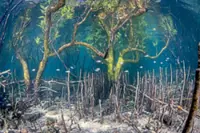
The mangroves’ complex root system creates friction that quickly weakens storm surges, tidal waves and river currents before they reach inland, Serina said.
“Mangrove forests act like giant sponges, absorbing and storing runoff water to prevent sudden street flooding.’’
“The roots that grip the soil tightly along shorelines protect riverbanks from being washed away and prevent land collapse during heavy rain,” she said.
“Mangroves slow water flow, causing sediment to settle and build up the shoreline so it can keep pace with rising sea levels.”
These forests prevent riverbanks from eroding, and protect the marine ecosystem by providing spots for shrimps, prawns and mud crabs to grow and reproduce away from open-sea predators, she said.
“Johor’s mangrove forests are vital breeding, nursery and feeding grounds for marine life such as prawns, edible snails, mud crabs and fish.
“The tangled mangrove roots in Pulau Kukup (the Johor National Park) and Sungai Johor estuary shelter young and spawning fish like barramundi, mangrove jack and threadfin.
“Mud flats and roots support plenty of shellfish like siput sedut and mud creepers, which breed on the mangrove floor,” she said.