
Rising from humble beginnings, the 36-strong Mega Symphony now plays for dignitaries
ONLY three people raised their hands. That was the response when Datuk Muhammad Kifli Ma Hassan gathered new Road Transport Department (JPJ) recruits and asked who wanted to join a marching band.
A band needs at least 30 members to produce a balanced sound.
About nine years later, that band – Mega Symphony – has become a respected marching band with a distinctive identity, favouring popular songs that resonate with the public.
It has also performed at National Day parades.
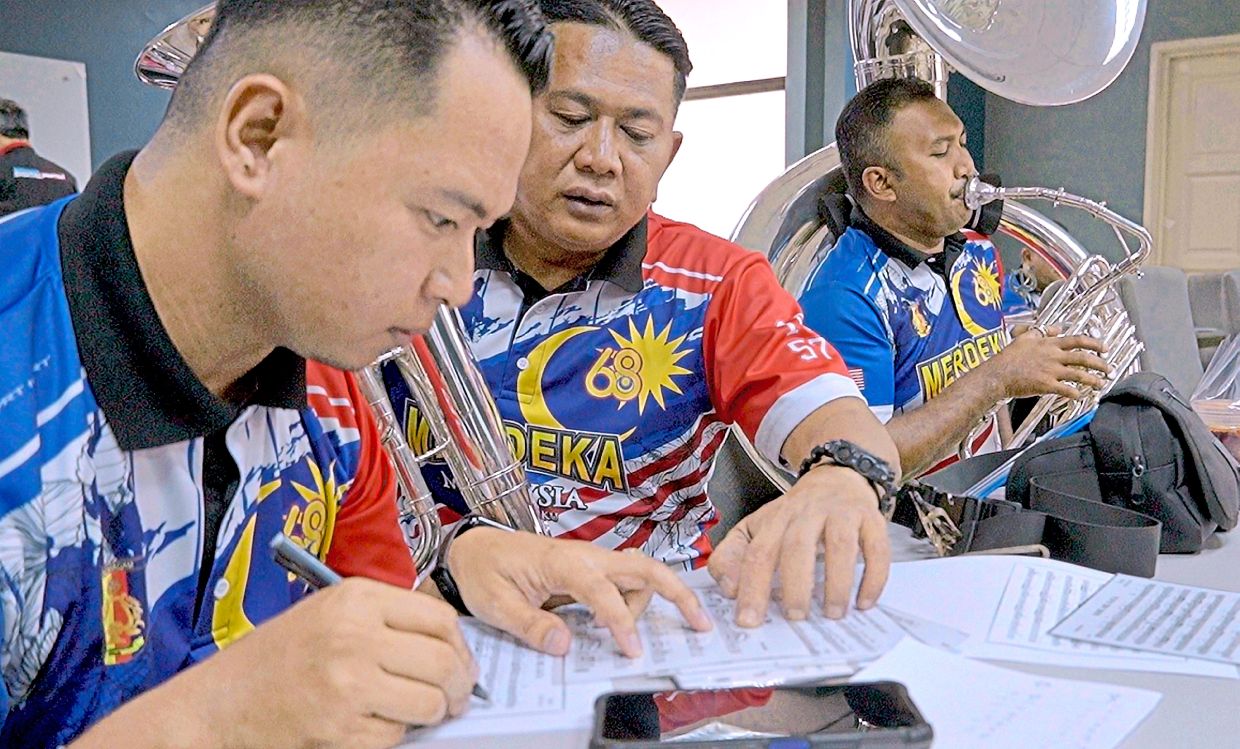
Its beginnings were far humbler.
Muhammad Kifli, who is JPJ Malaysia enforcement senior director, said Mega Symphony was established at the Malaysia Road Transport Academy in 2017, with almost nothing to work with.
“We started with very limited resources, and the lack of musical instruments was one of the department’s biggest challenges in realising our dream of having our own marching band.
“We rented instruments or borrowed them from other agencies that already had their own bands,” he said in an interview with Bernama.
A KPI with a deadline
The idea for a marching band came from former Transport Ministry secretary-general Datuk Seri Saripuddin Kasim.
In November 2016, he attended the closing ceremony of a JPJ basic training course at Akademi Pengangkutan Jalan Malaysia in Ayer Molek, Melaka, and noticed that the trainees’ march-past was accompanied by a band from an outside agency hired by JPJ.
“He then said he wanted to see JPJ’s own marching band accompany the next training graduation ceremony, making it my key performance indicator (KPI),” Muhammad Kifli recalled of the task ahead of him as the next ceremony was in May 2017.
With the deadline set and the first call for volunteers having drawn only three hands, he had to find his players another way.
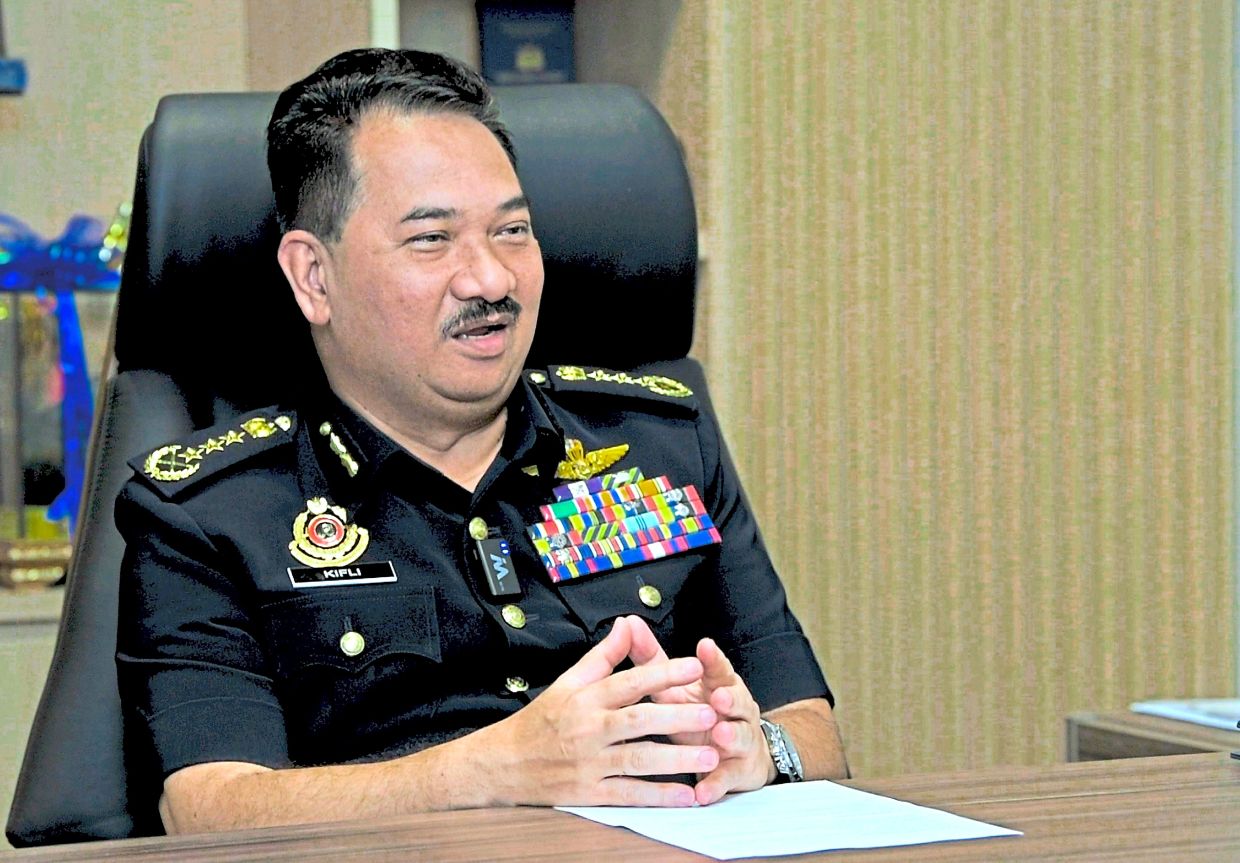
Persuasion by necessity
Muhammad Kifli believed some JPJ personnel had hidden talents, whether deliberately kept under wraps or simply undiscovered.
His approach, which he described as “questioning” and “persuasion by necessity”, was to speak to trainees one by one.
“Since we needed 30 people, I had to meet the trainees individually and ask what musical skills they had,” he said.
Some could play the guitar, piano or drums. At least they had some musical foundation.”
The numbers were still short, so he dug further into individual backgrounds.
“I asked whether anyone had played the kompang (traditional Malay frame drum), or the flute or serunai (traditional wind instrument) during their school days,” he said.
The effort paid off.
Thirty-five candidates were identified from JPJ branches nationwide, including Sabah and Sarawak.
“Of those, only three had actual basic knowledge of playing marching band instruments.”
With specially appointed instructors and the members’ own determination, the group, whose experience had largely been limited to playing the kompang at wedding celebrations, became a capable official marching band within three months.
In May 2017, Mega Symphony accompanied the procession at JPJ’s training graduation ceremony in Melaka, meeting the KPI for Muhammad Kifli.
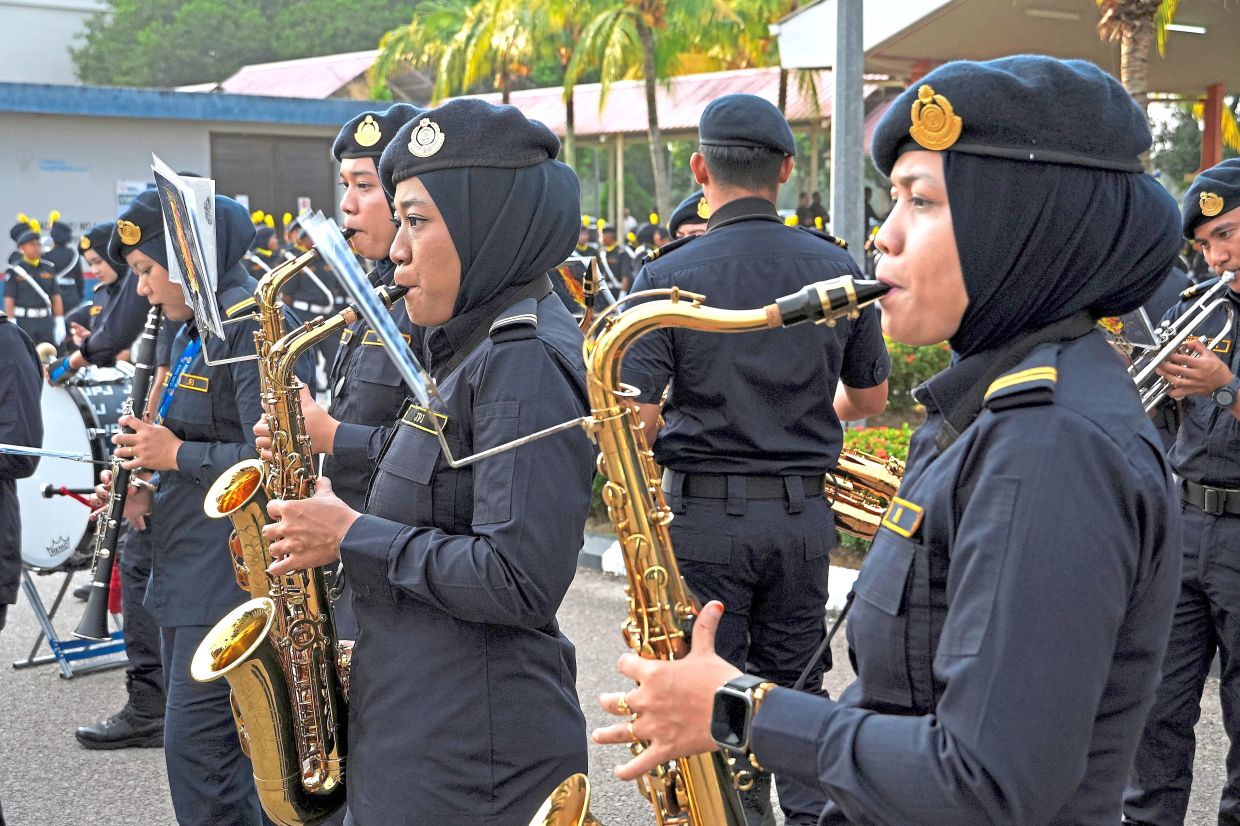
Part-time musicians
Keeping the band running has brought its own challenges.
The members are not full-time musicians; they are JPJ officers and personnel with official duties to prioritise.
To prevent a shortage when members cannot be released, a reserve system is introduced.
The band now has a pool of 10 reserve members.
Pregnancy is another factor.
Women members must step back from the band for about six months – three months before giving birth, then three months of maternity leave.
“This is where our reserve members play an important role in replacing those who are unavailable,” said Muhammad Kifli.
The band currently has 36 permanent members, 11 of whom are women.
Distance is a further constraint.
Band members are stationed across Malaysia, including Sabah and Sarawak, so they cannot practise together every day.
Instead, they are assembled for one or two weeks before an event or competition.
“Our constraints are time, location and practice venues,” said Muhammad Kifli.
“However, because our members have such strong interest and confidence, a short training period of seven to 14 days is sufficient for them to absorb and understand what they need to do,” he said.
Raising JPJ’s profile
Muhammad Kifli said Mega Symphony was established for more than entertainment.
It is an important platform for showcasing the unity, solidarity and identity of a uniformed service.
Its formation has placed JPJ alongside other enforcement agencies, including the Malaysian Armed Forces (MAF), Royal Malaysia Police (PDRM) and Malaysian Prisons Department, which established their own marching bands much earlier.
One of Mega Symphony’s proudest achievements has been performing at National Day parades on several occasions, in front of the country’s dignitaries.
JPJ has also formed a bagpipe band, which has been entrusted with escorting distinguished guests at several official national events.
“This is a tremendous honour and a significant achievement for us as a civil enforcement agency.
“It demonstrates that we, too, can stand alongside other enforcement agencies in the defence and security sectors,” Muhammad Kifli said proudly.
As Mega Symphony’s founder, Muhammad Kifli hopes its legacy will continue.
He also wants JPJ to have two strong marching bands in future, with a second based at the department’s headquarters under its Enforcement Division.
In his message of encouragement to the band’s members, he said: “To the members of JPJ Malaysia’s Mega Symphony, you are truly remarkable individuals. Others may not be able to do what you have accomplished.
“In just three months, you learnt to read and study musical notes, and then deliver an outstanding performance.”
“Well done and congratulations to all members of JPJ Malaysia’s Mega Symphony.”