
MBIP-funded project replaces generators with power inverters for more sustainable night market operations
THE familiar rumble of petrol-powered generators and the smell of exhaust fumes are becoming less noticeable at a Taman Pulai Indah night market in Iskandar Puteri, Johor, where traders have switched to a greener power alternative.
Since adopting power inverters in August, participating traders have been operating without running conventional generator sets, thus reducing noise pollution and eliminating daily petrol expenses for business operations.
Helping traders save
The initiative, known as “Green Night Market Power Inverter”, is led by project leader Dr Nur Faizal Kasri, a senior lecturer at Universiti Teknologi Malaysia’s (UTM) Electrical Engineering Faculty.
“The project aims to reduce the environmental impact of night market operations, while helping traders lower their running costs,” he told StarMetro.
“Previously the night market, which has about 25 food and beverage stalls, was quite noisy because of the generator sets.
“Now, it is much quieter and there is no unpleasant smell from the generators,” he added.
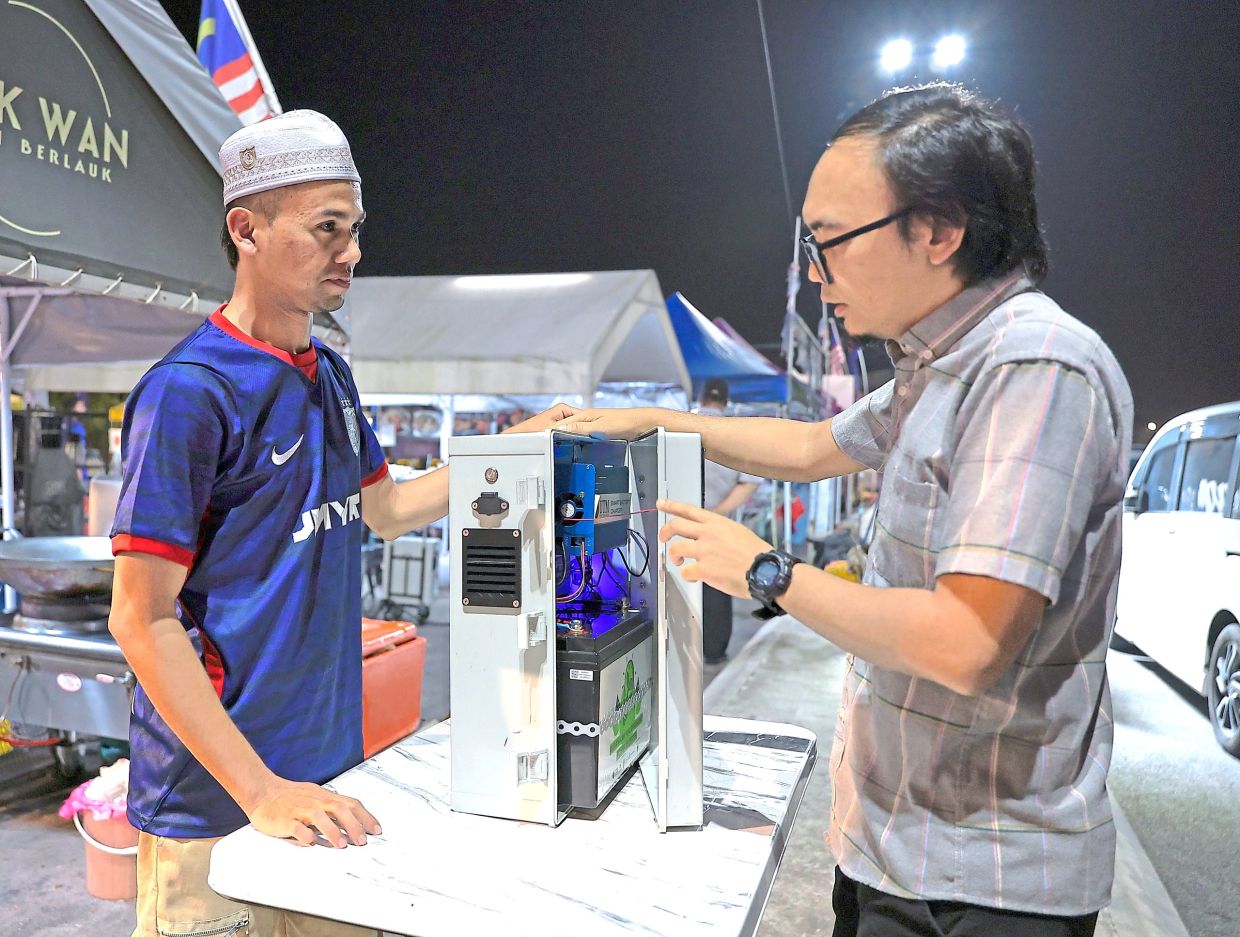
Nur Faizal said the project received RM50,000 from Iskandar Puteri City Council’s (MBIP) Low-Carbon Community Grant 5.0 to supply 15 power inverters and develop a web application to monitor energy usage.
The project currently has 13 fully operational units for use by the traders, free of charge.
The remaining two units developed faults during field testing and were returned for warranty claims and battery replacements.
Nur Faizal said that after handing over the power inverters and holding a briefing session, participating traders were quite enthusiastic and excited about adopting the technology in their daily operations.
“The participants, selected based on criteria such as compliance with MBIP business rules and regulations, must be consistent in their business operating hours.
“The power inverters have a capacity of 1,280 watt-hours (Wh), sufficient to power ordinary stall equipment such as lights and fans for four to five hours, depending on the load.
“Traders can charge the units at home before bringing them to their stalls.”
He said traders tended to choose generator sets as the initial purchase cost was about RM500 to RM600, but running expenses included petrol, maintenance and engine oil changes.
“With power inverters, traders no longer need to buy petrol every day.
“Based on our calculations, the technology could help participating traders save a combined total of about RM40,000 annually,” he said, noting the savings varied according to individual usage.
Nur Faizal said the project demonstrated the potential for a cleaner and more cost-effective way of supplying electricity to commercial stalls.
“Through the web application, we track daily energy consumption and monitor where the devices are being used.
“Based on the project’s monitoring at the Taman Pulai Indah night market, the initiative has recorded an estimated carbon dioxide reduction equivalent to 73.5kg, which the team compares to planting 31 trees or a car travelling 323km.
“It has also recorded fuel savings of 31.9 litres,” he said.
However, Nur Faizal said the power inverters might not be suitable to cater to stalls with high power demands, such as commercial coffee machines.
He said the next step was to secure funding to extend the power inverter initiative to more night markets and commercial areas.
He hopes MBIP will continue supporting the project, while the team explores external funding opportunities to bring the technology to other localities.
“Ultimately, I hope this initiative paves the way for local authorities to introduce policies encouraging or requiring commercial areas and night markets to use power inverters instead of generator sets,” he said.
“The longer-term goal is to make cleaner power a practical and affordable option for traders, while reducing the environmental impact of everyday commercial activities,” he added.
Smart partnership
Nur Faizal said his team had formed a smart partnership with UTM senior lecturer Dr Kelvin Tang Kang Wee to study the power inverter’s potential to reduce localised heat at night market stalls.
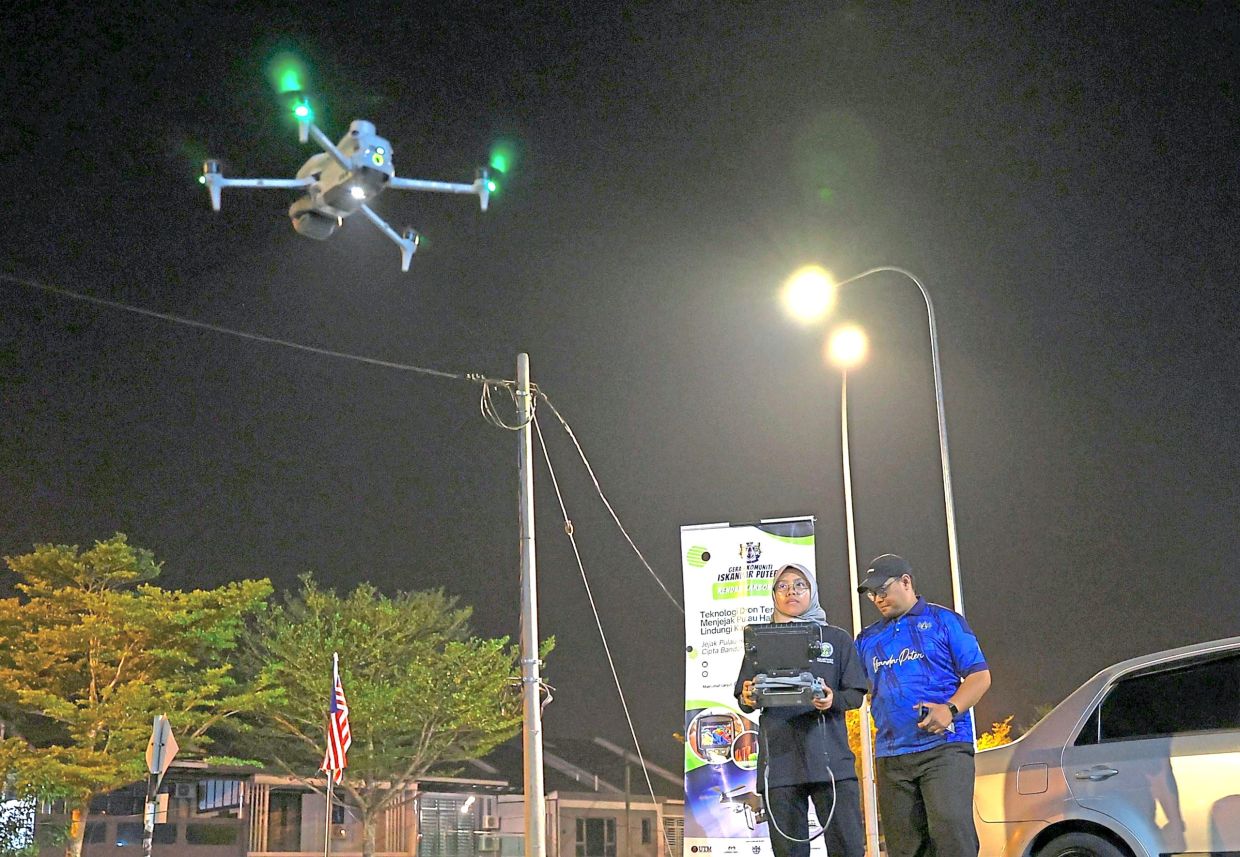
Tang, who leads the university’s Geomatics Innovation Research Group, said he developed a project using drones equipped with thermal and conventional cameras to map heat distribution in residential and industrial areas.

“This helps us identify localised hotspots and understand how different surfaces and equipment contribute to heat build-up.
“Thermal imaging allows us to examine specific heat sources more closely, including generator sets and equipment used by traders,” he said.
Tang said he received a separate RM50,000 grant under the same MBIP programme for a project titled “Thermal Drone Technology, Mapping Industrial and Housing Areas and Protecting Our Surroundings”.
“Although Nur Faizal and I received funding for separate projects, we decided to collaborate to assess the environmental impact of generator set usage and explore how replacing the equipment with power inverters could contribute to a cooler and cleaner environment.
“The data collected will help local authorities and town planners make better-informed decisions when planning residential and industrial developments,” he said.
Tang stressed that urban development should not focus solely on housing density but also incorporate sufficient green spaces and water bodies to help dissipate heat.
The technology could eventually be extended to other local councils to support sustainable urban planning, particularly in rapidly developing areas with growing industrial activity and data centre hubs, he said.
Beyond academic research, Tang said a significant portion of the grant received was dedicated to public and youth education regarding climate change.
His team recently partnered with local residents committees in Taman Teratai of Iskandar Puteri to engage students and guide them through drone data collection sessions, mapping out thermal temperatures onto blank diagrams to understand urban heat distribution first-hand.
“We hope to give the younger generation early exposure to thermal drone technology while helping the broader public better understand the importance of sustainability and environmental conservation in urban settings,” he said.