Asean members must play bigger role to end annual problem
Each year during the dry season, many parts of the country become shrouded in smog from the haze – the result of slash- and-burn clearing in parts of Indonesia and, in some cases, locally.
This year, however, the regional haze has worsened sharply due to El Niño, and people across Malaysia, Singapore, Indonesia, Timor-Leste and Brunei have suffered the consequences.
At its peak, the Air Pollutant Index (API) in Indonesia’s Kalimantan and Sumatra regions reportedly breached 1,200, driven by more than 15,000 hotspots nationwide.
These toxic levels pose a severe threat to public health.
While open burning in Malaysia remains manageable through strict enforcement, fires in Indonesia have raged unchecked for nearly three months.
Many are peatland blazes, which compounded the crisis, as they are notoriously difficult to extinguish.
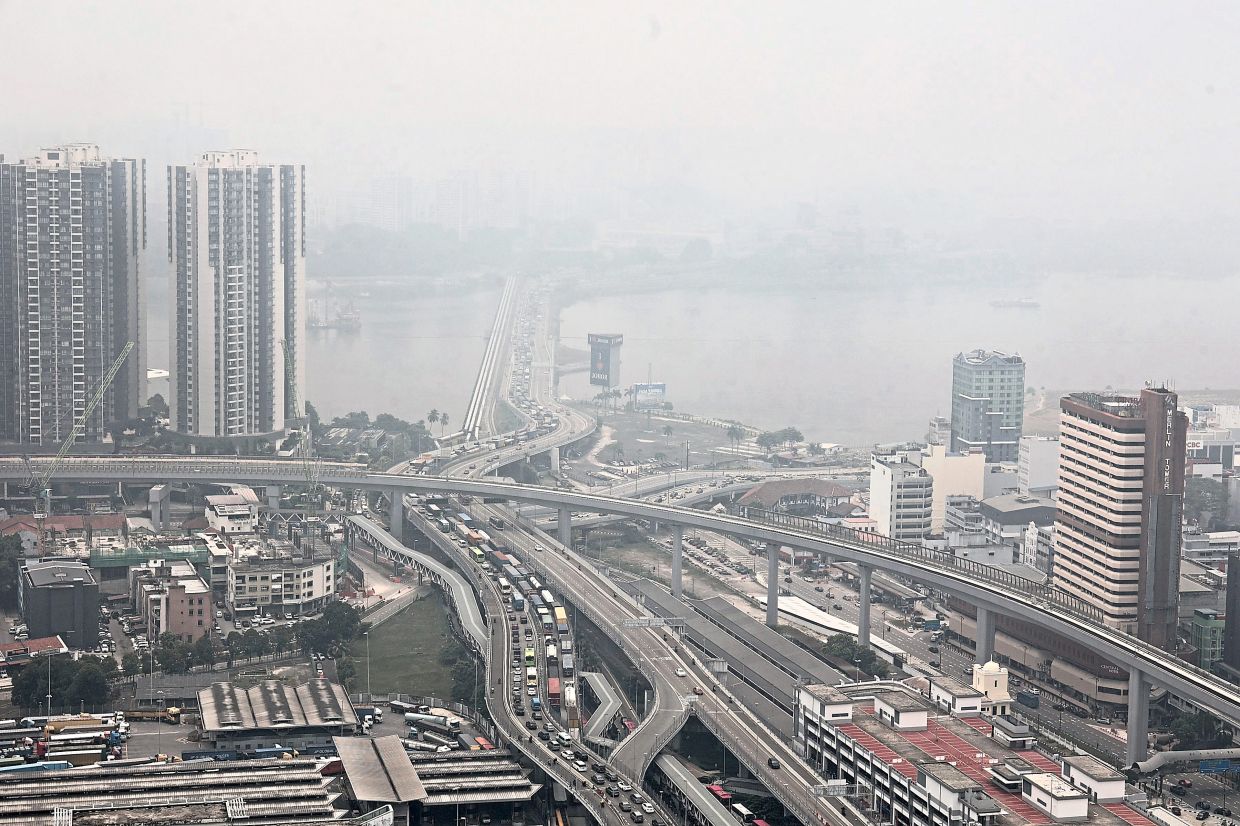
Due to transboundary haze, API readings in several areas in Johor reached unhealthy levels earlier this month, forcing schools statewide to close for two weeks from Oct 7.
The closure disrupted students in the middle of their year-end examinations, forcing them back into online classes – including my own children.
Across the nation, the haze has triggered a surge in respiratory illnesses, skin conditions and throat and eye irritation, particularly among the elderly and young children.
My eight-year-old son was among those affected, requiring urgent hospital treatment and medication for breathing difficulties.
Deeply concerned by deteriorating air quality impacting the health and well-being of its residents, Johor Mentri Besar Datuk Onn Hafiz Ghazi sent an official letter to Indonesian Consul-General in Johor Baru, Sigit Suryantoro Widiyanto, on Sept 30.
Onn Hafiz also called on Asean countries to play an active role in tackling the haze, urging them to call for an emergency meeting to enhance joint action, especially in controlling the fires, monitoring hotspots and preventing fires.
He said the haze situation had affected Johor since Aug 25.
So, what has happened since then?
There are many questions that demand answers. For instance, why was Indonesia so slow in seeking assistance from its neighbours in flighting the fires?
Why did the country accept Japan’s offer of assistance to combat the blazes, yet decline earlier offers from Malaysia and Singapore?
Singapore took action expeditiously under its Transboundary Haze Pollution Act (THPA).
Under THPA, Singapore had issued notices to 10 errant companies that had contributed to the haze in the republic, requiring them to deploy firefighting personnel to extinguish fires or prevent them from spreading on land they own or occupy in Indonesia.
They must also stop any ongoing burning activities, refrain from starting new ones, and submit action plans to Singapore’s National Environment Agency (NEA), detailing measures to put out fires and prevent them from recurring.
Failure to comply can result in fines of up to S$5,000 (RM15,500), up to one month in jail or both, for company representatives.
At least five of the companies publicly named under the THPA are listed on the Singapore stock exchange.
Although Indonesia has now formally accepted offers of help from Malaysia and Singapore to fight the fires, it needs to act quickly.
Besides its neighbours, Indonesia’s own people have been suffering from inhaling harmful, toxic fumes which can lead to long-term health problems such as bronchitis and possibly even more severe diseases.
Asean members like Singapore and Malaysia also need to play a bigger role, as many of the plantation companies and paper factories blamed for the fires have their headquarters in these two countries.
Politicians from these countries cannot continue playing the blame game, but must instead sit down and find a long-term solution.
They must demonstrate a strong political will to end this annual haze problem.
Asean should push for termination of concessions for companies and plantations involved in slash-and-burn activities, or have their land seized or forfeited.
Hefty fines and prison sentences should also be imposed on the polluters, aside from other drastic penalties like the possibility of companies being delisted from the Malaysian and Singaporean stock exchanges if they are found guilty.
Such harsh action will deter companies and corporations, hopefully making them think twice before starting a fire to clear their land.
We need drastic, sustainable and long-term solutions to resolve this annual problem, instead of merely giving a slap on the wrist to a few rich corporations or influential individuals.
Already a subscriber? Log in
Get 20% OFF The Star Digital Access
Cancel anytime. Ad-free. Unlimited access with perks.