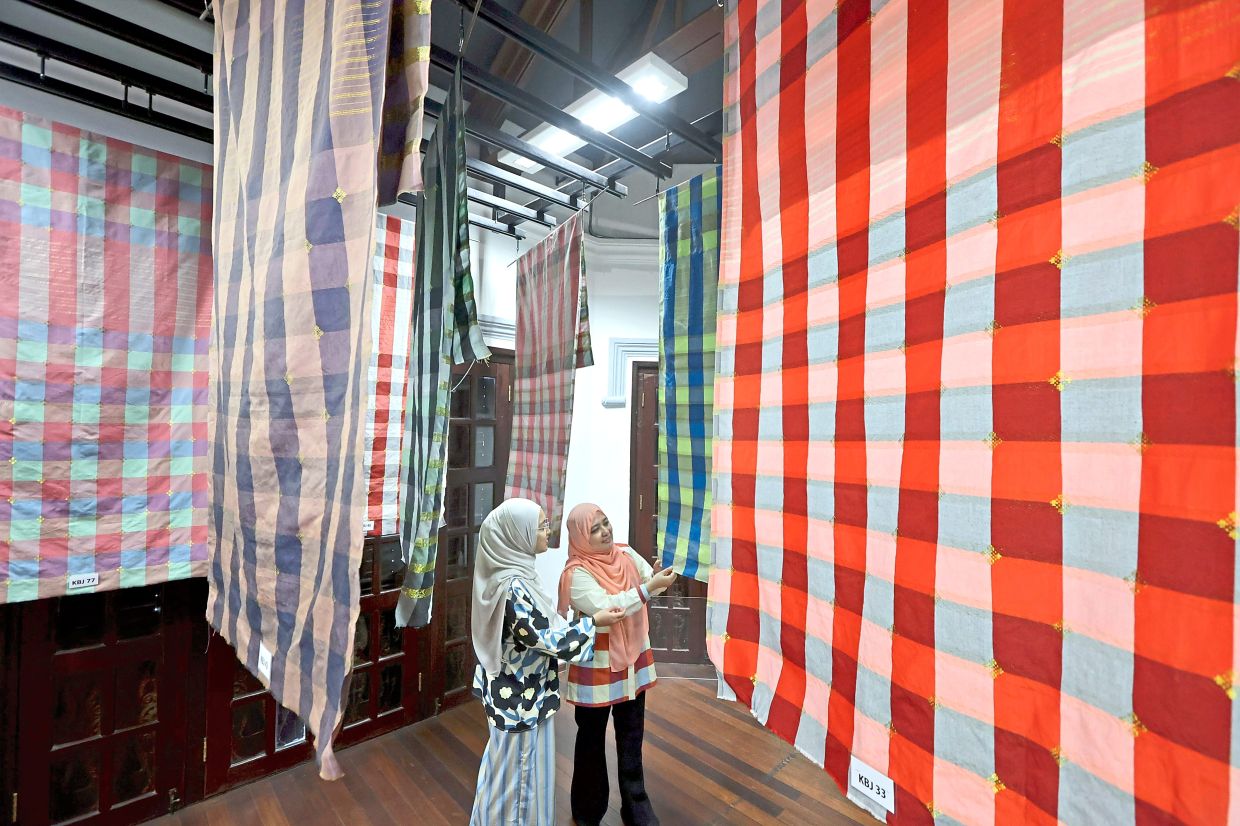
AT first glance, Kain Benang Johor may look like a simple checked fabric, but a closer look reveals intricate floral motifs woven into the corners of its grid, telling a story uniquely rooted in the state’s heritage.
Unlike textiles from other states where gold or decorative threads may take centre stage, Johor’s identity lies in combining checked patterns with floral motifs, while relying mainly on cotton and silk threads.
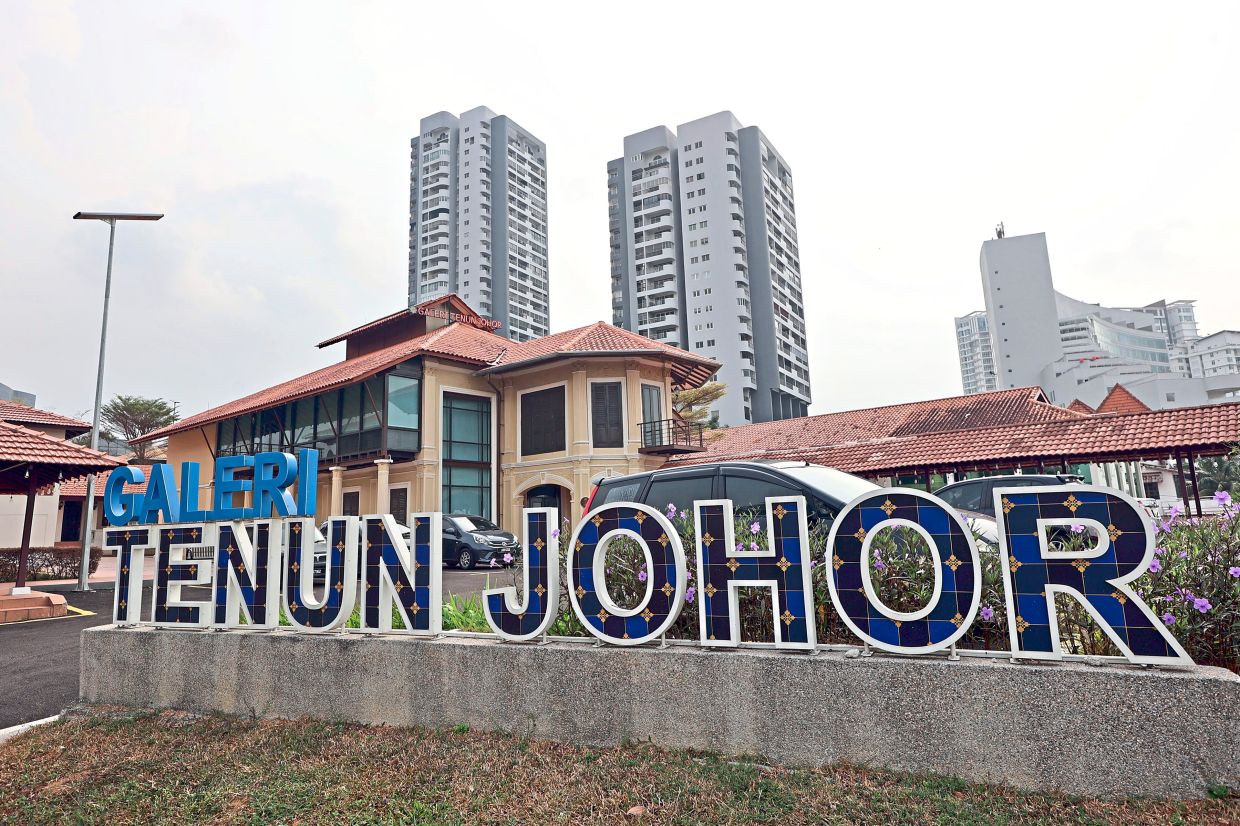
The unique Kain Benang Johor textiles are on display at Galeri Tenun Johor, located within the Sultan Abu Bakar Heritage Complex in Jalan Sungai Chat, Johor Baru.
The gallery, run by Yayasan Warisan Johor (YWJ), allows visitors to observe artisans working on traditional looms.
Established by YWJ in 2013 and officially opened on Nov 18, 2018, the gallery showcases not only the history and production process of the textile but also exclusive Kain Benang Johor motifs designed to be worn by the Johor Royal Family.
YWJ assistant administrative officer Roslinda Mohd Rosli said the textile was developed from a traditional weave known as Tenun Corak Muar.
“Originally, Tenun Corak Muar was just a checked design without flowers or motifs between the squares.
“Following years of research carried out by YWJ, we incorporated subtle floral elements to create a signature identity for Johor’s woven textile,” she told StarMetro.
Roslinda said public motifs were generally inspired by local flora and traditional Malay
symbols, such as black pepper, gambier and betel leaves, while designs for the royal family usually feature crowns and tiaras.
She said the basic weaving technique was not unique to Johor, as the interlacing of longitudinal warp threads, known as loseng, and weft threads was common across Malaysia.
“What distinguishes the textiles from one state to another is largely design, material, colouring and the way decorative techniques are incorporated.
“In Johor, we call it Kain Tenun Johor because we use a lot of cotton or silk rather than decorative threads,” she said.
The public can view and explore various Kain Benang Johor designs as well as handwoven fabric from other states and countries at the gallery.
From dyeing the threads to the final weaving, it takes about one-and-a-half to two months to produce a piece measuring about 2.15m, depending on the weaver’s skill, Roslinda explained.
“If the base fabric is prepared, the weaving takes about two weeks, with each weaver producing about two pieces a month.
“There are eight steps in the process – dyeing the thread, followed by menerai (winding the thread), menganing (ascertaining the measurement of threads for weaving), menggulung (rolling the warp threads), mengarat (heddling), menyampak (inserting threads into the loom), menyongket (weaving), and weaving into textiles called menenun,” said Roslinda.
She noted that the quality of the finished fabric depended heavily on the weaver’s skill, particularly the strength used to beat and compact the threads.
She said silk required even greater care due to its delicate nature that could break more easily, driving up production time and costs.
“This painstaking process is also why Kain Benang Johor does not come cheap,” she said.
“A handwoven piece starts at around RM2,000.
“To make the fabric accessible and encourage wider use among Johor folk, YWJ introduced a more affordable, mass-produced version under the Siri Qalbu collection last year, with pieces offered at RM250 in conjunction with Visit Johor 2026.
“This has been quite popular among consumers, especially civil servants, who tailor it into baju kurung, kain samping and corporate shirts,” she said, adding that authentic pieces were sold exclusively at the gallery.
YWJ aims to shift public perception so that Kain Benang Johor is not viewed solely as
ceremonial or luxury attire, but as contemporary clothing.
The textile’s visibility has been bolstered by the royal family, whose use of Kain Benang Johor at official and formal occasions has helped bring greater attention to the craft.
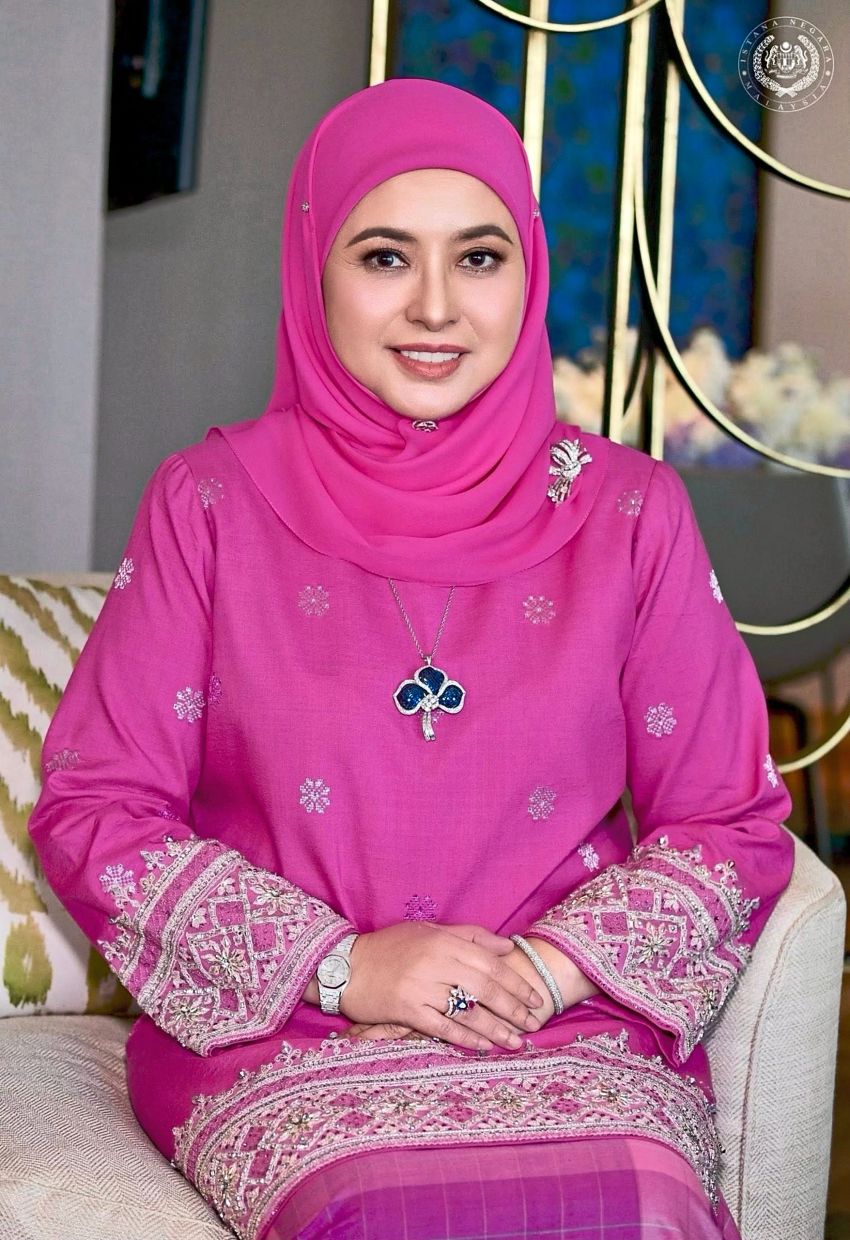
Her Majesty Raja Zarith Sofiah, Queen of Malaysia, wore Kain Benang Johor during an official visit to Uzbekistan in May this year and a state visit to Brunei with His Majesty Sultan Ibrahim, King of Malaysia, in October 2024.
Roslinda said YWJ had registered 10 Johor songket and weaving designs with the Malaysian Intellectual Property Corporation (MyIPO).
“Six designs are exclusive to the Johor Royal Family because their motifs and patterns represent the Johor Palace, such as Songket Johor Jauhar, Songket Johor Medini, Songket Johor Maharani, Songket Johor Tunku Mahkota Johor A, Songket Johor Tunku Mahkota Johor B and Songket Johor Tanjung Puteri.
“The remaining four – Tenun Johor Tanjung Piai, Tenun Johor Mayang Selida, Kain Benang Johor Corak Muar Berbunga Renek A and Kain Benang Johor Corak Muar Berbunga Renek B – are available for public use.
“At the moment, authentic Kain Benang Johor can only be bought at our gallery and there are no stockists or sellers outside YWJ,” she said.
Rather than relying solely on skills passed down through generations, YWJ has been developing its own pool of young weavers.
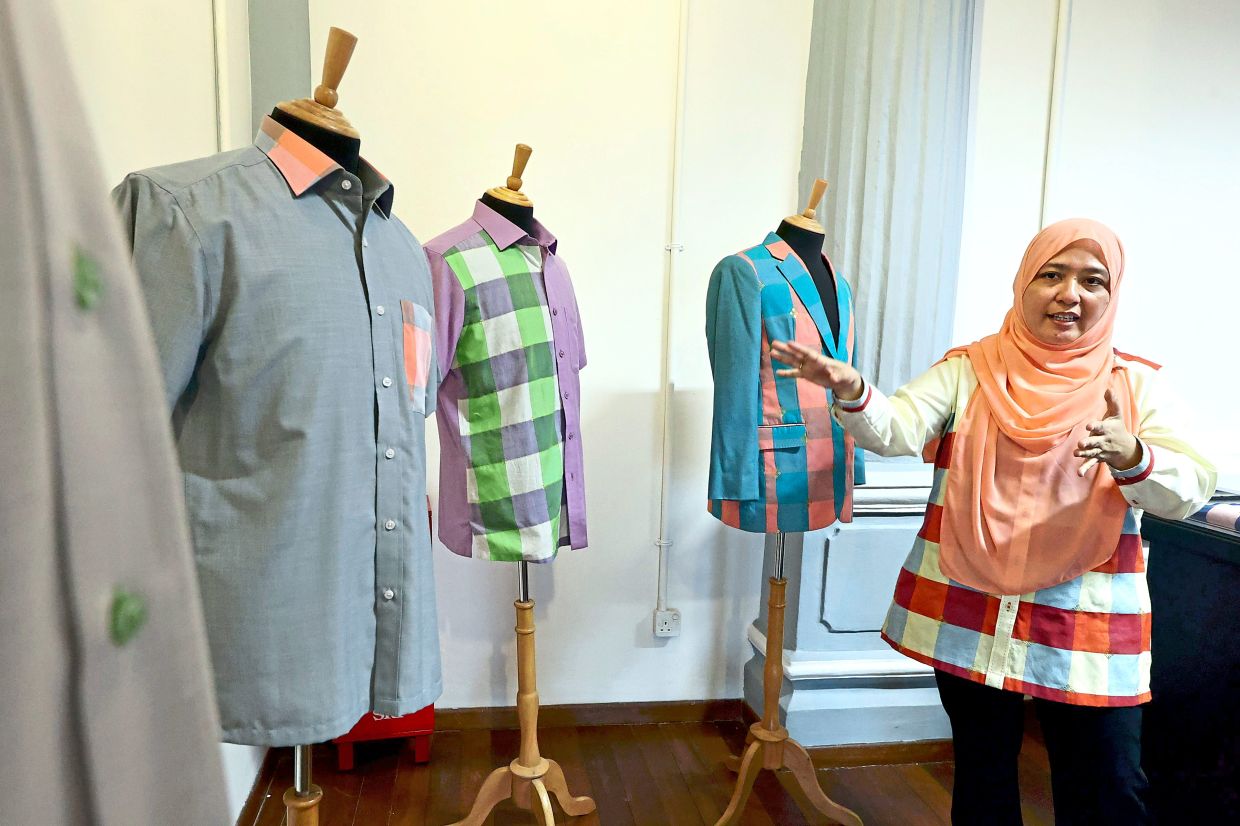
It employs seven weavers aged 25 to 35, including two young men who joined after completing their secondary school studies.
“Some of them have formal qualifications in weaving from the National Craft Institute, while others were trained directly by YWJ after leaving school,” said Roslinda.
“Every state and country has its own weaving identity.
“Visitors can identify and compare the textiles displayed at the gallery.
“We hope that by letting visitors see the threads being transformed into fabric, we can help to keep this heritage alive for generations to come,” she added.
Sultan Abu Bakar Heritage Complex tickets are RM10 for adults, RM5 for children aged 12 or below, and RM5 for senior
citizens.
The ticket includes entry to Galeri Tenun Johor.
The gallery is open Tuesday to Thursday and Sunday from 9am to 5pm, with modified hours on Friday (3pm to 10pm) and Saturday (9am to 10pm).