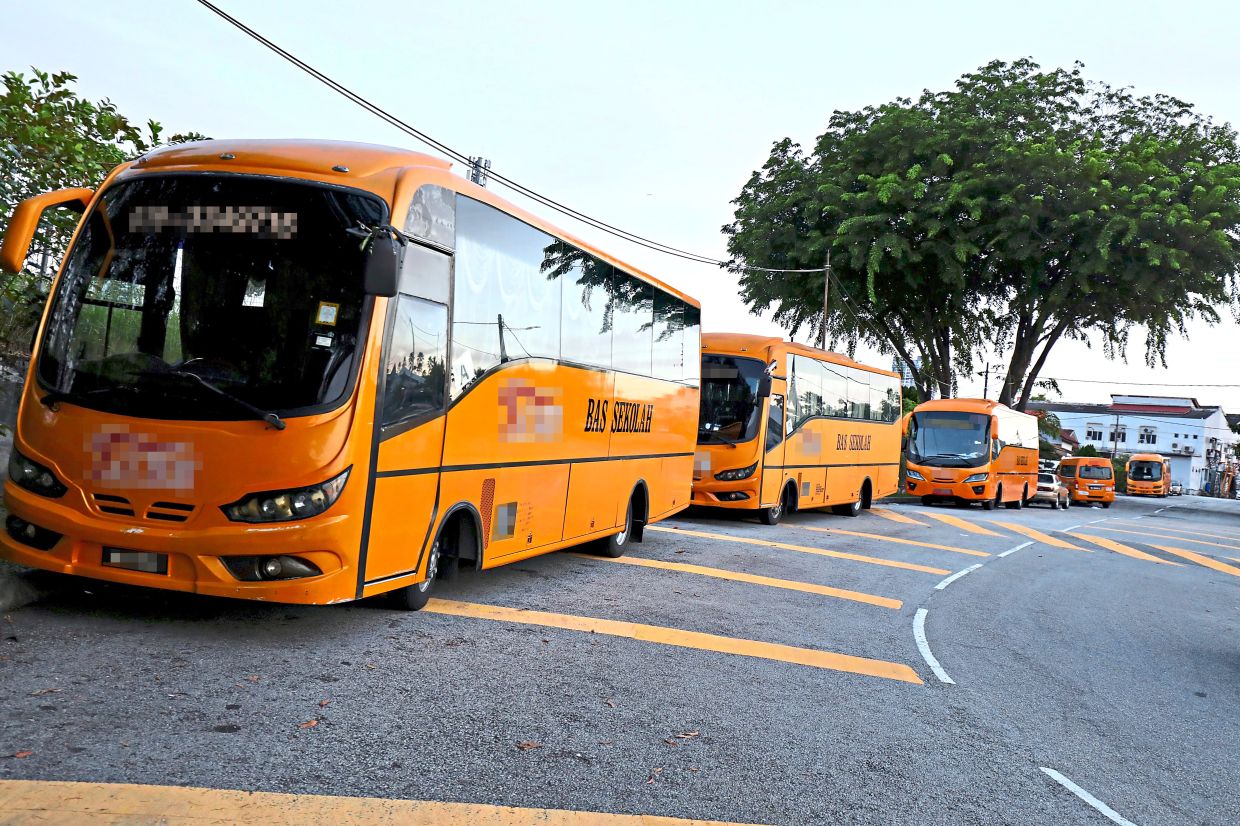
School buses and vans parked along residential roads have turned parts of Kuala Lumpur into what residents describe as an unofficial transport depot.
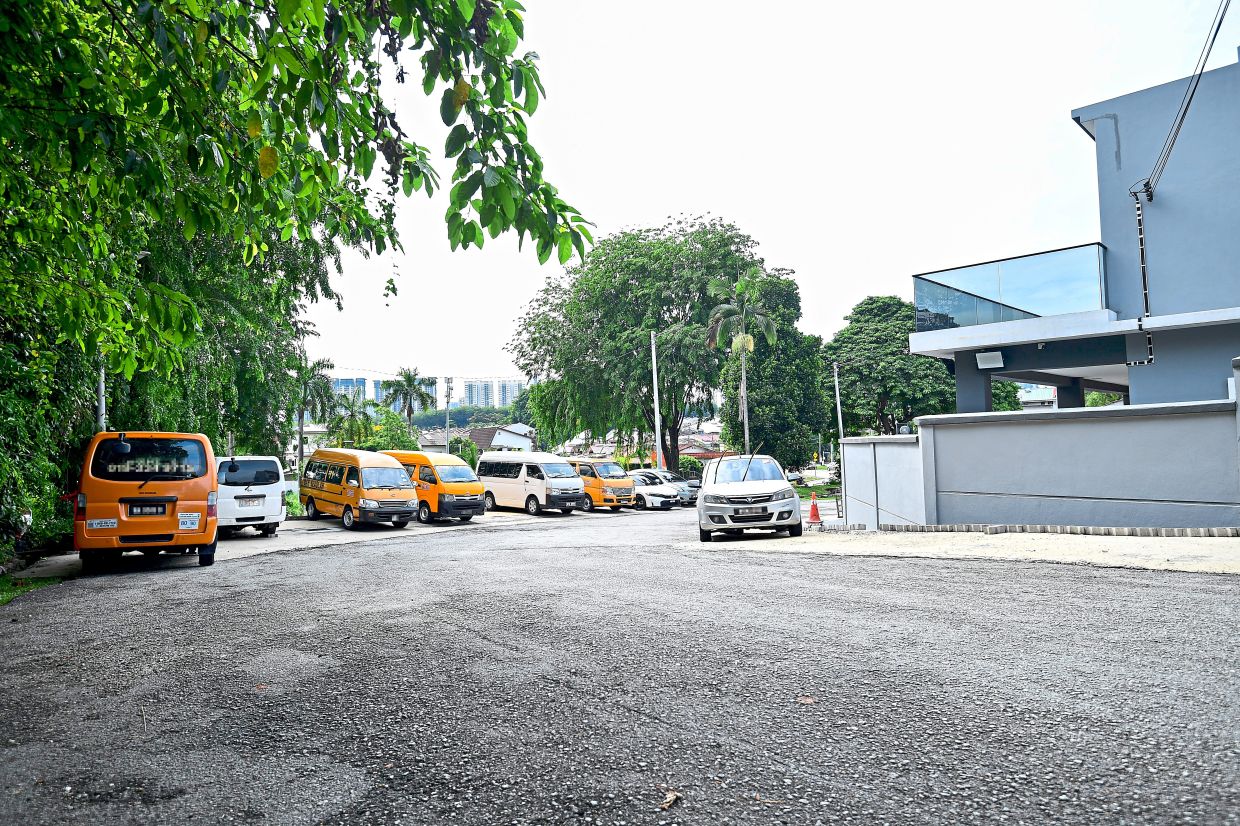
Vehicles were seen parked along main roads and near T-junctions in Taman Bukit Indah, off Jalan Kelang Lama.
Residents said they obstructed motorists’ view and posed a danger to pedestrians and other road users.
The problem is not confined to Taman Bukit Indah, as several school buses were also found parked along residential roads in neighbouring Taman Desa.
Residents said the heavy vehicles should not be parked along residential roads.
They said the engine noise and exhaust fumes affected their quality of life.
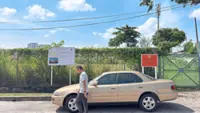
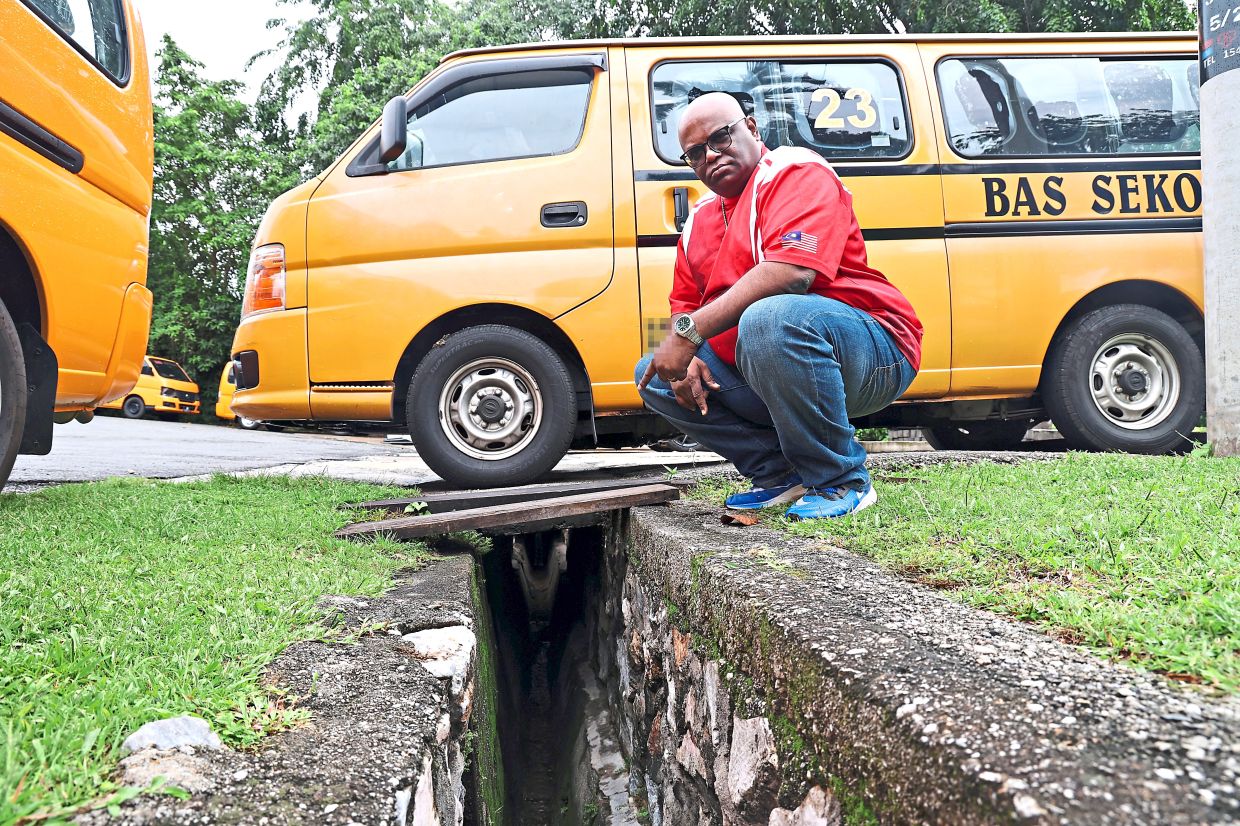
Sections of a roadside drain in Taman Bukit Indah had also allegedly been cemented over to create parking spaces, raising concerns over maintenance access and the risk of flash floods.
Residents claimed they had complained to Kuala Lumpur City Hall (DBKL) for several years but no sustained enforcement action followed.
Several asked to be identified only by partial names, citing fear of repercussions.
A resident, identified as Sim, estimated that more than 20 school buses and vans were parked in the neighbourhood.
“The engines are switched on and off throughout the day, producing noise and exhaust fumes.
“The vehicles also take up precious road space. Sometimes, it feels as though we are living in a transport terminal,” he said.

“One resident complained of breathing difficulties believed to have been aggravated by the exhaust fumes, yet no effective action followed.”
Low said sections of the drainage reserve were also being used for parking, although it remained unclear who had covered the drains or whether there was approval by DBKL.
“DBKL must determine whether the structures are approved, whether the drains remain accessible and whether parking so many vehicles is permissible in a residential area,” she said.
Concerns of residents
A long-time resident, who wants to be anonymous, said he saw sections of the roadside drain in Jalan Nyaman 11 being cemented over two years ago, allegedly to create parking spaces.
“The contractors carried out the work in broad daylight.
“My neighbours and I were unhappy because this is a public drain, not private property.”
He said residents repeatedly complained to DBKL while officers inspected the site but no action followed.
He also lodged a report through DBKL’s Adu@KL platform last year.
Another resident, known only as Kumar, said drain cleaners struggled to reach the covered sections of the drain.
“Alam Flora workers cannot do their job properly. Rubbish and silt will eventually build up.
“During heavy rain, the water could spill onto the road or enter our homes.”
Following the complaints, Seputeh Federal Territories Residents’ Representative Council (MPP) Zone 6 chairman Alvin T. Ariaratnam said he would raise the matter with DBKL.
“Drains and road reserves cannot be turned into private parking spaces.
“DBKL must determine whether approval was granted and whether the structures obstruct water flow or maintenance access.”
Alvin said DBKL should also investigate whether the large-scale parking of school buses and vans complied with regulations.
“This is not simply a case of a few buses being parked outside a house.
“A large number of commercial vehicles are being stored along several residential roads every day.
“DBKL must establish whether these roads or parking areas were approved or gazetted for use by public service vehicles.”
He said the Road Transport (Provision of Parking Places) (Federal Territory of Kuala Lumpur) Order 2016 provided for vehicles to be parked at places or in bays designated by the mayor.
He added that DBKL had the power to remove, clamp or detain vehicles under certain circumstances, while unauthorised parking could result in a fine of up to RM300 upon conviction.
Alvin said the Land Public Transport Agency (APAD) should examine the operators’ licence and determine whether it contained conditions governing where vehicles must be kept when not in use.
He said the Street, Drainage and Building Act 1974 also prohibited anyone from covering or obstructing an open drain without the local authority’s prior written permission.
“APAD must check the operators’ licence and storage conditions, while DBKL must investigate the use of its roads, parking areas and drainage reserve.
“The agencies should act together instead of having residents passed from one authority to another,” said Alvin.
Rules for transport operators

He said operators would usually be required to provide proof of a suitable parking facility when applying for the relevant commercial vehicle permit or licence.
Parking commercial vehicles on public roads for long-term storage was generally not permitted, he added.
Cheong said traffic regulations and local authority by-laws also prohibited vehicles from obstructing roads and pedestrian access.
Vehicles parked in a manner that obstructed traffic or pedestrians could face enforcement action even if they were said to be waiting or loading, he said.
“Enforcement typically falls under the jurisdiction of the Road Transport Department (JPJ), APAD for licensing breaches and local authorities for parking and obstruction violations.
“The procedure involves issuing compounds for illegal parking and, in cases of persistent obstruction, the relevant authorities have the power to order the removal of the vehicles.”
Cheong added that an operation involving such a large number of buses would be expected to have a permanent parking area that did not disrupt the surrounding community.
During a site visit, StarMetro observed dozens of school buses and vans parked along several residential roads in Taman Bukit Indah, including in continuous rows near bends and junctions.
Some vehicles were parked on cemented sections over roadside drains, with only small grated openings left at certain points.
Check on covered drains
DBKL said it will take action over the alleged covering of roadside drains in Taman Bukit Indah but needed more time to resolve the parking of school buses and vans in the residential area.
DBKL Seputeh branch manager Ahmad Fairuz Bustamam said the complaints had to be handled separately as the bus parking issue involved both DBKL and APAD.
He said DBKL would first act on the drain issue, which fell under the local authority’s jurisdiction.
However, he said it would need to discuss the bus parking matter with APAD to determine the applicable laws, licensing conditions and enforcement responsibilities of both agencies.
“The bus issue involves two agencies, so we need time to discuss with APAD and determine how it should be addressed.”
An APAD spokesperson, however, said the use of public roads for bus parking should fall under the jurisdiction of the relevant local authority.
“Locations where public service vehicles are allowed to park may include gazetted bus stands and terminals.
“Tour buses may also be permitted at designated locations, such as certain hotels.
“A school bus operator must have a proper place to keep the vehicles when they are not in use.
“However, whether a particular road or site can be used for that purpose is for the local authority to determine.
“As this case involves roads or land under DBKL’s jurisdiction, DBKL must investigate and decide whether the parking is permitted,” the spokesperson said.
When StarMetro spoke with the bus operator concerned, the reporter was repeatedly questioned why buses are not allowed to be parked by the roadside.
The operator also also asked who had complained, how many complaints had been lodged and the reasons behind them.
However, the operator acknowledged receiving summonses over the matter and said the fines have been paid.
The operator did not specify the offences.