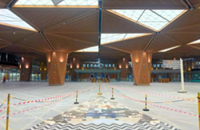
RETAIL food markets in Johor Baru can look forward to better business once the Johor Baru-Singapore Rapid Transit System (RTS) Link is up and running in January next year.
Johor Bumiputera Consumer Association chairman Syed Abdullah Syed Mohamed expects the increase consumer demand to benefit local businesses.
He said the influx of Singaporean grocery shoppers would have positive impact on hypermarkets, supermarkets, wet markers and farmers’ markets in Johor Baru.
With the RTS Link, he added, retail outlets in malls would attract larger crowds.

“When demand goes up, that means more jobs, better stores and more variety,” he said when contacted.
However, he warned that this could trigger a price increase for local consumers.
He suggested the Domestic Trade and Cost of Living Ministry (KPDN) and Federal Agricultural Marketing Authority (Fama) jointly promote Made-in-Malaysia (MiM) food products to Singaporean grocery shoppers.
“They could set up booths in malls or JB Sentral Station.”
Syed Abdullah said instead of price competition between traders to attract Singapore shoppers, businesses in Johor Baru would do better if they provided unique experiences through authentic food and cultural offerings.
National University of Singapore Southeast Asian Studies Department lecturer Dr Serina Rahman said when shops cater to foreign buyers, local consumers could also get a broader range of goods.
On possible price rises, she believes the situation would still be manageable since the majority of Singaporean grocery shoppers did not buy from small shops in Johor Baru.
However, she pointed out that food and beverage (F&B) outlets in downtown Johor Baru and those near the Johor Causeway, which targeted Singaporeans, were already charging higher prices.
A July study by Singapore Business Federation (SBF) on the impact of the RTS Link on Singapore’s retail and F&B sector, forecast that Singaporeans would spend an additional S$1.05bil (RM3.37bil) annually in Johor, with groceries being the single largest spending category.