THE Johor International Book Bazaar has once again made way for books and voices that may not always find space on mainstream bookstore shelves to reach a wider audience.
Returning for the fifth time, the event brought together 85 exhibitors from Malaysia and seven other countries, namely Indonesia, the Philippines, Singapore, Turkiye, the United Kingdom, China and India.
Johor information and education committee chairman Dr Muhammad Naqib Md Ghazali said the event, organised by the Johor Public Library Corporation (PPAJ), was the first government-initiated international book bazaar in Malaysia.
He said the state government was keen to continue organising the bazaar, following the encouraging response.
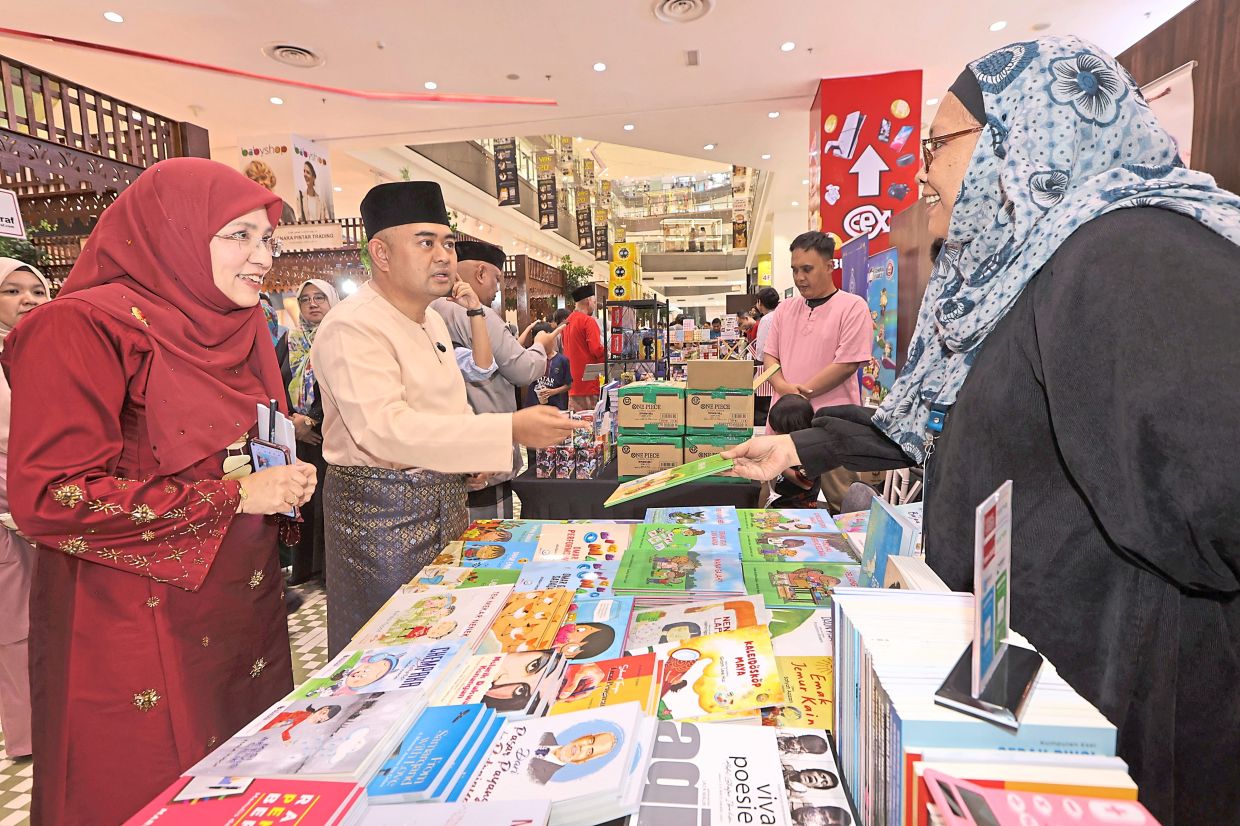
“Books remain an important source of reference, as the information they contain has been vetted and can provide people with reliable information.
“Efforts such as this must continue to give the public access to credible sources of information while encouraging more writers to produce their own works,” he said during the bazaar launch.
Exhibitor Siti Shakira Suhaimi said book bazaars played an important role in bringing non-mainstream titles to a wider audience.
“Events like this open up opportunities for both readers and smaller publishers, as they usually bring together smaller and independent publishing houses that may not have the same reach as large publishers.
“There are actually many independent publishers in every state, but some are very small, so people may not even know they exist.
“Book bazaars give them a platform to introduce their works to more people while also allowing readers to discover books that may not be easily found in mainstream bookstores,” said Siti Shakira, who runs Toko Buku Rakyat with her husband Amir Hamzah.
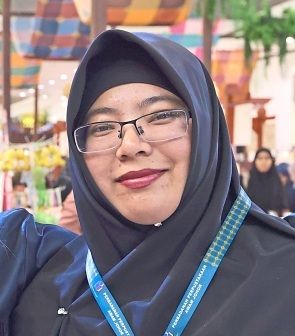
Toko Buku Rakyat, she said, started in 2012 as a publishing house before expanding its operations to include a physical bookstore at Wisma Sentral in Kuala Lumpur.
Apart from publishing its own titles, including works by Amir under his pen name Benz Ali, Toko Buku Rakyat also carries books from smaller local publishers and selected titles from Indonesia.
“These include works by writers and thinkers such as Leo Tolstoy and Friedrich Nietzsche, as well as books exploring socialism, philosophy and various schools of Islamic thought that have been translated into Bahasa Indonesia or Bahasa Malaysia (BM),” said Siti Shakira.
“There are readers who tell us that although they can read the English editions, reading in another language takes longer.
“So having translations really helps, especially for readers who are more comfortable reading in BM,” she added.
Siti Shakira, who was participating in the Johor International Book Bazaar for the third time, said the event stood out among other state-level book fairs she had attended.
“I would say Johor tops in holding big book fairs. One of its advantages is that it is held in a shopping mall, which makes it more accessible to the public.”
Direct access
Author and illustrator Emila Yusof said the book bazaar gave readers a chance to discover titles that might not be readily available in mainstream bookstores.
“Readers can only find these titles at bazaars or book fairs.
“You may not find our books on the shelves at popular local bookstores, so events like this give readers more diverse choices,” she said.
Emila, whose works include children’s novels and picture books, said such bazaars also enabled authors and illustrators to showcase their works directly to readers.
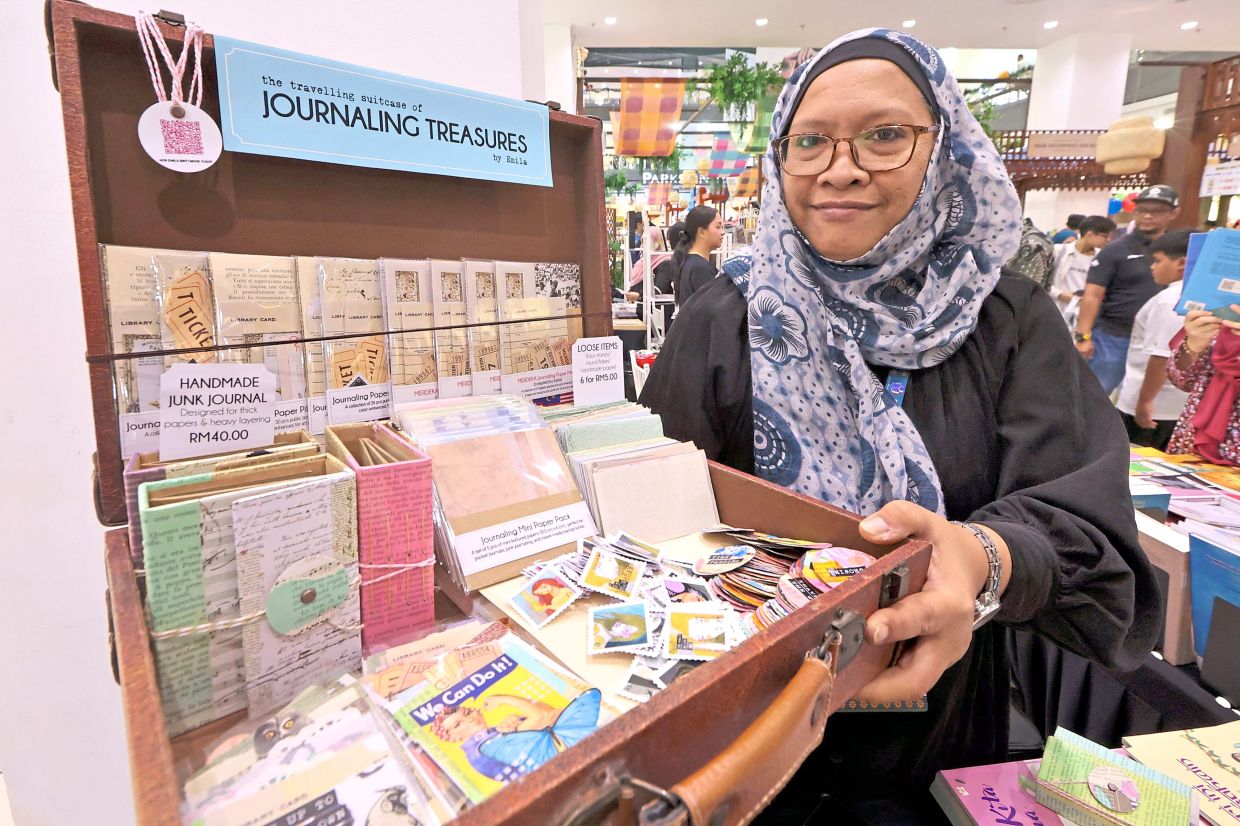
“Apart from books, I have also brought some of my handmade journalling materials featuring my own illustrations and artwork.
“I do journal as a hobby and decided to bring some of my creations here to share with fellow journalling enthusiasts,” said Emila, who was manning the Smart Forum booth that carried several of her books alongside works of other Malaysian authors.
Southern University College Journalism and Communication lecturer Loh Yu Chiang said he shared the creative works of his students and former students with the bazaar visitors.
“Among the works displayed at our university’s booth are publications produced entirely by former journalism and communication students, including on photography, writing and editing.
“We want to promote our students’ works to the public via this book bazaar,” added Loh.
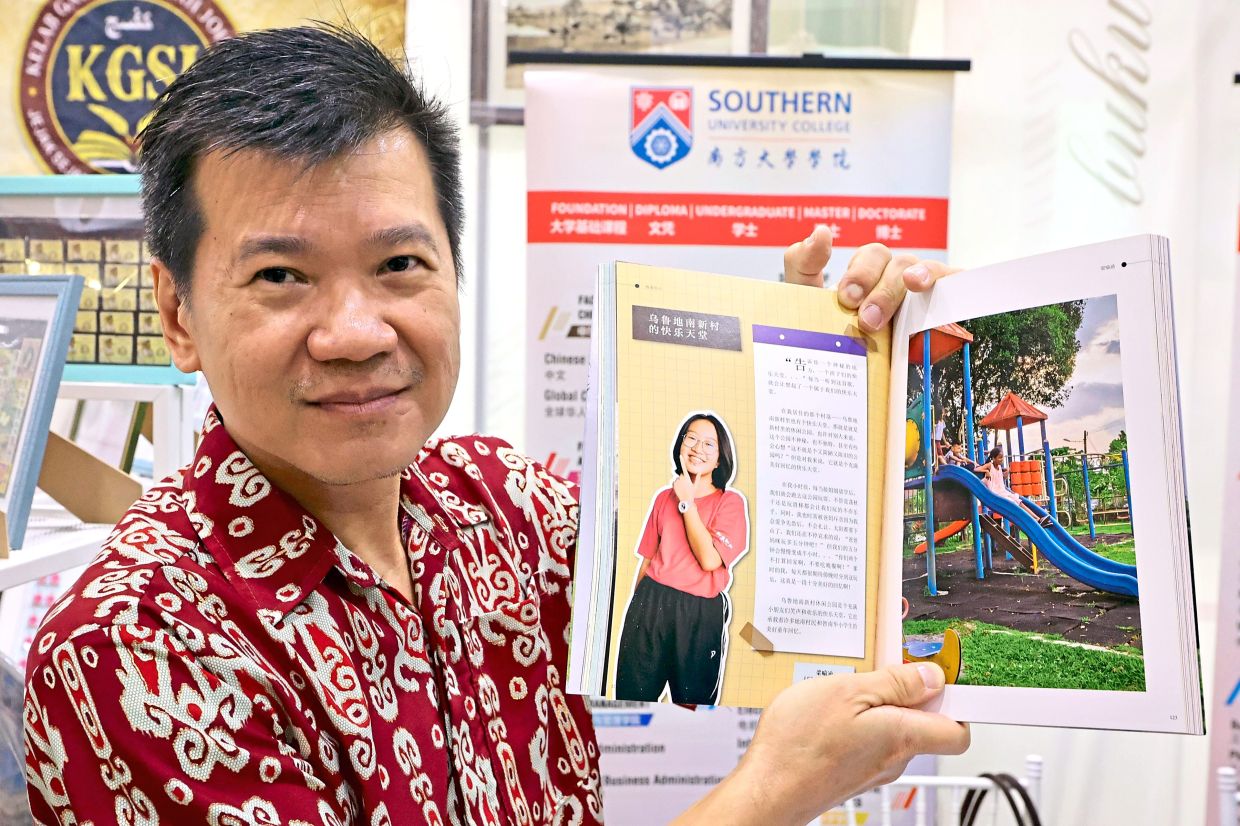
Among the books featured at the booth were the works of primary school pupils aged between nine and 12, jointly produced by the university and local schools.
“We have been working with them through workshops aimed at developing their visual literacy and storytelling skills.
“We ask them to look at what interested them in their surroundings and use their mobile phones to take photographs before composing stories around them.
“We then compiled them into a book we brought to show here,” said Loh, who is also the university’s Southern New Media Centre director.
Clarissa Villamor, an attaché at the Philippine Embassy in Kuala Lumpur, said the book bazaar provided an opportunity to share more about her country’s history and culture with others through books.
“Many of the books we brought represent Filipino culture, including our history, politics, food and folklore, but presented in ways that connect with modern readers and make them more relatable.”
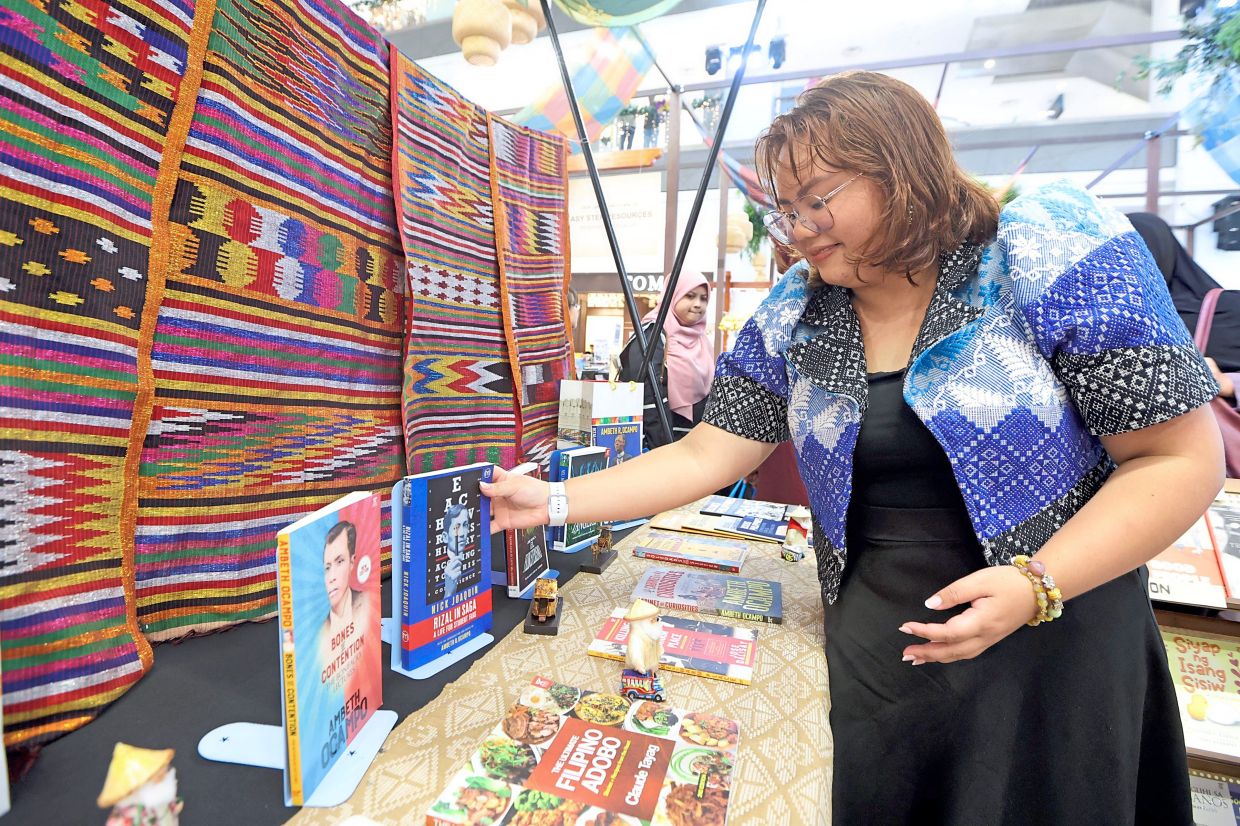
Among the titles showcased were works by and about Philippine national hero Jose Rizal, whose writings reflected the country’s experiences and struggles during Spanish colonial rule.
“We also have books that explore other aspects of Filipino culture, including one that takes our mythical creatures and connects them with modern times,” said Villamor.
She said the cultural exchange went both ways, with the delegation also getting a glimpse into Malaysian literature while touring the bazaar.
“We were surprised to see so many Malay books here, including some by young adults, which is a booming genre in the Philippines.
“It is interesting to see similar developments in fiction across our countries,” she said, hoping to take part in more such events in the future.
Learning culture, language
Singaporean author and publisher Salbiah Bahri said book bazaars offered parents and children an opportunity to discover materials that could be used not only for reading, but also for learning about language, culture and everyday life.
The founder of Little People, Big Words said she used familiar subjects such as nasi lemak and durian to encourage children to appreciate family interactions and traditions that could easily be lost amid modern lifestyles.
“One of the things I want children to understand is that food does not just magically appear on the table.
“When I was young, my father would catch prawns, my uncle would climb a coconut tree and all of us would help gather the ingredients.
“This is something we no longer experience today. I want children to be able to understand this.”
Salbiah, a former lecturer at Ngee Ann Polytechnic and Temasek Polytechnic in Singapore, said her background in early childhood language and literacy influenced the way she designed her books.
“The books have prompts because sometimes parents or teachers read a story to children, but may not know what questions they can ask afterwards.
“There are many layers to a story, so the prompts encourage children to name objects, answer questions and use language instead of simply reading the book from beginning to end.”
Salbiah also published separate English and BM editions of her books, particularly for children with dyslexia.
“If their stronger language is English, I encourage them to read the English version first for pleasure and meaning.
“Once they already know the storyline, they can then read the BM version and focus on expanding their vocabulary without having to process the story all over again,” she said.
Help of technology
The bazaar also showcased how technology was being used alongside books to encourage reading among younger generations.
This included the Little Johor Explorer application developed by Southern University College computer science lecturer Shafika Mohd Suhaimi in collaboration with PPAJ, to cultivate the reading habit among children while introducing them to Johor.
“The first edition of the application has been developed and we are now developing a second one featuring more Johor stories.
“We realised that there were not many children’s stories about Johor, including its history and other things related to the state.
“So, we introduced a Community Authors module where anyone with stories about Johor, including stories from the past, can contribute and become an author,” she said.
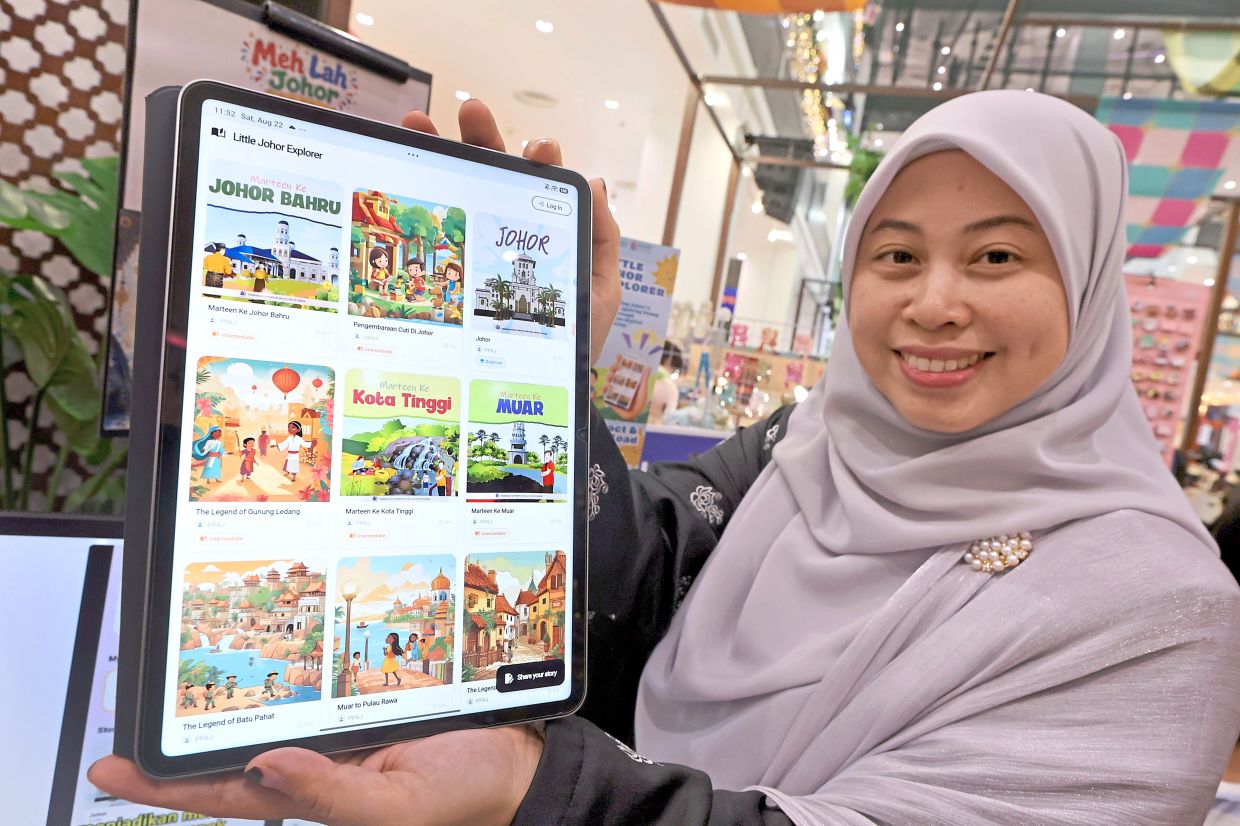
Shafika said the stories submitted through the app would be vetted by PPAJ, while artificial intelligence (AI) was used to generate illustrations to accompany the approved stories.
“Children need visuals when they read, so we use AI to generate suitable images, but the stories themselves come from people.
“We also keep the amount of text on each page short, as the app is designed for children,” she said, adding that the stories were either in English or BM.
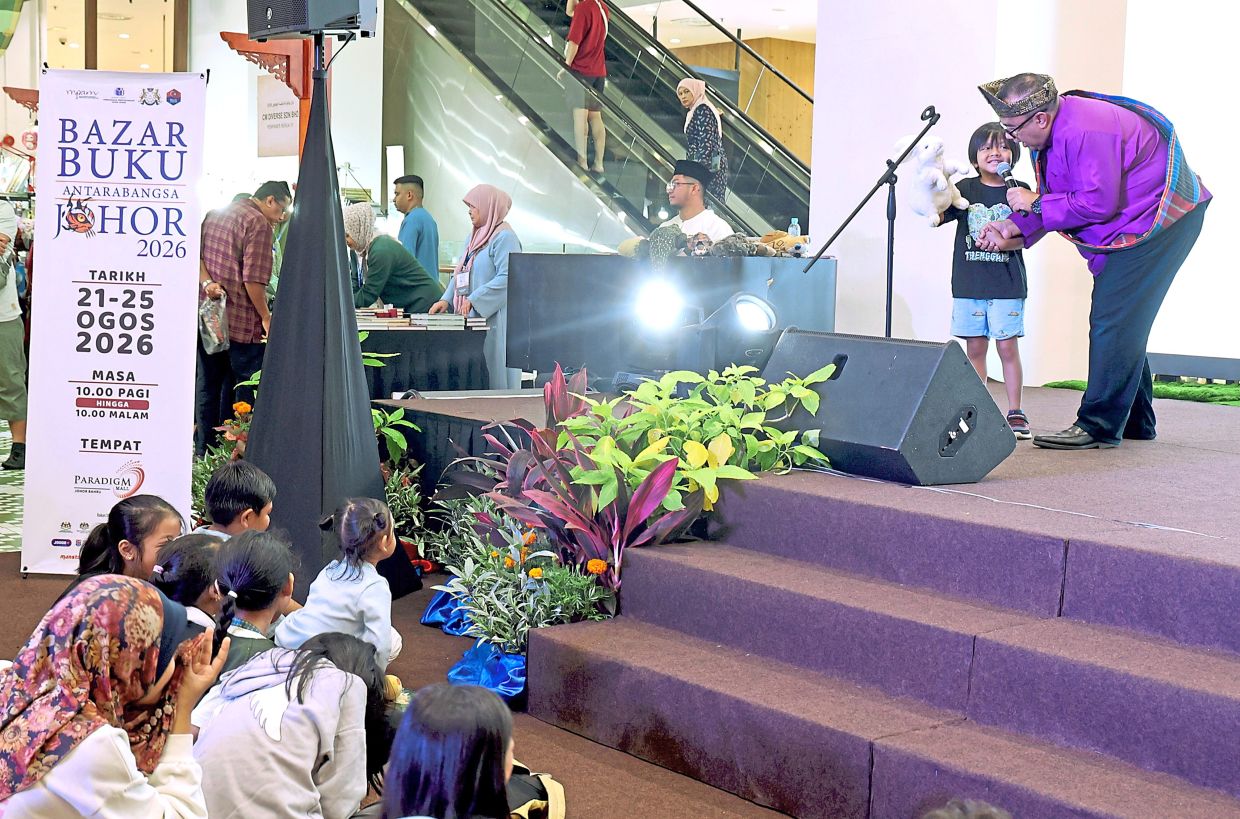
Apart from books, the bazaar also featured talks, meet-the-author sessions, children’s storytelling activities, heritage trails, radio programmes, Johor traditional attire and various family activities.