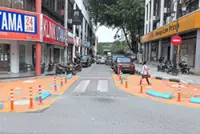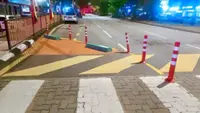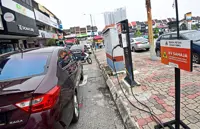
Calls by the Taman Tun Dr Ismail Residents Association (TTDIRA) to stop the formalisation of parking along Jalan Tun Mohd Fuad in Kuala Lumpur reveal a deeper issue.
Congestion is being used as a guise.
If informally parked cars already cause obstruction, jams and make the street dangerous, what is the issue with formalising parking spaces?
Why is there a preference for less order on the streets in Taman Tun Dr Ismail?
This demand shows a contradiction from TTDIRA leadership.
Residents cite that interventions cause problems, but the problems were present – and arguably worse – before the local authority stepped in.
Legal guidelines set in motion enforceable frameworks that point to bigger objectives.
Formalising parking is part and parcel of building Kuala Lumpur for all users.
Beyond curbing lawbreakers, formal parking has multi-faceted benefits.
Properly parked cars can protect pedestrians from high-speed traffic along Jalan Dato Sulaiman.
Slowing cars down reduces crash risks and the chances of serious or fatal injuries if an accident occurs.
The proactive action of Kuala Lumpur City Hall (DBKL) to formalise parking shows that the city has a vision for its streets –less chaos, increased safety, calmer speeds and an overall people-first neighbourhood.
Some residents want to keep Jalan Tun Mohd Fuad as it is, arguing that wide lanes allow smooth traffic flow when volume is low.
Unfortunately, the assumption that congestion can be solved by preserving carriageway is false.
Taman Tun Dr Ismail’s gridlock stems from an excess of traffic, exacerbated by developments at the Kuala Lumpur Golf & Country Club.
Providing sufficient road capacity for all vehicles is impossible and converting market parking into a multi-storey facility will only draw more cars to the area.
Far from an afterthought, DBKL’s move to widen sidewalks to create more mobility options is the right step.
People arriving in Taman Tun Dr Ismail by train and walking reduces total traffic volume.
Formalising parking encourages this shift, as parked cars act as a shield to the sidewalk, creating low-stress spaces that are comfortable to walk in.
In fact, illegal parking is rampant because there has not been a comfortable, alternative way to get to the local shops other than parking right in front of them.
For many other residents in Taman Tun, myself included, the pain of staying the same is greater than the pain of not adapting to population shifts taking place in our neighbourhood.
We warmly welcome the recent road safety changes and hope they will build a better Taman Tun Dr Ismail for all.
Timothy Ong
Taman Tun Dr Ismail