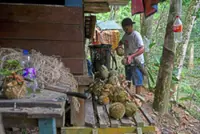
AS DURIAN lovers flock to get their hands on well-known varieties such as Musang King and Black Thorn, an Orang Asli community in Labu, Negri Sembilan, waits for hill durian or ‘durian bukit’ to fall from the trees.
Hill durian, which thrive on hill slopes without the aid of modern farming technology, remain a source of pride for the Temuan Orang Asli community in Kampung Orang Asli Sebir.
The fruits’ appeal lies in the diverse flavour profiles that are rarely found in commercially cultivated durian.
ALSO READ: Bumper harvest fuels culinary creativity
Durian bukit orchard owner Zurdi Baharu, 44, said his trees bear fruit only once a year and are left to grow naturally, preserving the fruit’s authentic taste and distinctive aroma.
Commercially cultivated durian, on the other hand, can produce fruit two or three times a year through the use of fertilisers.
He said hill durian possessed a unique character because they grew on mineral-rich hillsides, allowing the trees to flourish without the use of pesticides or chemical fertilisers.
“What makes hill durian special is the variety of flavours they produce.
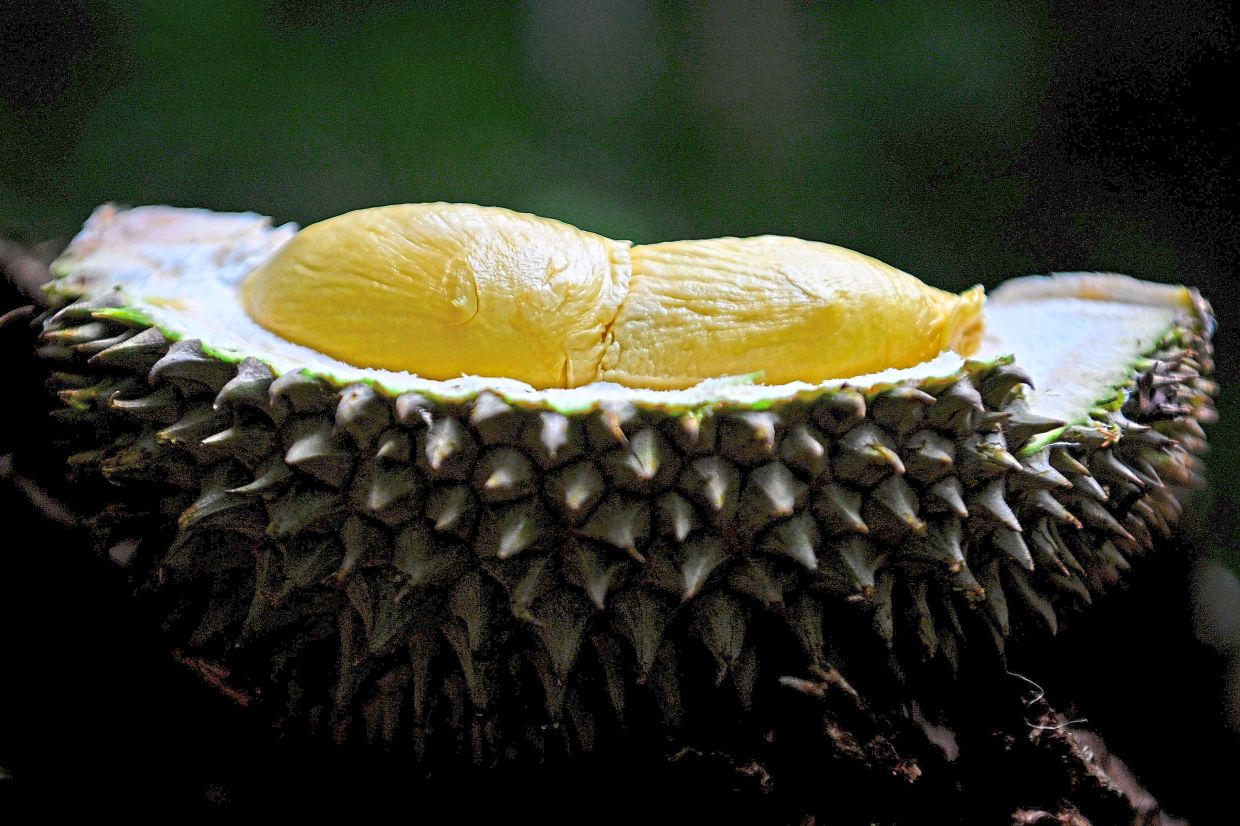
“Every tree bears fruit with its own distinct taste − some are bitter, others sweet or creamy − while the flesh is generally denser.
“This durian is organic and has its own following,” he told Bernama.
Zurdi said most of the durian sold in the market today were grafted varieties developed from kampung durian and cultivated using fertilisers to increase yields.
“You can see hybrid durian being sold even when it is not the natural durian season, because fertilisers are used to stimulate fruiting, and they are often sold at high prices.
“Our ‘durian bukit’ is different,” he said.
The father-of-two usually begins collecting fallen durian as early as 7am each day during the fruiting season and can gather about 200 fruits daily, which are sold to middlemen at RM2 per kilogramme.
With more than 50 hill durian trees in the orchard, which has remained in his family for generations, the annual harvest provides Zurdi’s family with an additional source of income.
“Although durian prices are lower this season, demand for hill durian remains encouraging because the fruit has its own dedicated following,” he added.
Hill durian enthusiast Rosli Ali, 48, said the fruit offered a distinctive flavour that was difficult for hybrid durian to match.
Besides being more affordable, hill durian has rich, dense flesh, he said.
“Whenever the durian season begins, I look for ‘durian bukit’.
“If I am lucky enough to find one with yellow flesh, I know it is going to taste really good.
“There is no need to spend a fortune on expensive durian, because hill durian offers everything you want in a durian,” Rosli added.