
DESPITE the rising cost of living, some businesses in Johor are choosing to keep their prices low in a bid to make life a little easier for customers struggling to stretch their ringgit.
One such business owner is Ling Pau Moi, who has been providing affordable tailoring services from her home in Kulai for the past 20 years.
Coming from an underprivileged family, the 60-year-old understands firsthand the challenges of having to make every ringgit count.
She charges customers RM1 to sew buttons and RM2 to replace jacket zipper pullers.
“For me, there is no need to charge too much, especially since I am working from my own house and not paying rental for a shop.
“My intention is to earn just a little side income for me and my family, not to make large profits.
“At the same time, I also want to help people as much as I can. This is the way I know how.”
Other services Ling provides are repairing school bag straps and zips as well as altering clothes.
“The services I provide are simple things that budget- conscious people need, particularly those with school-going children.
“These are minor fixes that can help people save a lot of money because they do not have to buy new items,” she said.
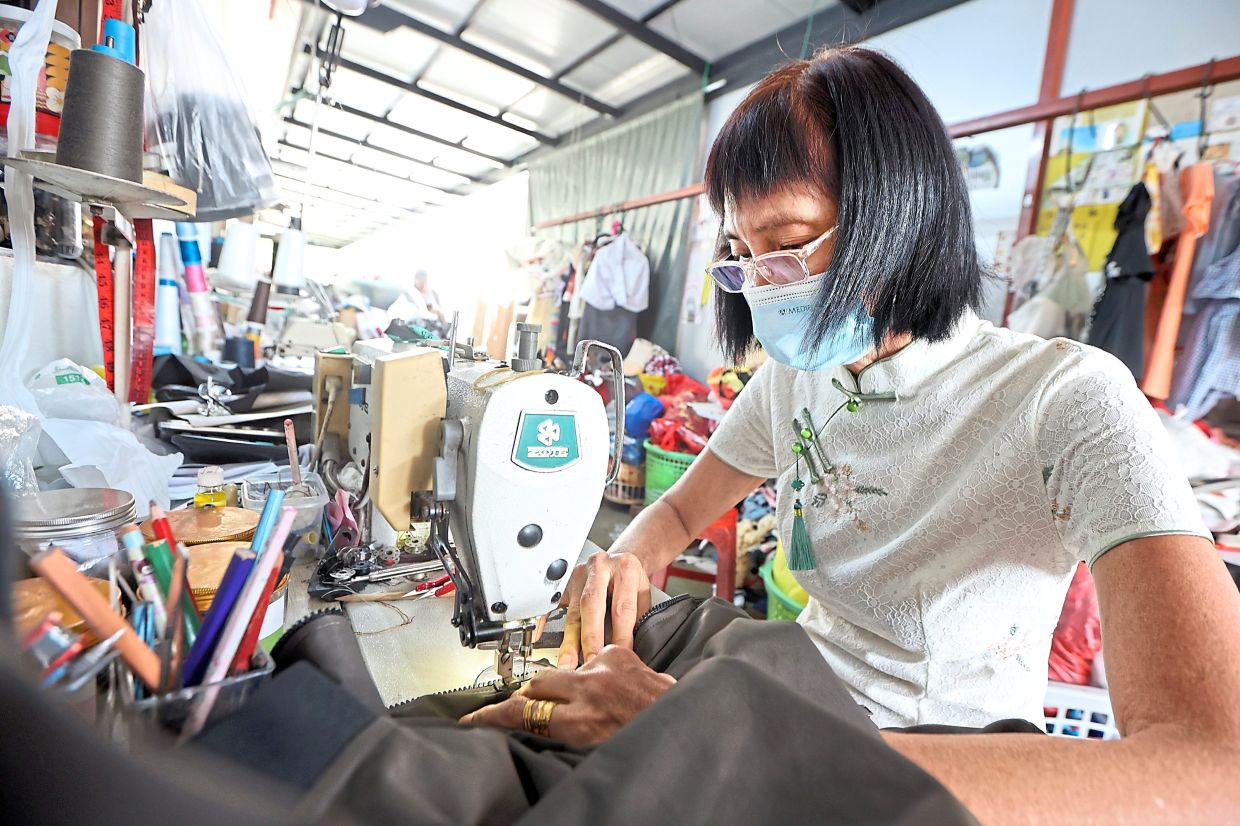
Ling picked up tailoring when working at a clothing factory in Singapore more than 30 years ago.
“I worked for several companies for about 10 years before moving here with my husband for good,” she added.
One of the few remaining traditional barbers in Johor Baru, Pang Heok See has kept the price of a haircut with full grooming service at just RM9 for adults and RM5 for children.
“I used to charge only RM6, but I increased it to RM8 about five years ago, then to RM9 about three years ago to cope with rising costs,” he said.
The 78-year-old does not see the need to increase prices anytime soon as he is making enough to cover operating costs and still has a little extra for daily expenses.
“At my age I am not interested in making a ton of money, especially since all my children are working,” said Pang who has been a barber since he was 17.
One of the main reasons he has been able to maintain his business despite keeping prices low is because he owns his shop in Tampoi.
“My years of hard work have also allowed me to own this shop.
“So, I do not have to worry about rent, which has skyrocketed over the years and could have driven up my operating costs drastically.
“It is not a luxury that many businesses get to enjoy. Other businesses are forced to either increase prices to cope or shut down for good,” said the father of five.
Pang has cut back on his work hours due to advancing age, and now receives about 10 customers daily.
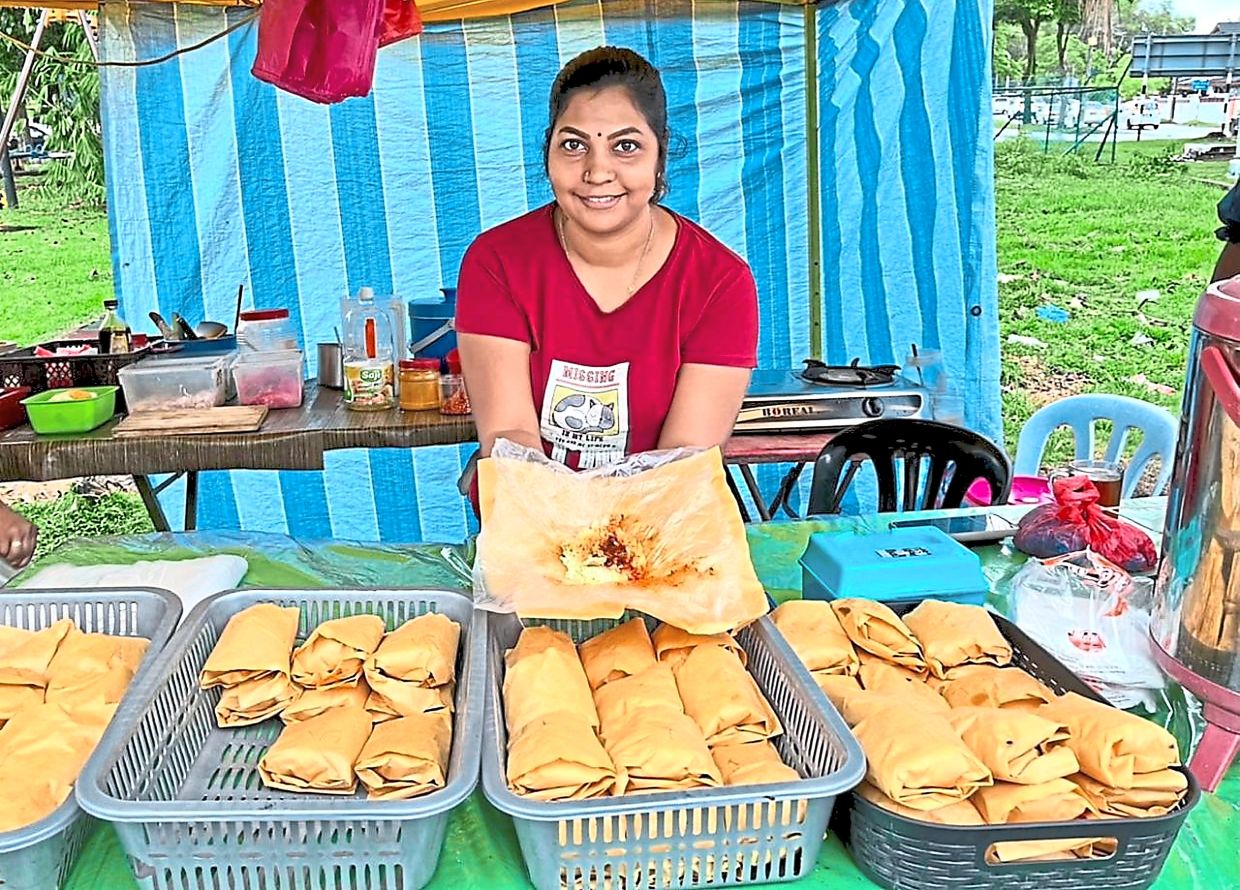
“I used to open from 9am until 10pm, but I have now decided to close by 8pm, so I can have more time to myself,” he said.
Pang said that apart from locals, some customers were also Singaporeans who sometimes paid him extra as a way of showing appreciation for his service.
“There are not that many traditional barber shops operated by old-school barbers like myself anymore, especially in urban areas,” he noted.
Pang said some well-to-do customers even paid as much as RM100, while Singaporeans typically paid about S$15 (RM46), which is the amount they would normally pay back home.
Affordable food
Also opting to keep prices reasonable is S. Kalaiarasi, 42, who has been selling nasi lemak with basic ingredients for just RM1 since she started the business seven years ago.
Her nasi lemak comprises rice, sambal, fried anchovies, peanuts and egg.
“For now I don’t intend to increase the price of my nasi lemak, as the income is manageable.
“I am also well aware that those struggling to make ends meet, depend on affordable food,” she said.
She also offers add-ons such as chicken, prawn, squid or cockle sambal at RM2.
Kalaiarasi, whose stall is located in Tampoi Indah, Johor Baru, said her customers included students and those working in Singapore.
“I operate my stall from 4pm to 5am the next morning,” she said.
“For now, my suppliers are able to get me the ingredients I need at an affordable price, allowing me to still cover my operating cost.
“So I do not see the need to increase prices anytime soon, and will stick to the current price for as long as I can,” she added.
Eatery owner Anor Serat, 57, continues to offer meal sets from as low as RM5 despite current economic challenges.
Anor, who previously worked as a ship cook in Singapore for
19 years, opened his eatery in Kampung Bendahara, Johor Baru, two years ago.
The eatery, which operates from 8am to 5pm daily except on Fridays, offers meal sets comprising rice, vegetables, a choice of fish or chicken, and either iced tea or iced syrup.
“Customers can refill their rice for free. We replenish the dishes every two hours.
“Although raw material costs continue to rise, I will continue to maintain the RM5 price as long as I can. So far, I am still able to make a profit,” he said.
Anor, who moved from Penang to Johor about 20 years ago, said the business carried sentimental value as it was inspired by his parents’ constant reminders to be charitable and to help others.
“As such, I do not focus solely on making profits. Instead, I want to ensure that everyone can enjoy a full meal at a reasonable price.
“The profits may not be as high as what some other eateries make, but I am grateful that the business continues to receive support from the public,” added Anor.
Traders praised
Johor Domestic Trade and Cost of Living Ministry director Lilis Saslinda Pornomo said businesses that continued to offer affordable goods and services played an important role in helping consumers cope with rising living costs.
“While businesses are also facing increasing operating costs, including raw materials, rent and utilities, there are still some traders who choose to keep their prices low to support their communities.
“Such efforts should be appreciated as they help ease consumers’ financial burden, particularly low-income families and those struggling with the rising cost of living,” she said.
Lilis added that consumers should continue supporting local businesses that strive to maintain affordable prices without compromising on the quality of their products and services.
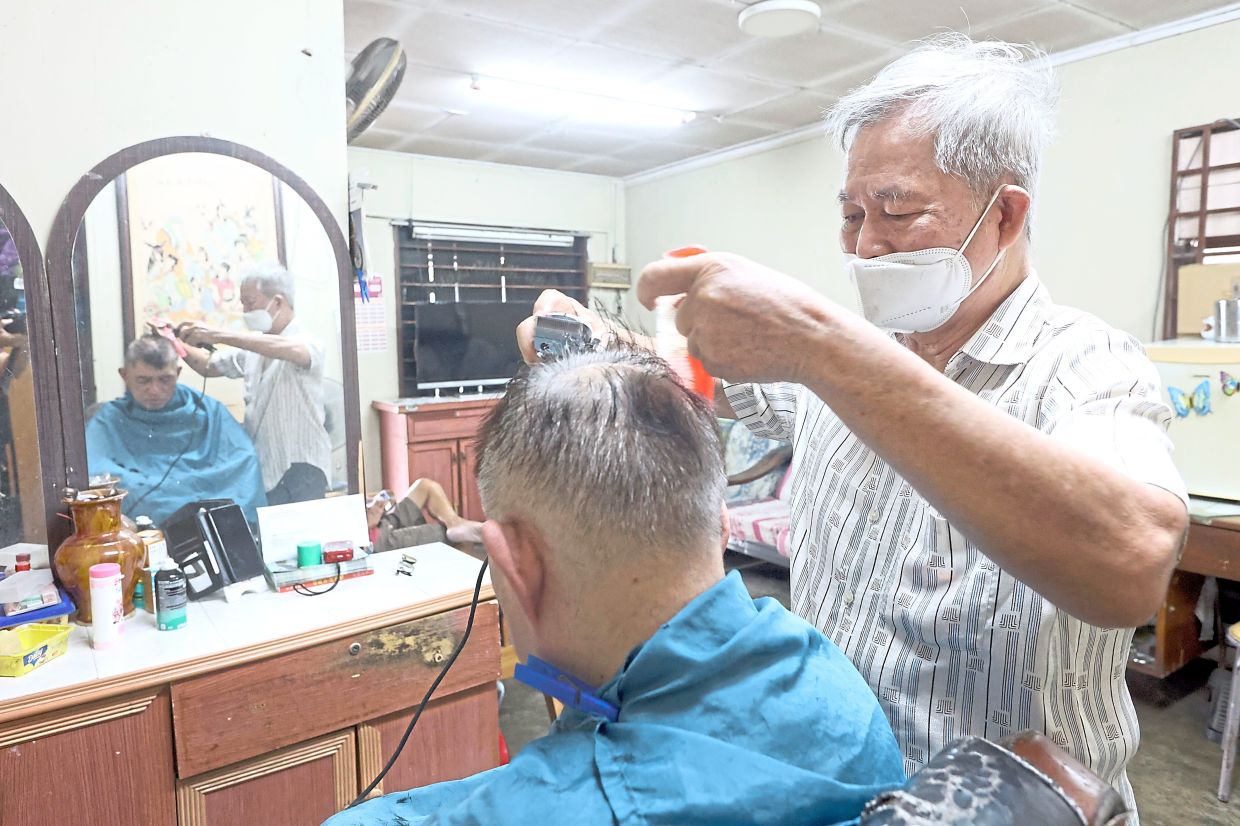

Pang cutting the hair of a customer at his barber shop in Tampoi.
Ling sewing the zipper of a jacket at her house in Kulai.
Lilis says businesses that continue to offer affordable goods and services play an important role in helping consumers cope with rising living costs.
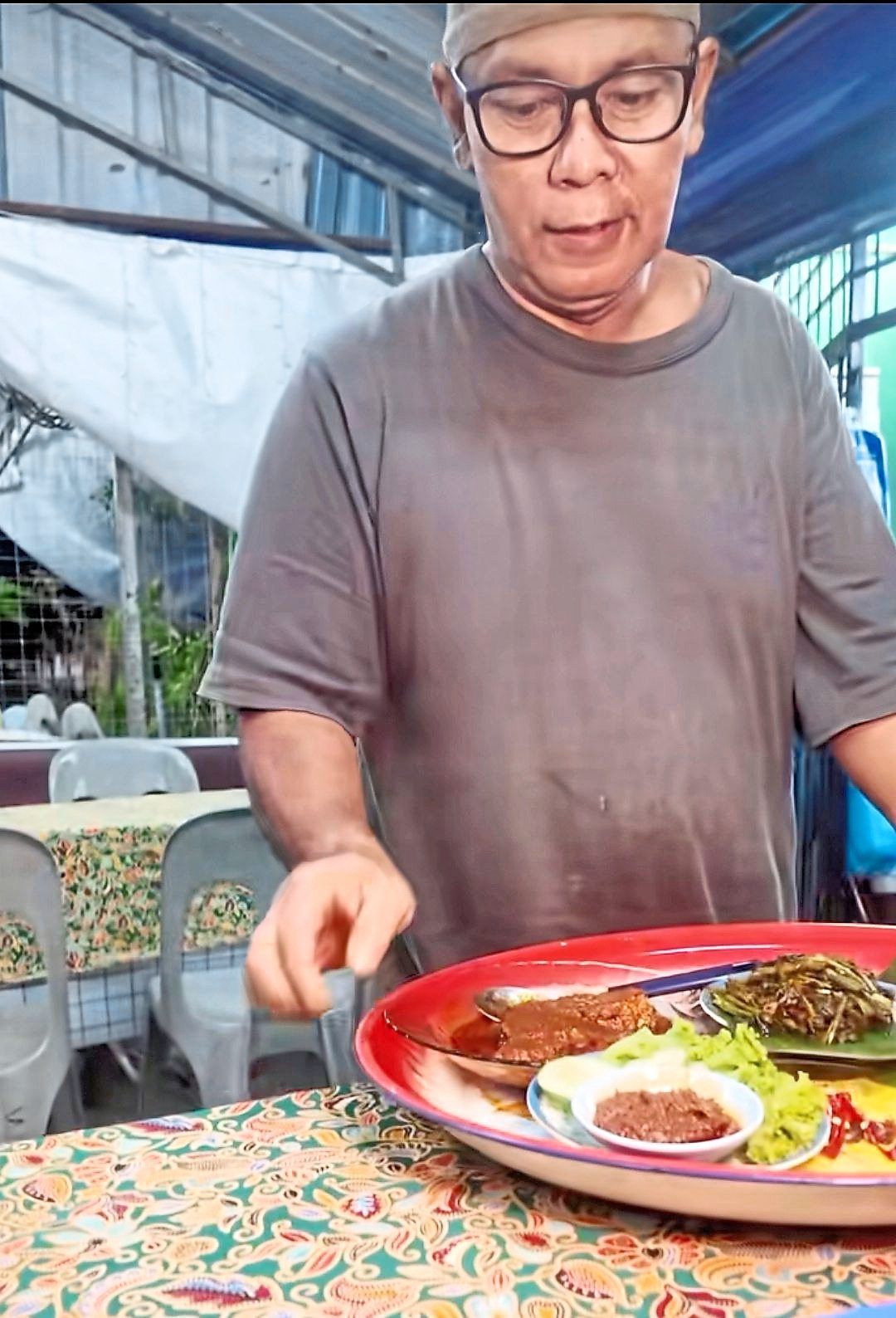
Anor continues to offer meal sets from as low as RM5 at his eatery.
Kalaiarasi has kept the price of nasi lemak at only RM1 for the last seven years.