Troupe uses traditional performance to tell stories of early migration to Penang
AMID raging winds and endless waves, over the wailing and prayers of the ship’s passengers, a haunting thought arose:
“Time feels endless on board.”
Escaping war and catastrophe that beset China in the late 19th century, two friends set off from Zhangzhou city in Fujian province to seek employment in the south.
Their journey carried them first to Singapore and then, unexpectedly, to Penang.
Here, they put down roots as part of the early Hokkien immigrants whose descendants now form one of the state’s core ethnic communities.
In “A Song of Crossing to the Southern Seas”, Penang glove puppet theatre troupe Ombak Potehi captures this emotional voyage to a place its members now call home.
Gloves on
As a performing arts group, Ombak Potehi is unique even by Penang standards.
Formed in 2015 by noted ethnomusicology scholar Prof Dr Tan Sooi Beng, the young troupe, with members then averaging under 30 years old, was put together to master potehi – a centuries-old performance art.
A distinct form of Chinese glove puppetry originating in Fujian around the 17th century, the art form was brought to the region by Hokkien immigrants.
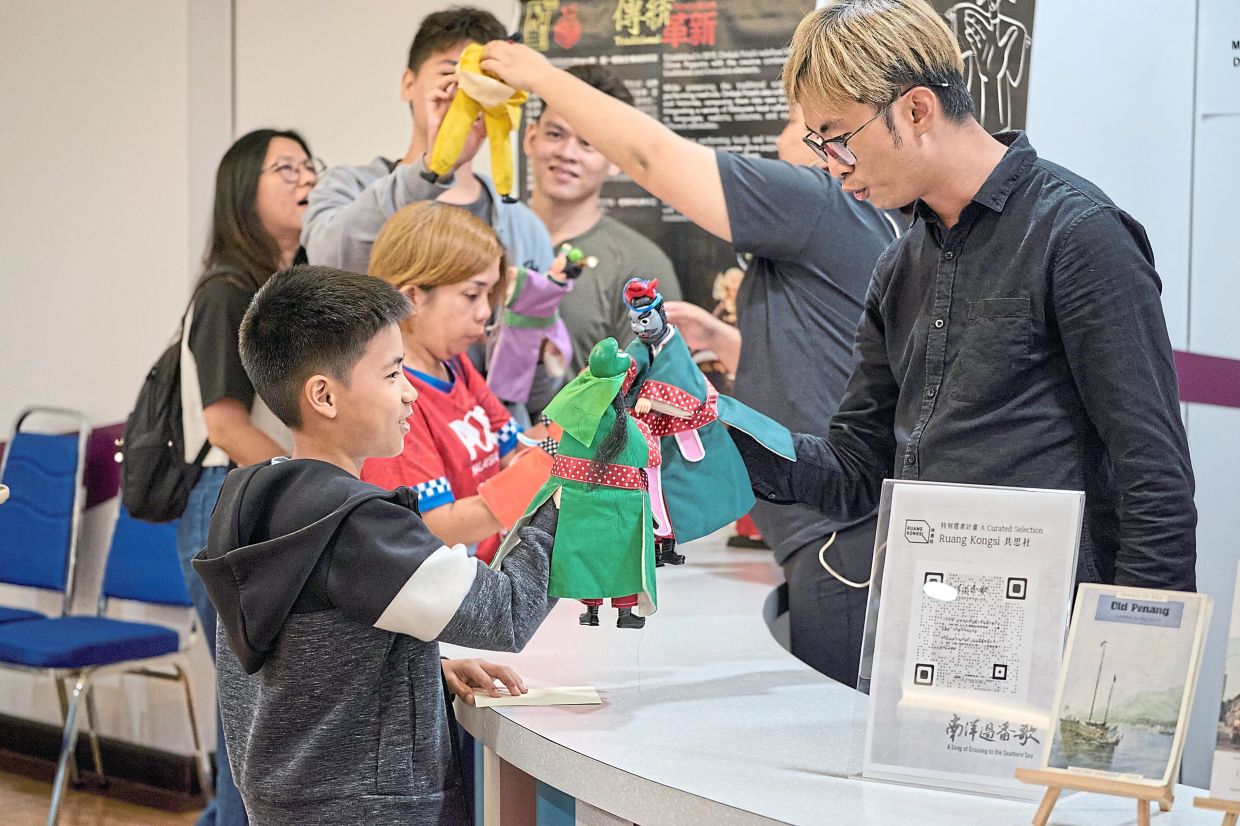
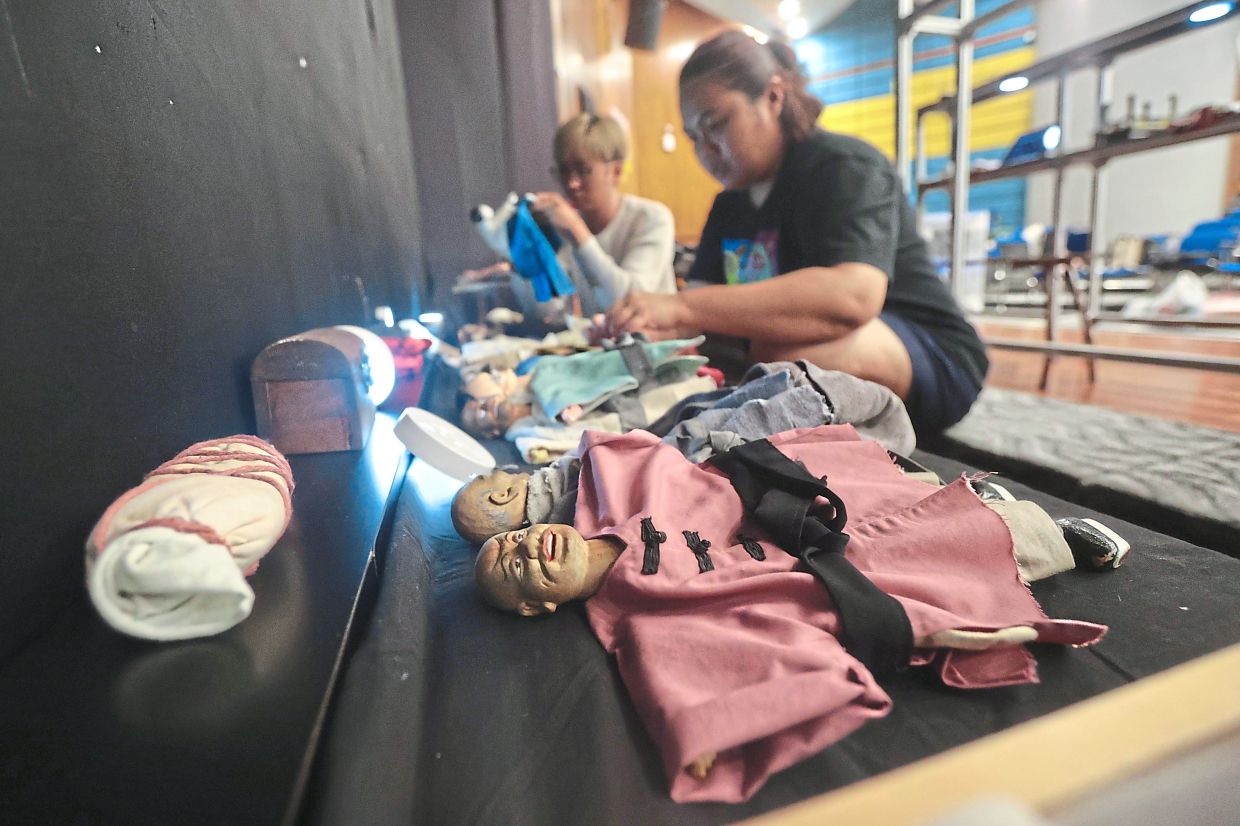
Made of elaborate hand puppets about 30cm tall, potehi characters are free from the strings or rods that manoeuvre their European counterparts.
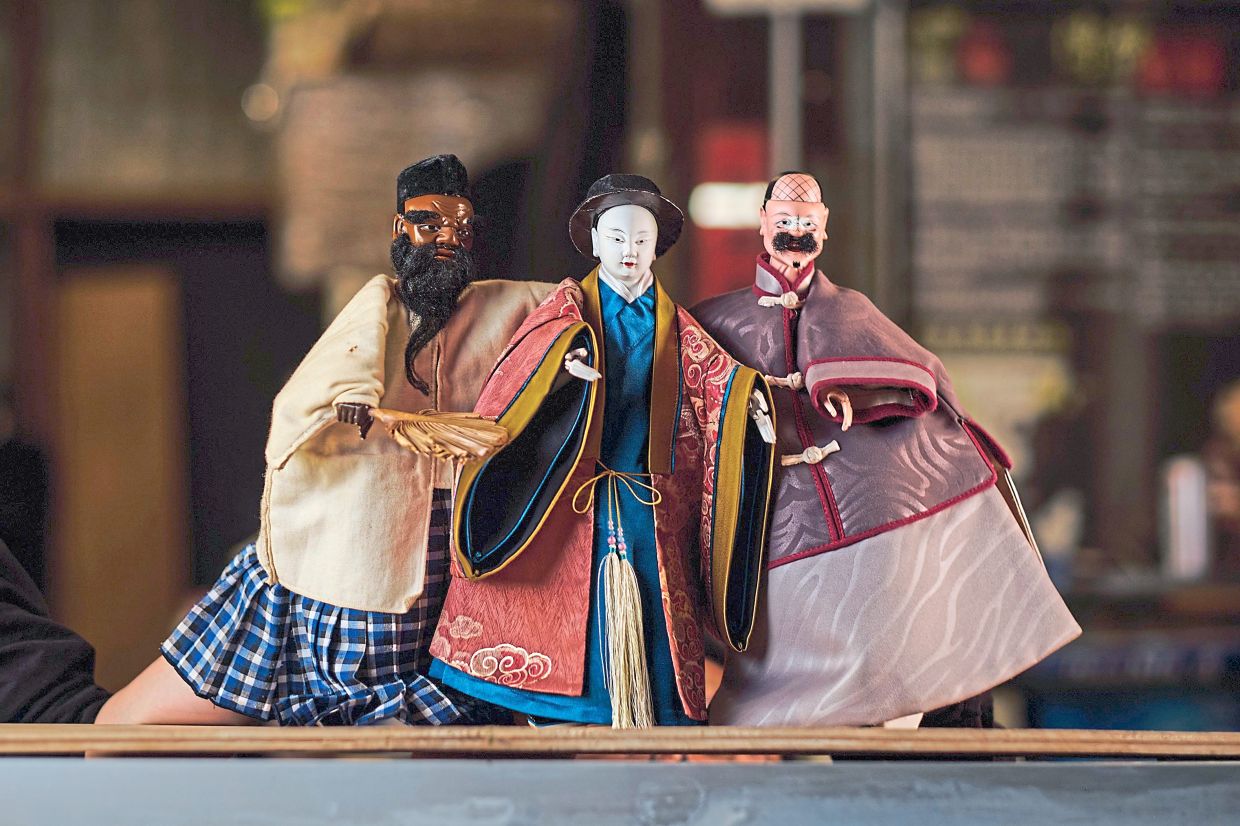
Instead, the puppet’s head is controlled by the forefinger while the remaining fingers steer the arms.
Historically, potehi was a sought-after, affordable form of entertainment for temple celebrations and small functions, requiring less time for preparation and manpower than a full opera troupe.
However, faced with the challenges of modern times, potehi experienced a sharp decline by the 1970s.
“I’ve been researching potehi since the 1980s and could see the form was dying. Performances were held for temple festivals, but there was no audience,” said Prof Tan, who received the Boh-Cameronian Lifetime Achievement Award last year.
“In 2014, with the help of the heritage masters, a group of us known as the ‘Friends of Potehi’ decided to document the four remaining troupes in Penang,” she said.
The result was Potehi − Glove Puppet Theatre of Penang − an innovative multimedia box set that detailed the history, troupes, stage iconography, puppet types, manipulation techniques and music of potehi in Penang.
Realising that documentation alone was not enough to revitalise the theatrical form, Prof Tan founded Ombak Potehi in 2016 to get young people learning from the Beng Geok Hong Troupe.
These apprentices spent their breaks between performances mastering puppet manipulation and music from the masters.
Finding a voice
Founding member and current Ombak Potehi artistic director Marcus Lim, 40, like many millennials in the troupe, had never experienced potehi growing up.
“I have a great interest in Hokkien opera, as it brings back a lot of childhood memories of my mum and grandmother.
“Those involved in documenting the potehi troupes thought I may be interested in trying it out by joining the youth troupe – at that time, I was still young!” he laughed.
A purchaser in the IT sector by day, Lim has since written about a dozen scripts.
“Everyone in Ombak Potehi has their own full-time job so we can only come together in our free time.
“Over the years, we have had quite a number of members who were teachers and who worked in the press line or corporate sector,” he said.
The team started with about 12 members, with musicians slightly outnumbering puppeteers.
They gathered, often on Sundays, at Universiti Sains Malaysia (USM) where Prof Tan was based.
“After observing performances by our masters, we started to rewrite the stories we had seen because the traditional stories needed three hours to perform.
“We did not think it would fit today’s younger generation’s attention span,” said Lim.
Both Lim and Prof Tan also noted that language was another hurdle.
Traditional potehi is performed in classical Hokkien, which differs significantly from the localised Penang Hokkien.
Caught between wanting to preserve the art in its original form while tussling with making it accessible to current audiences was a conundrum for the group.
However, interactions with troupes from Taiwan, Indonesia and Japan helped Ombak Potehi find its own voice.
“Potehi in Indonesia is interesting; they still keep the traditional way of performing with Hokkien glove puppets, but use Bahasa Indonesia.
“This triggered me to think about what we wanted to preserve – is language the main thing?
“We decided to use our own local stories but maintain the traditional methods,” Lim said.
And with that, “Kisah Pulau Pinang” (“The Tales of Penang”) was born, a three-part series centred around a Hokkien immigrant who was forging a path in a strange, new land.
“The main character comes from China so he speaks traditional Hokkien, while the Nyonya and second-generation characters speak in local Penang Hokkien,” said Lim.
From Taiwan with love
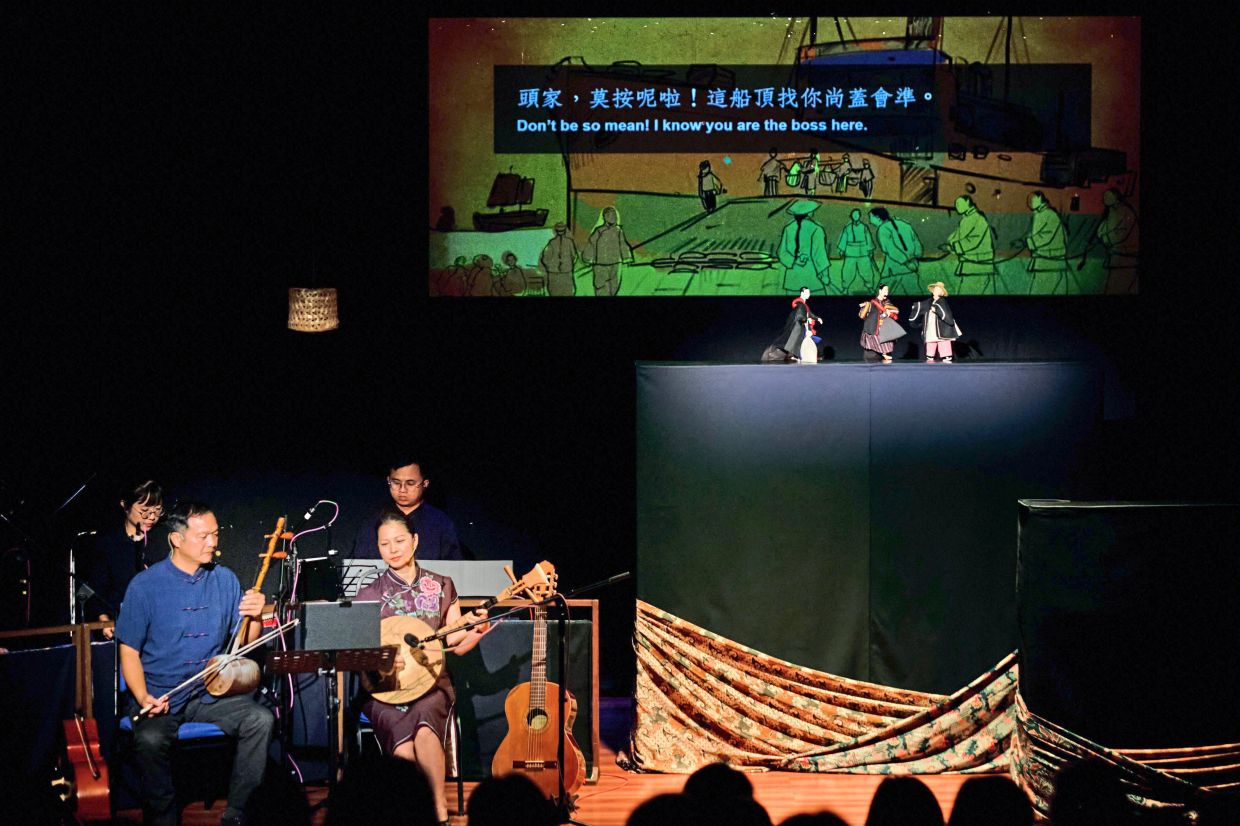
In late April, “A Song of Crossing to the Southern Seas” took the stage at Auditorium A in Komtar in George Town, Penang.
The two-hour production follows two friends taking their first steps out of their native homeland of China.
Lim Ah Ghee, the sole descendant of his family line, was buoyant with expectation as he waited for Chew Boo Seng on the docks of a harbour.
Chew, a more cautious, introverted character compared to his bold, devil-may-care companion, was leaving with a heavy heart; his thoughts filled with his parents who had to stay behind in the war-ravaged country.
The duo managed to bribe the ship’s tauke (boss) for better food and lodging, but not all passengers on board were so lucky.
Some were unwilling travellers, having been tricked on board by slave traders.
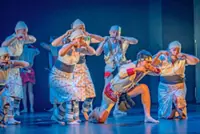
Through high winds and rough seas that bathed the stage in ominous shades of blue, the ship’s inhabitants cried, begged and prayed as storms and sickness beset the vessel.
Those who succumbed to pox were unceremoniously thrown overboard while the dying were left unattended in the ship’s hold.
For those who survived, opportunity and more dangers awaited in the new lands of Singapore and Malaya.
“A Song of Crossing to the Southern Seas” was written by Lim, and performed in collaboration with the Smile Folksong Group, an award-winning Taiwanese duo who practise the art of liam kua – a traditional chant-song art that blends music and storytelling.
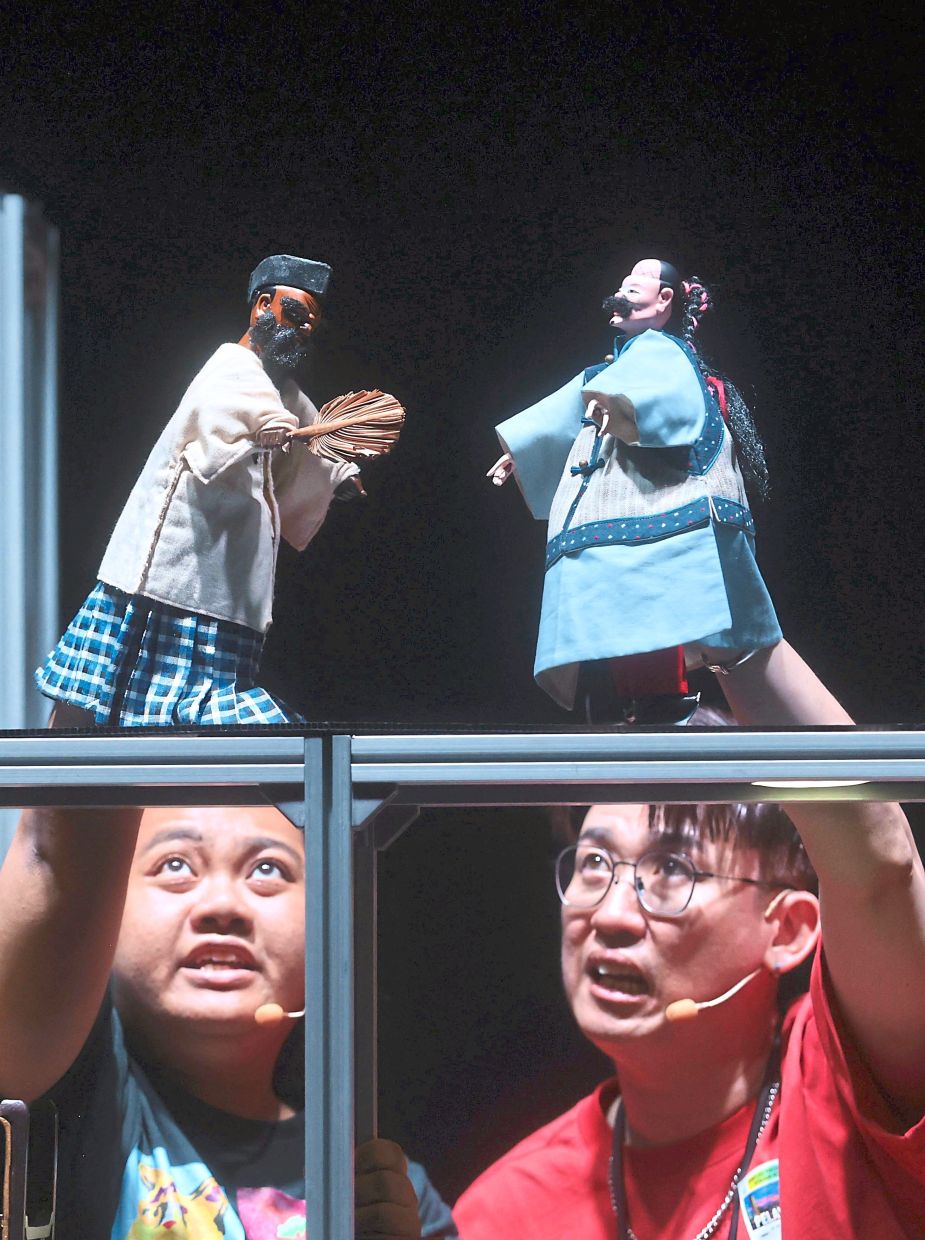
Ombak Potehi troupe manager Keith Song described the liam kua artistes as similar to the tukang karut in traditional Malay performances.
“The liam kua artistes are the storytellers while we, the puppeteers, act out the story.
“The play is a combination of both arts: potehi and liam kua,” Song explained.
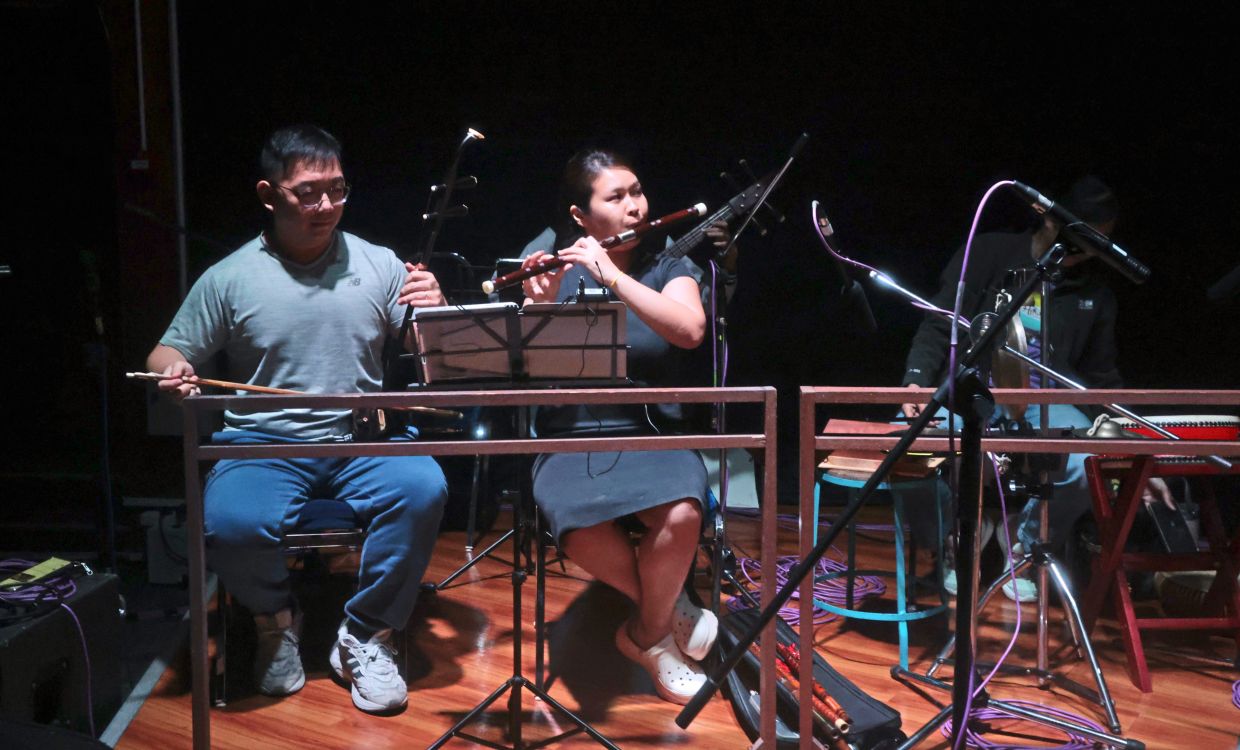
He said that half a dozen Ombak Potehi musicians playing traditional Chinese woodwind, bowed string, plucked string and percussion instruments anchored the whole performance with their melodies running throughout the story.
The two arts groups crossed paths back in 2016 and kept in touch.
The groups rehearsed separately first before coming together for several days of intense rehearsals, said Song.
“The essence of this kind of performance is in the live performance.
“The chemistry is very important,” he stressed.
“Time is never enough and we (jokingly) say, be prepared to rehearse till you faint.”
Despite the intensity, he found working with the liam kua artistes a wonderful experience.
“Even though they are older than us, we share the same wavelength and when we come together, they treat us like family.
“You do not get that in every collaboration,” Song added.
This production, which was supported by Hasanah Foundation’s Arts For All Seasons initiative, was actually the second part of Ombak Potehi’s collaboration with the Smile Folksong Group.
In November 2024, a six-member team from Penang travelled to Taichung to perform the play for audiences in central Taiwan.
Smile Folksong Group member Chu Chien-Chih, who plays a traditional two-stringed instrument called daguangxian, said the group’s journey to Penang was symbolic of the immigration journey of the main character in the play.
“We are very happy to be able to come to Penang and perform this play here.
“After staging it in Taiwan, this feels like the right completion of the play’s journey,” he said.
For Lim, aside from writing the play, directing and performing as one of the puppeteers, the migration story is one that continues until today.
“After writing this play, we realised this is a story that will never end.
“Crossing the sea is something that happens even now,” he said.