WHILE people grumble about the scorching hot weather, it is a much-welcomed environment for belacan (fermented shrimp paste) and salted fish entrepreneurs in Kampung Kuala Sungai Pinang and Pulau Betong, in Penang.
The prolong hot and dry weather not only expedited the drying process but also improved the quality of the product and saved production time – a big advantage for the traditional industry.
Chop Kim Hoa brand belacan entrepreneur, Lo Eng Joo, 78, said the hot weather was suitable for producing high-quality belacan as the drying process can be done naturally without rain interruption.
He said producing belacan was not only complicated, but also took a long time before it became the final product, making the weather factor very critical to ensure that the product not easily damaged and lasted long.
“Usually the process of drying belacan takes a day, depending on the weather conditions.
“If it is dried at 10am, it can be taken off around 6pm but if it rains, the drying period becomes longer,” he told Bernama when met at his family’s factory in Pulau Betong.
Lo said the process had to be repeated at least three times involving drying and using machines, besides fermenting the belacan for three months before going through final drying and packaging.
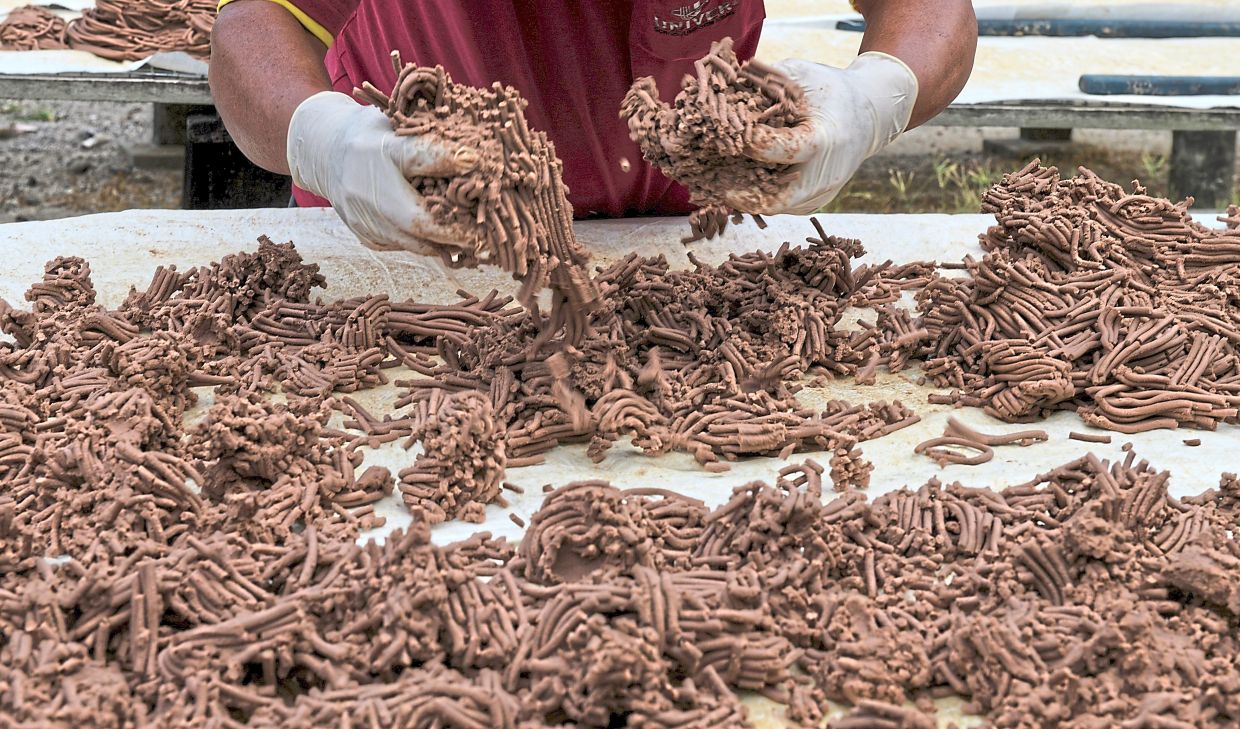
He said about half a tonne of belacan was processed every day using geragau shrimp supplied form Terengganu, Perak and Selangor.
The business, founded by Lo’s grandfather more than 70 years ago, was not being continued with his two younger brothers and assisted by two other family members.
Meanwhile, a salted fish entrepreneur in Kampung Kuala Sungai Pinang, Teoh Yooh Mooi, 60, said the current hot weather had allowed production to increase to 300kg per day compared to less than 100kg during the rainy season.
She said the situation was also influenced by the fish supply factor because fishermen went to sea more often when the weather was good.
“I only produce two types of salted fish, namely marine catfish and croacker,” she said.
Teoh said large-sized fish would usually take up to a week to dry completely as its flesh was thicker but now it only took around four days.
“For smaller gelama fish, the drying process takes at least two days compared to three days during humid weather or the rainy season,” she said.
Teoh said dry weather also provides an advantage in terms of quality when the salted fish produced looked cleaner compared to if exposed to rain or through a drying period that is too long, thus increasing its appeal to buyers.
She said there was no issue of overstocking because her regular customers came every day, with a selling price of RM15 per kg for large fish and RM10 per kg for small fish.
“I understand that many are uncomfortable with the hot weather because they get tired easily, but for me it makes the entire process of making salted fish easier, from soaking, marinating, drying to packaging,” she said.