ART is often synonymous with sensory mastery: the subtle swell of a melody, the vibrant contrast of pigments, or the physical precision of movement.
For some, however, these senses are fractured or absent, yet the drive to create remains undimmed.
Consider the deaf pianist sensing rhythm through floorboards, the painter wielding a brush by foot, or the dancer redefining grace from a wheelchair.
Their paths diverge, but their ultimate ambition is singular: to be recognised as artists first.
StarMetro speaks with three differently-abled creatives highlighting their progress and significant voids within Malaysia’s cultural infrastructure.
They consistently maintain they do not seek pity, but rather the right to engage in creative expression.
Music beyond the silence
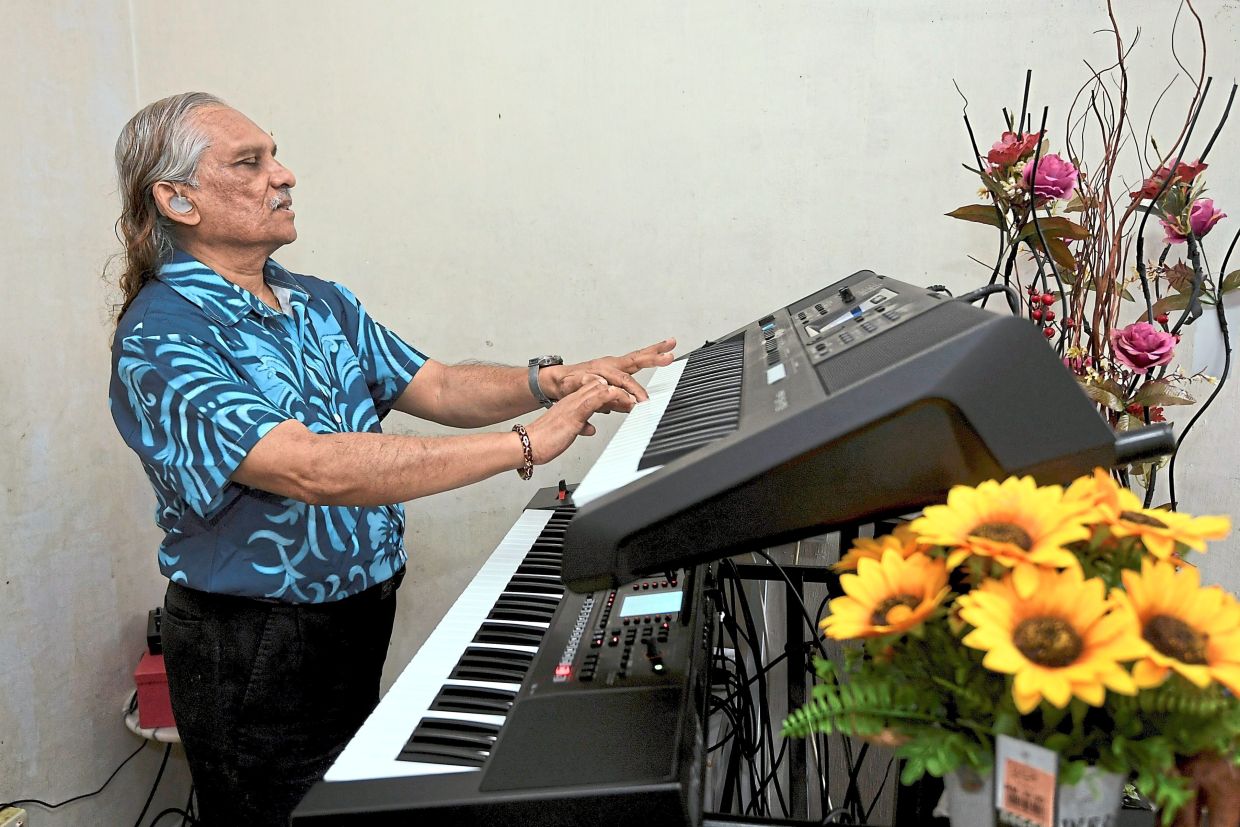
Louise Prem Kumar Jayaseelan, 62, lives with profound visual impairment and near-total deafness, retaining only fractured hearing within his left ear.
Despite such adversity, music has defined five decades of his life.
He navigates the keys not through sight, but through memory and tactile intuition.
His musical journey began at school when his father introduced the melodion, during a childhood that was still illuminated by both sight and sound.
Observing his burgeoning talent, teachers encouraged him to perform, marking his debut on the stage during traditional year-end concerts.
But by age 10, his primary senses withered, necessitating a transition to deaf-blind studies that demanded immense patience and adaptation.
His tutor would place headphones over his ears, playing organ melodies, which Louise would then painstakingly recreate entirely by ear.
Under her six-year tutelage, he excelled, eventually securing a Grade 7 qualification in both the organ and keyboard.
Driven by ambition, Louise later enrolled in a three-year correspondence course based in the United States to further his craft.
“I recorded my lessons onto cassettes to send via post; my instructor would then mail back her recorded critiques,” recalled Louise.
His brother Joseph Selva Kumar said Louise had even been a freelance piano instructor to young students in Brickfields, teaching them in his aunt’s home.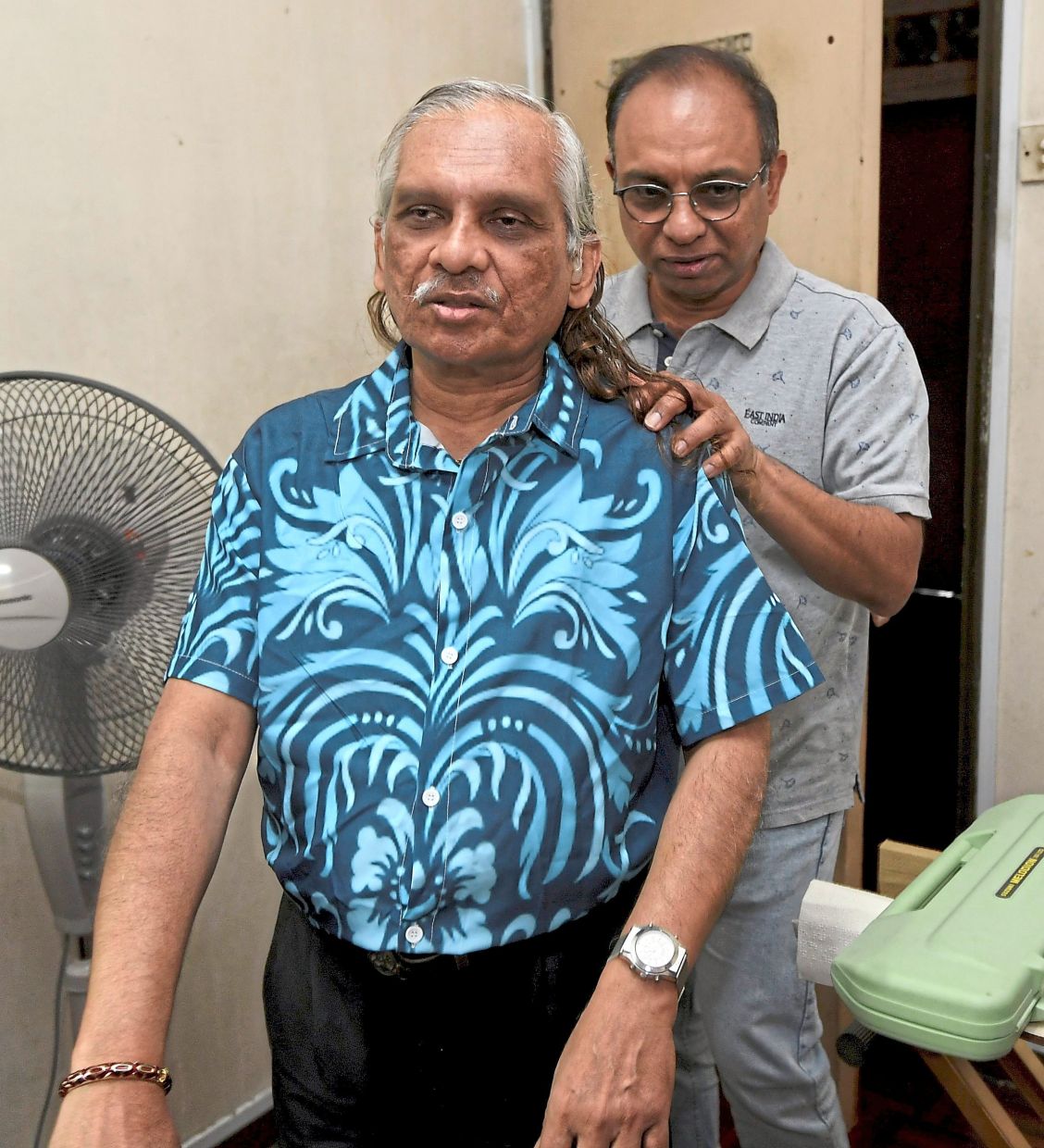
“Whenever he played the piano there, people around the neighbourhood would listen to him and later ask for private lessons with him,” said Joseph.
Over time, Louise transitioned from playing the organ to portable keyboards that were easier to transport to weddings, hotels and charity events.
He has performed at fundraising galas and weddings, with the most recent one being The Dementia Society gala dinner at the Royal Perak Golf Club in Ipoh last year.
Louise has also participated
in a concert called “Unveiling Uniqueness” organised by Musicians for Musicians held at Menara BAC in 2024.
Beyond playing instrumental covers, Louise composes his own melodies which he hopes to share more widely.
“My ambition is to record my own composed melodies and be an artiste,” he said.
Joseph acknowledged that sustaining a music career presented obstacles far beyond mere talent.
When opportunities arise, he said sighted musicians would respond instantly, a luxury Louise simply lacked.
“My brother must coordinate transport, availability and a guide, perhaps me or an official from the Malaysian Association for the Blind.
“By the time we navigate those logistics, the opportunity has often vanished,” he said, pointing out that disabled performers required intentional inclusion rather than unfair competition.
“In a major programme, why not reserve one specific slot for disabled musicians, allowing the public to witness their genuine capability?”
Opportunities are frequently stifled by logistics; arranging transport, hauling heavy equipment and securing sighted assistance, which require coordination that others often overlook, said Joseph.
Despite the barriers, Louise remains focused on what music has always meant to him.
For him, music has never depended solely on sight or sound, but on memory, vibration and the quiet determination of hands that have found their way across the keys.
And as long as those hands continue to move, so will the music.
Dancing with heart
In 2015, Angel Yee Ai Wei worked in a Singapore salon, chasing relentless sales targets while managing thyroid issues and an erratic lifestyle.
Pressure mounted until her body collapsed; a severe fever and weakened immune system led to a bacterial infection triggerring the condition that doctors diagnosed as polyneuropathy.
Soon, she was paralysed from the neck down, unable to move or speak. Doctors warned she must relearn everything from scratch.
“I felt weaker than a baby. A baby can at least move their hands and feet, whereas I could not move at all,” said Yee, 32.
She returned to Malaysia for acupuncture treatment, physiotherapy and rehabilitation, yet progress was slow, causing deep mental anguish for her.
Slowly she regained speech, small movements – fragments of independence, learned to balance again and rebuilt strength, with this year marking her 11th year using a wheelchair.
“I learned to coexist with my wheelchair; it is a tool that allows me to continue moving forward,” she said.
Long before paralysis, dance had shaped Yee’s life from four years old up to age 21.
She performed in school competitions and group showcases, with dance being an emotional language to her.
“When I dance alone, I can express what is inside the heart.”
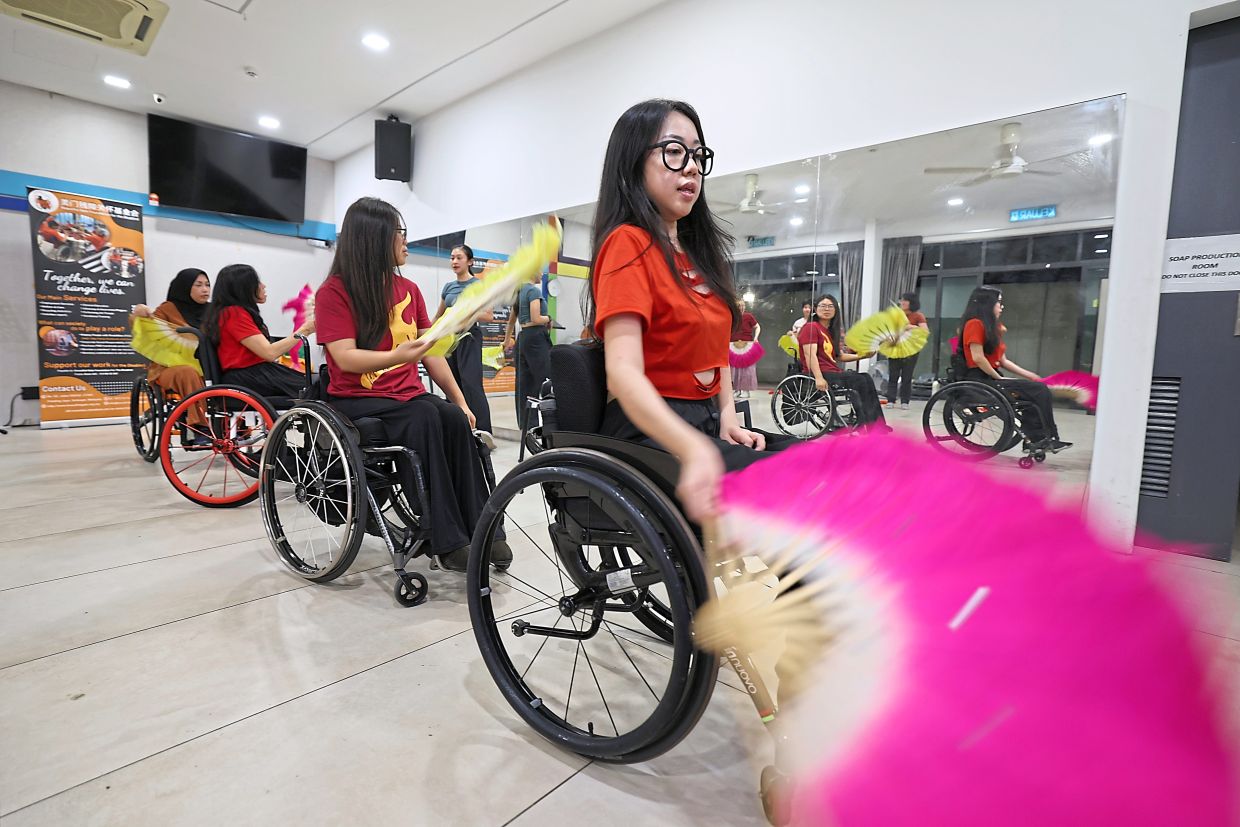
Last September, Yee signed up to join a wheelchair dance troupe at the Beautiful Gate Foundation for the Disabled in Petaling Jaya.
Her first performance with the dance troupe was on Nov 16 last year for the Love Seremban Charity Carnival Initiative, an event that supports persons with disabilities and other beneficiaries.
Stepping onto the stage again after paralysis felt surreal for Yee, as she felt it was unbelievable that after everything, she still had the chance to perform.
“We explore our own way of dancing, even though moving in a wheelchair can be inconvenient, everyone makes their best effort to turn up, as that is our spirit,” she said.
Yee believes society is slowly changing in how it views artistes with different abilities.
“At times, people focus more on the disability than the quality of the art.
“As long as it comes from within, it is art.
“Learning to appreciate yourself is also an art,” she said.
A decade ago, she laid in bed unable to move, questioning her future.
Today, Yee is determined to dance on stage and express herself.
Redefining independence
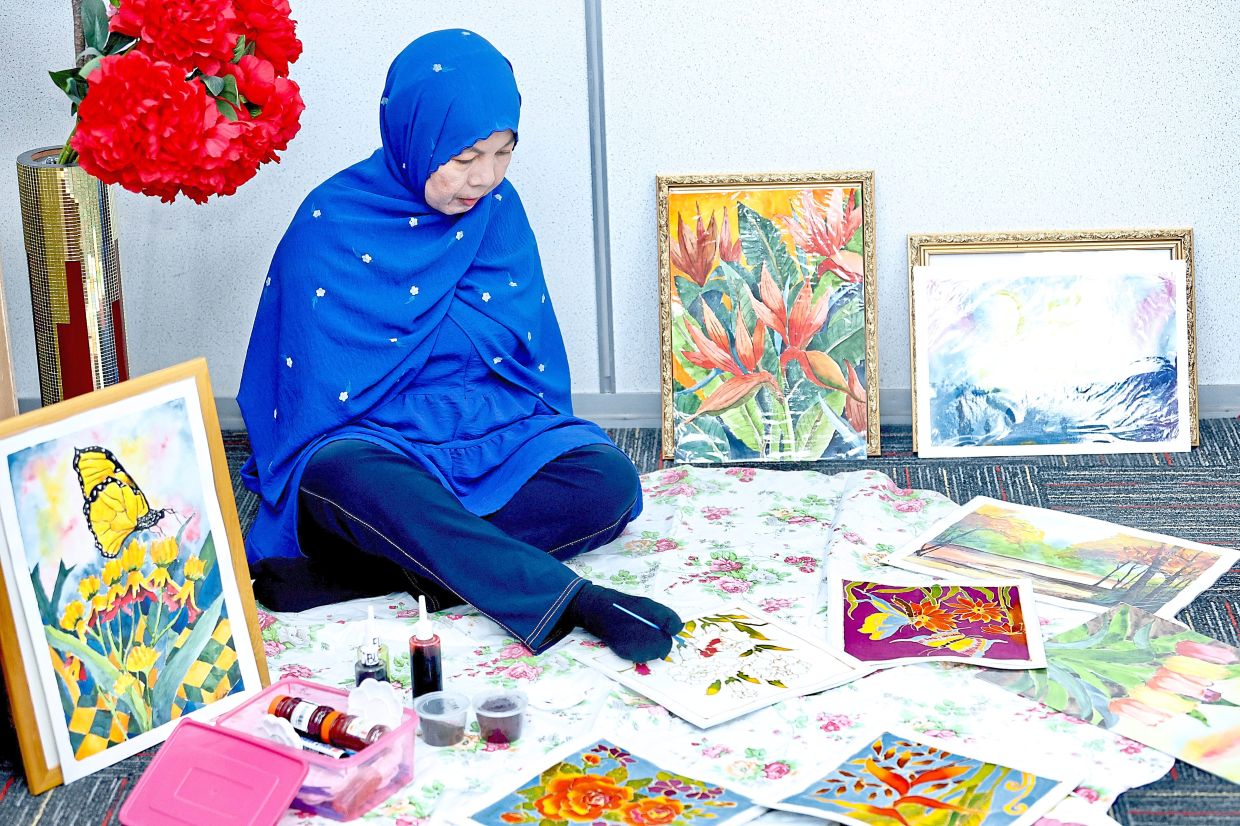
When Siti Aishah Yaacob dips her brush into dye to begin a new batik piece, she does so with her feet.
Born without arms, the 51-year-old artist spent her youth redefining the very essence of independence.
For her, disability was not a sudden arrival; it was simply how her life began.
“From birth, I have been accustomed to self-reliance.
“My mother ensured I mastered everything alone; dressing, bathing, eating and even attending school independently,” she said.
Today, Siti Aishah is a professional with the Mouth and Foot Painting Artists (MFPA), an international body supporting these creators.
She joined the organisation in 2001 and has remained a dedicated member for nearly a quarter of a century.
Her artistic journey began at school as a young girl, where her favourite lesson was always art.
Her classmates found her work impressive, often requesting small, bespoke pieces for themselves.
What began as a childhood interest gradually evolved into paid commissions and, eventually, a career.
Under MFPA, Siti Aishah submits several paintings each month, typically five to six pieces.
The organisation reproduces selected artworks into products such as calendars and prints, which are distributed internationally, with the payment for the artwork going back to her.
Thanks to MFPA, Siti Aishah has participated in numerous exhibitions, including the 2020 Gifted Art Exhibition by Art4Love, which she recalled as her most memorable.
Today, she focuses primarily on batik, having previously mastered both watercolour and acrylic.
She finds that batik offers a unique sense of fulfilment because the finished work becomes wearable.
“Seeing someone wearing a garment I painted, whether at an event or a festive celebration, brings immense satisfaction,” she said.
Still, like many creators, Siti Aishah is no stranger to doubt, acknowledging moments of “creative block” when a piece fails her expectations.
“Sometimes we feel unsatisfied with our work, but I refuse to let those feelings linger.
“Art is an expressive medium; however a piece is created, it remains art,” she emphasised.
Sharp critiques have also surfaced during exhibitions, where she overheard remarks comparing her work to that of able-bodied children, but she simply shrugged.
“To me, art should be judged on its own merits, not measured against the artist’s physical form,” she said.
Physically, the process is gruelling; large batik pieces require precision while seated. She has to maintain balance as she rotates the fabric with her feet.
Siti Aishah said she had frequently touched hot wax accidentally, but she considered this an occupational normality.
“It can be exhausting, yet it remains a peaceful journey nonetheless,” she said.
What began as a childhood hobby has evolved into a lifelong career, providing Siti Aishah with a vital personal lesson.
“If your passion becomes your profession, you will always find joy in your labour,” she said.