

Its chewy texture and distinct sweetness have helped the round-shaped cake retain its place during the lunar new year celebration, even as modern treats gain popularity.
For 53-year-old Sim Beng Ai, last-minute orders from family and friends are proof that the beloved traditional cake has stood the test of time.
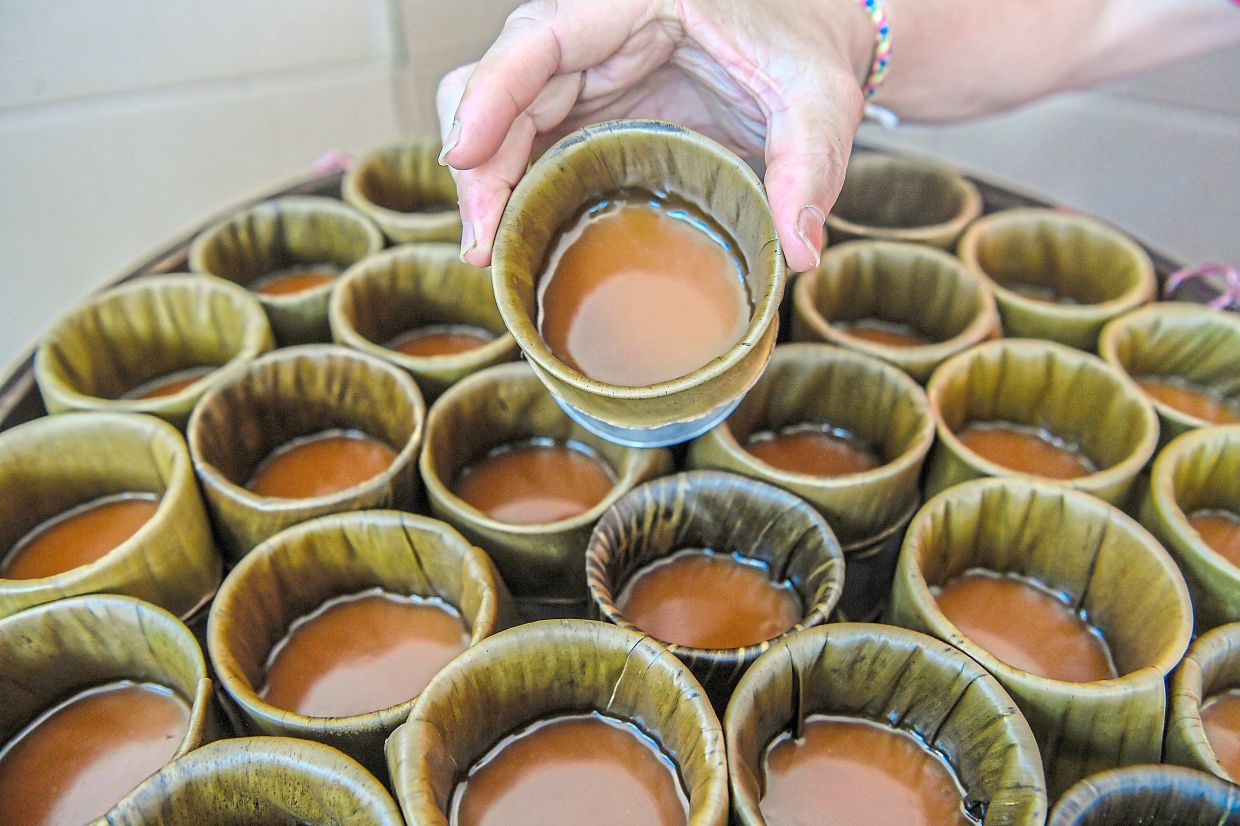
The mother-of-three said making nian gao was no simple task as it demanded patience, care and attention to detail.
She uses only glutinous rice flour and sugar, but the process is painstaking and takes three days to achieve the desired result.
“Steaming slowly, the cake wrapped in banana leaves gives off a delightful fragrance but making it is not easy.
“If you get it wrong, the cake would not turn out well,” she told Bernama in Alor Setar, Kedah.
“We soak, grind and dry the rice first, then prepare the mixture and steam it for 24 hours.
For this, she said, “you really have to keep the heat steady.”
Sim said that she was unable to accept large orders as her husband, Saw Beng Hup, 58, could only assist on weekends.
However, she said each nian gao was prepared with care despite their busy schedules.
Saw said the sticky rice cake remained one of the most important traditional symbols during Chinese New Year as it represented prosperity, abundance and close family ties.
“I learned the recipe and way of making traditional nian gao from my mother, and she learned it from her grandmother.
“It’s a family tradition that has been passed down for generations,” he added.
Saw, who is a secondary school principal, intends to take over the business fully after retirement as his siblings are not interested in continuing it.
In the three weeks leading up to Chinese New Year, the couple prepared more than 1,000 pieces in various sizes, priced between RM6 and RM12 depending on size.