Each year as Chinese New Year approaches, a small factory in Kota Baru, Kelantan, springs into activity, producing traditional delicacies that have been handed down for more than a century, even as their names become increasingly unfamiliar to the younger generation.
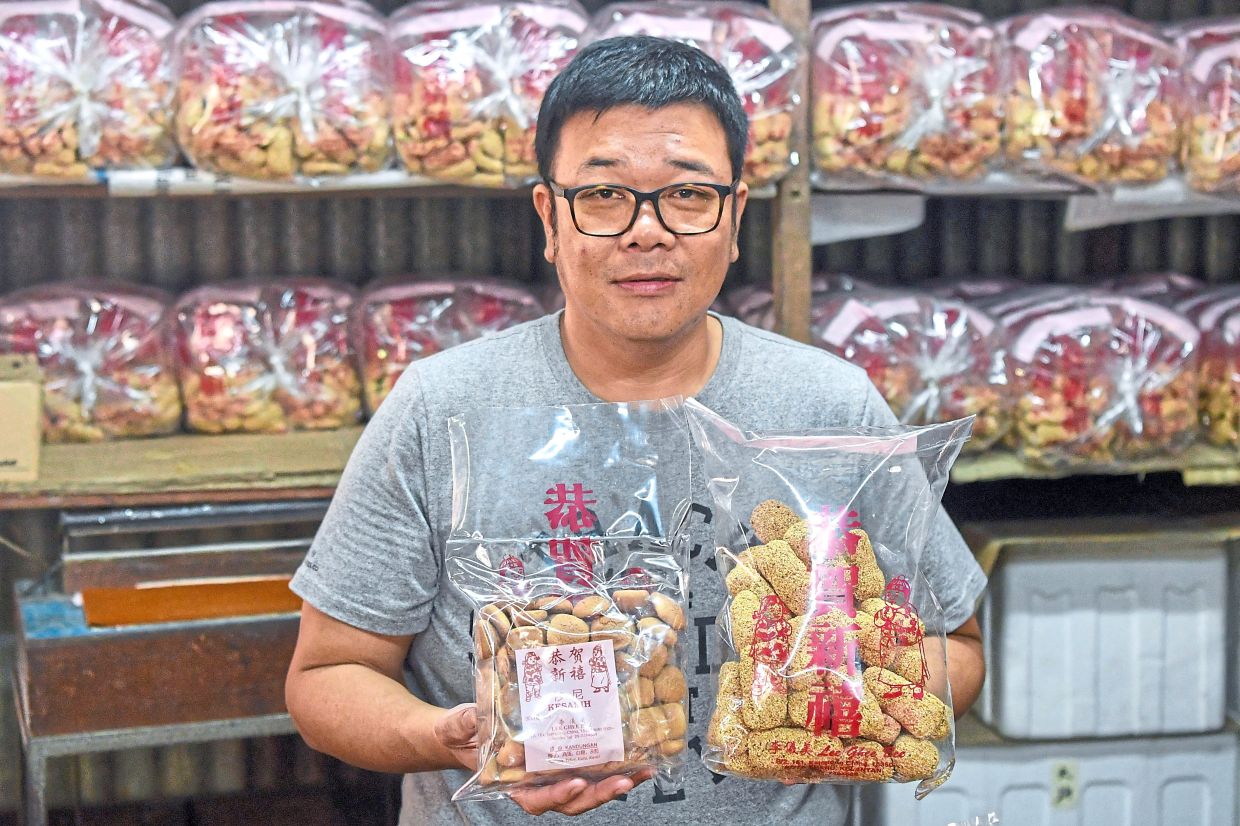
From the modest workspace next to Gok Kapur Market in Kampung Cina, kuih mua lau and kesanih biscuits (also known as sanih) are produced using time-honoured recipes, alongside kuih bakul which is synonymous with Chinese New Year celebrations.
What sets the operation apart is that the entire production process is carried out by Malay workers, reflecting a spirit of harmony and cultural cooperation.
Experienced worker Nur Mawardah Mohd Yusof, 25, said unlike kuih bakul, mua lau and kesanih biscuits remained niche delicacies.
“Mua lau is also known locally as kuih lengo or bijan in the Kelantan dialect, and is among the most produced items here because of its unique taste.
“However, not many people realise that it is actually a traditional delicacy of the Kelantan Chinese community,” she told Bernama.
Nur Mawardah, who has worked part-time at the factory since her teenage years, said production was capped at about 2,000 packages to ensure consistent quality.
She is joined by Auri Aslin Aslinda Mohd Rosli, 21, and Nur Alisya Nabila Othman, 19, in the preparation process.
“We work elsewhere and are called in on a part-time basis about three months before Chinese New Year, which is the busiest period,” said Auri Aslin.
“We enjoy working here because the relationship is close, like a family, and the atmosphere is relaxed.”
Third-generation factory owner Lee Su Wei, 46, said the business was founded by his late uncle.
Production was carried out only for the Chinese New Year period, he said, using traditional methods to preserve authenticity and maintain the delicacies’ exclusivity.
Mua lau is made from glutinous rice, white yam sourced from Thailand, rice extract, sesame seeds and oil, and involves a lengthy and meticulous preparation process.
“It begins with kneading the dough, which is then sun-dried until fully dehydrated.
“It is then cut into thin square pieces, fried, coated with sugar syrup and finally rolled in roasted sesame seeds.”
The drying process depends heavily on the weather, taking up to three days in humid conditions.
“The sugar-coating stage is the most challenging, as the sugar has to be cooked for almost an hour until it thickens and must be applied quickly before it hardens,” he added.
Kesanih biscuits are square-shaped egg treats made from starch, fresh coconut milk and egg yolk.
Lee said demand came not only from Kelantan but also from other states, as well as from Singapore and Brunei.
“As long as there is a generation willing to continue making these delicacies, we will preserve this heritage.
“It is even more meaningful when these foods are produced together with the local community in a harmonious setting.”
Lee said the three traditional delicacies produced at the factory were not merely festive treats, but also symbols of unity and living proof that nearly forgotten cultural heritage could continue to thrive in Kelantan’s multiracial society.