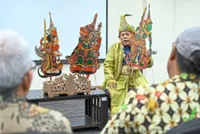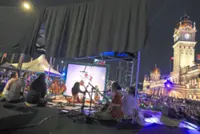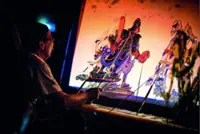
BEYOND the silhouettes of puppets moving across a white screen and the casual dialogue that draws laughter, the art of wayang kulit carries profound lessons about human nature.
Wayang kulit expert Che Mohd Nasir Yusoff said every character in Kelantan wayang kulit is created with its own meaning, representing the many facets of human behaviour closely tied to everyday life.
“These characters are not merely there to bring stories to life,” he told Bernama.
“They reflect wisdom, arrogance, weakness and the conflicts we experience daily.”
He was speaking after the Animation Character Design Masterclass: Reimagining Kelantan Wayang Kulit Characters, held in conjunction with the Titih Pusaka Festival 2026 in Kuala Lumpur.
The festival was organised by National Academy of Arts, Culture and Heritage (Aswara).
Better known as Pak Nasir, he said the narrative structure of the state’s traditional art form is built around key characters such as Sri Rama, Siti Dewi, Rawana and Laksamana which form the foundation of the storytelling.
“This structure keeps the narrative balanced. It helps the storyteller deliver conflicts and messages without needing direct explanations,” he said.
The lecturer and wayang kulit adiguru (master craftsman) at Aswara’s Centre for Traditional Performing Arts also said that through these portrayals, audiences were able to grasp the wide range of emotions and human traits presented throughout the performance.
“They learn to understand emotions such as anger, patience, greed or compassion through the characters. It is subtle education,” said Pak Nasir, who was exposed to traditional Malay arts from a young age.
He added that the role of the puppet master or dalang goes beyond manipulating puppets and delivering dialogue, encompassing the structuring of the storyline and the conveyance of messages to the audience.
“The dalang is not merely an entertainer. He arranges the story and offers advice, but in a relaxed manner so that audiences reflect without feeling pressured,” he said.
A former student of the late National Arts Laureate Hamzah Awang Hamat, Pak Nasir said wayang kulit had long functioned as a form of entertainment that also imparted messages and moral lessons to society.
Addressing current challenges, he said the art form risked losing valuable knowledge if transmission was not carried out systematically and continued to rely solely on memorisation and oral delivery.
“If it is not recorded and organised, much knowledge can be lost.
“That is why knowledge transfer must be done systematically,” he said.
He said efforts to document wayang kulit knowledge were crucial to ensure the art continued and not fade away with the older generation of dalang.
At the same time, he said wayang kulit had the potential to remain relevant through adaptation into modern mediums such as animation and visual design, but stressed that younger generations must first understand its foundations.