AS the healthcare landscape grows increasingly complex, the ability to practise clinical skills in a controlled environment has become indispensable.
Simulation-based education enables medical students to refine their clinical decision- making, technical proficiency and communication abilities.
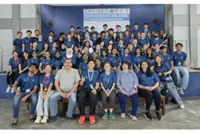
This innovation was at the heart of Internal Medicine Summit 2025: Advancing Through Simulation Learning (IMS 2025), hosted by the Asian Medical Students’ Association (Amsa) Newcastle Chapter at Newcastle University Medicine Malaysia (NUMed).
Sponsored by Modeizham Sdn Bhd and Vine Cafe & Founders Bakery, the summit welcomed participants from NUMed, Universiti Kebangsaan Malaysia (UKM), Manipal University College Malaysia, James Cook University, International Islamic University Malaysia (IIUM) and Cempaka International School.
NUMed Clinical Affairs Associate Dean Dr Vasantha Subramaniyam said, “IMS 2025 reflects NUMed’s commitment to nurturing excellence in medical education and preparing future-ready doctors.
“It paves the way for students to immerse themselves in simulated learning experiences that mirror the complexities of patient care.”
Clinical vice-president and organising chairman Ong Paul Sherng added, “Each participant received personalised guidance from experienced clinical instructors.
“A standout feature was the integration of virtual reality (VR), which made clinical scenarios more realistic, engaging and dynamic.”
Through interactive workshops, hands-on sessions and emerging topics, the summit empowered participants to enhance their clinical reasoning, sharpen diagnostic and procedural skills, and cultivate the confidence and empathy essential for effective patient care.
The programme also underscored the importance of interdisciplinary learning.
A highlight was the keynote address by Prof Judy CG Sng from National University of Singapore, Yong Loo Lin School of Medicine.
Her talk on AI (artificial intelligence) in Healthcare, Neuroscience and Medical Education introduced the virtual integrated patient (VIP) platform – an AI-powered simulation tool that transforms bedside teaching into a scalable, immersive experience.
Her insights generated much interest and enthusiasm among attendees, inspiring many to explore the intersection of medicine and innovation.
Consultant ophthalmologists Dr Andrew Low and Dr Leroy Tan from Hospital Sultan Ismail delivered an Ophthalmology Masterclass, focusing on visual acuity, fundoscopy and sight-threatening emergencies.
The afternoon session featured a Virtual Ultrasound Simulation Masterclass led by Dr Vasantha, followed by parallel workshops covering paediatrics, emergency medicine, obstetrics and gynaecology, venepuncture and cadaveric VH dissection.
Another defining moment was the VR Acute Care simulation powered by SIM X software, which created an immersive learning environment that surpassed traditional manikin-based simulations.
Participants were thrust into high-pressure scenarios, working in teams to make critical decisions and save virtual patients.
To conclude the day, an open-access VR station allowed attendees to further explore the technology and practise skills.
Dr Vasantha said, “Events like this truly embody NUMed’s belief that meaningful learning occurs when knowledge is translated into practice.
“They reaffirm our commitment to ensuring our graduates are well-equipped to navigate the evolving landscape of modern healthcare.”
With its emphasis on innovative technology and interactivity, IMS 2025 set a new standard for clinical education – demonstrating how simulation learning is reshaping the way future physicians are trained.